
Artist
Quicksilver Messenger Service
San Francisco, United States · Formed 1965
Quicksilver Messenger Service is a music group from San Francisco, United States, active since 1965. Their discography on Gatefold includes 19 records.

19
Albums tracked
71
In collections
1965
Since
Biography
John Cipollina used a custom Gibson SG with a Bigsby vibrato rigged through a stack of Standel amps and trumpet horns to get that stinging, bird-like lead tone. It’s the sound of the Fillmore West before the drugs turned heavy and the business got corporate. While the Grateful Dead were still figuring out how to tune their guitars and the Airplane was leaning into pop structures, Quicksilver was a dual-guitar attack that could actually hold a groove. They were the last of the big San Francisco bands to sign a contract because they didn't want to get screwed, and they used that leverage to keep their early sound raw and dangerously improvisational. Then Dino Valenti got out of prison and the wheels eventually fell off. The band went from a tight, dual-lead psychedelic machine to a vehicle for Valenti’s folk-pop ego, and it happened fast. One minute you’ve got the side-long freakout of 'Who Do You Love' from Happy Trails, and the next you’re listening to 'Fresh Air.' It’s still good music, but it’s a different band. They traded the weird, feedback-drenched exploration for AM radio hooks, and while the money got better, the danger was gone.
Bio from The Clerk
The Arc of Quicksilver Messenger Service
The pivots — what forced Quicksilver Messenger Service to reinvent.
The Dual-Guitar High Water Mark
Before they ever stepped into a studio, the core of Cipollina, Duncan, Freiberg, and Elmore spent years becoming the tightest live act in the Bay Area. Their 1968 debut and the live follow-up Happy Trails captured a unique interplay where Gary Duncan’s rhythmic jazz chords provided a trampoline for Cipollina’s shivering, treble-heavy lead lines. This era is defined by the Bo Diddley beat transformed into a psychedelic marathon, relying on telepathic timing rather than studio trickery. It’s the purest distillation of the San Francisco ballroom sound before the lineup started to fracture.
The Nicky Hopkins Interlude
When Gary Duncan left the band temporarily to follow Dino Valenti, the group recruited legendary session pianist Nicky Hopkins for 1969’s Shady Grove. Hopkins brought a sophisticated, classically-trained touch to the arrangements that forced Cipollina to play with more melodic restraint. The title track sounds like a gothic western, swapping out the garage-rock fuzz for a sprawling, piano-driven atmosphere that suggested a more mature direction. It was a brief moment where the band leaned into folk-horror and chamber-pop textures before the folk-rock transition took over.
The Valenti Takeover
The return of Dino Valenti for the Just for Love sessions in Hawaii completely reconfigured the band’s DNA from the inside out. Valenti became the primary songwriter and focal point, shifting the focus away from instrumental jams toward structured, acoustic-leaning protest songs and love ballads. The recording process became more conventional as the band chased a hit, eventually finding it with 'Fresh Air' and 'What About Me.' By the time they reached Comin’ Thru in 1972, the original psychedelic architecture was buried under horn sections and standard rock tropes.
Influences
- Bo Diddley — The entire second side of Happy Trails is a suite dedicated to Diddley’s 'Who Do You Love.' They took his signature syncopated shuffle and stretched it into a twenty-five-minute acid-rock excursion. You can hear Diddley's rhythmic DNA in every percussive guitar stab Greg Elmore hits.
- Django Reinhardt — Cipollina frequently cited Reinhardt as his primary influence for his rapid-fire vibrato and chromatic runs. His decision to use fingerpicks instead of a flatpick was a direct nod to jazz manouche techniques. It gave the band a European folk ghost inside their loud American amplifiers.
- The Weavers — David Freiberg came out of the folk circuit and brought a communal vocal sensibility rooted in traditional groups like The Weavers. You hear this in the clean, un-bluesy harmony stacks on their first record. It kept their sound grounded in the American folk tradition even when the guitars were melting.
- Link Wray — The aggressive use of the vibrato arm and the stabbing power chords on their early live tapes came straight from Wray's playbook. Wray's 'Rumble' provided the blueprint for the menacing, sustain-heavy tone Cipollina perfected. They treated the electric guitar as a weapon rather than just a melodic tool.
- John Coltrane — Gary Duncan was obsessed with Coltrane’s modal improvisations and used those shapes to move away from standard blues scales. The long-form jams on 'The Fool' were attempts to replicate the 'sheets of sound' intensity within a rock quartet. It’s the reason their jams have a vertical, upward-spiraling energy instead of just aimless noodling.
Discography
Their records — most-collected first.
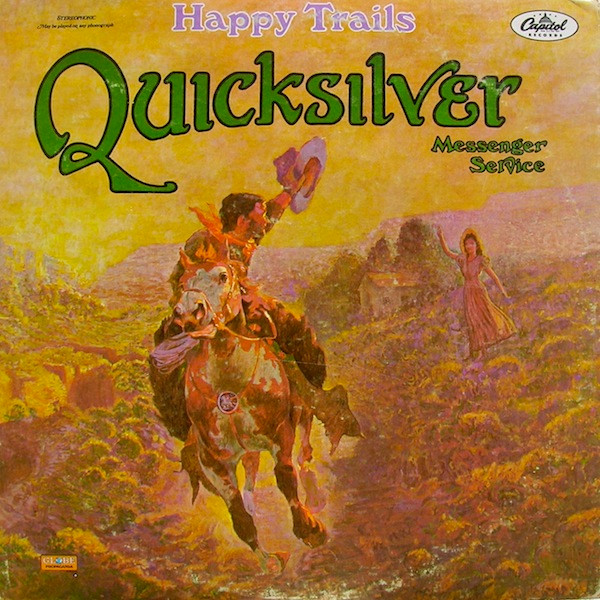
Happy Trails
1969
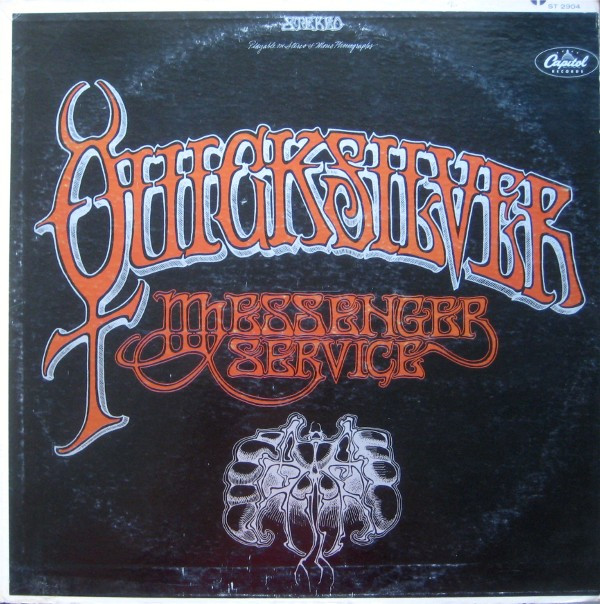
Quicksilver Messenger Service
1968
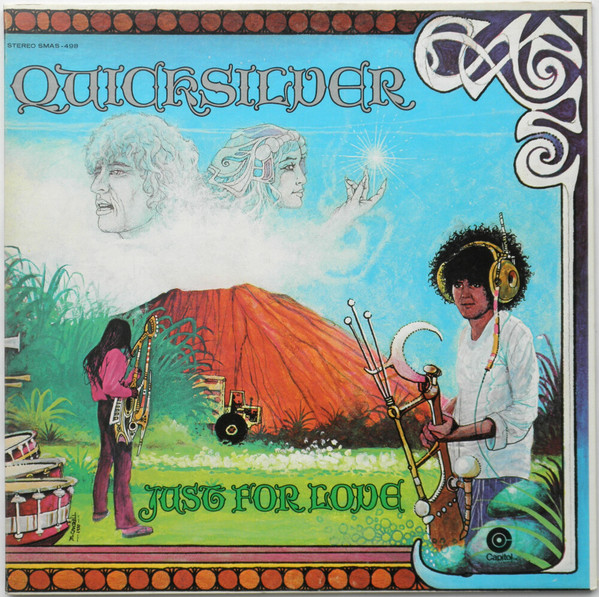
Just For Love
1970
Anthology
1973
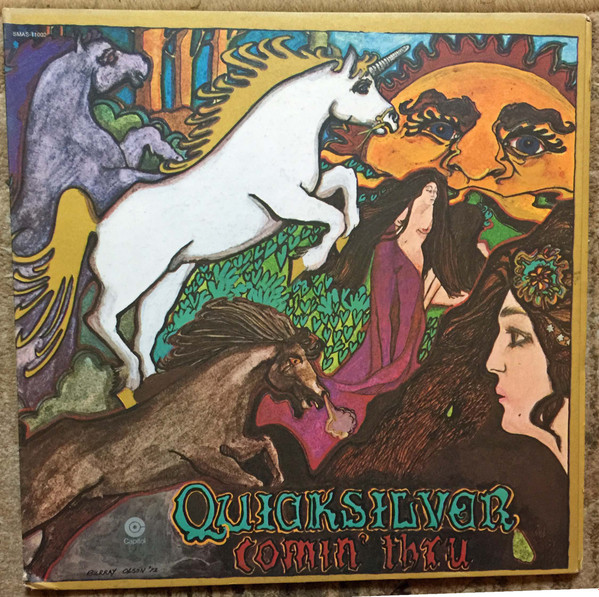
Comin' Thru
1972
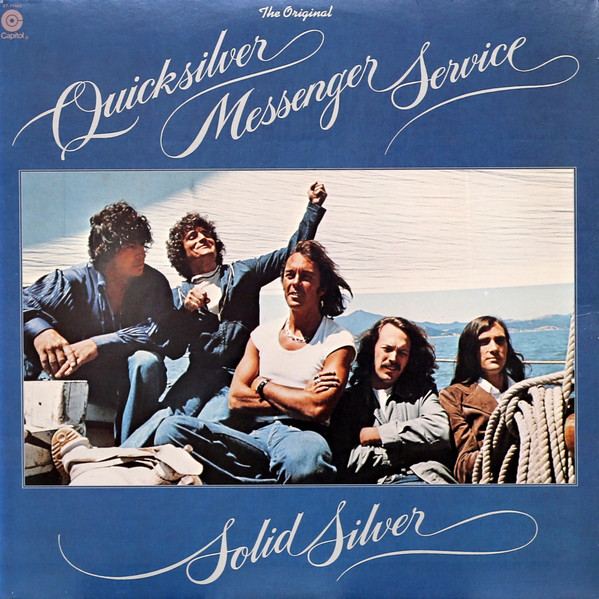
Solid Silver
1975

Happy Trails / Quicksilver
1974

Stony Brook College 1970
2015
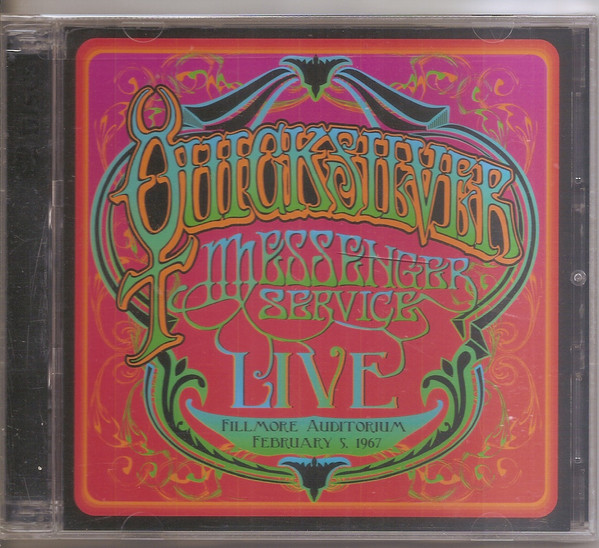
Fillmore Auditorium - Feb. 5, 1967
2015

Fillmore Auditorium, Nov. 5th, 1966
2014

Hawaii 1970
2014

Live At The Winterland Ballroom, December 1, 1973
2013
Anthology Box 1966-1970
2011
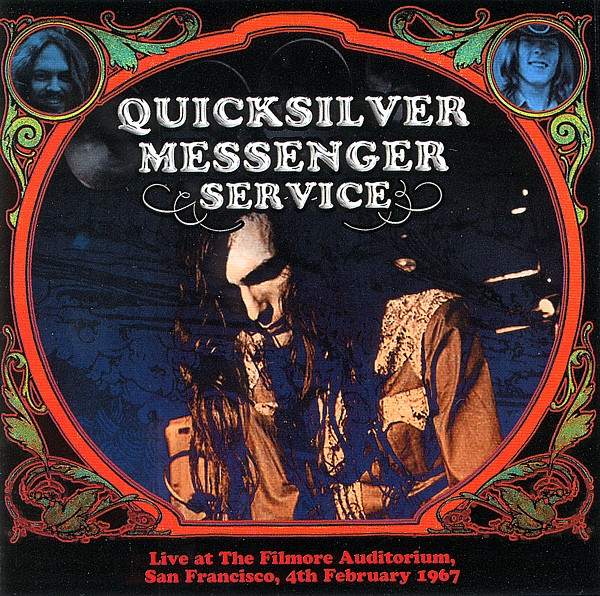
Live At The Filmore Auditorium, San Francisco, 4th February 1967
2008

Six String Voodoo
2008

At The Kabuki Theatre (The New Year's Eve Costume Ball 31 December 1970)
2007

Strange Trim
2007

Peace By Piece
1986

Quicksilver - Messenger Service
Related artists
Around the web
Follow every record they touch.
Start your shelf and Gatefold tracks Quicksilver Messenger Service's new pressings, tour dates, and the whole discography — automatically.
Start your shelf →Free forever. Works with 10 records or 10,000.