
Artist
Planxty
Irish folk music band
Ireland · 1972 – 2005
Planxty is a music group from Ireland, active 1972–2005. Their discography on Gatefold includes 8 records.

8
Albums tracked
7
In collections
1972
Since
Biography
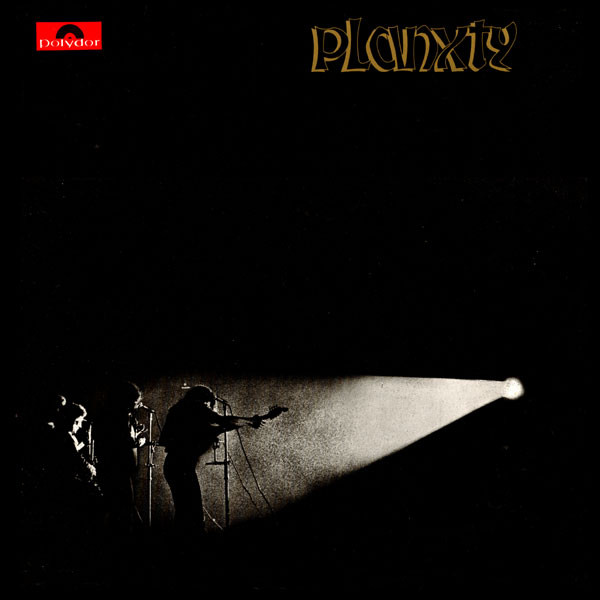
The Black Album—not the Jay-Z or Metallica ones, the 'purple' one with the silver knot—was tracked at Strawberry Studios with Phil Donnelly on the desk and everyone looking for a way to make traditional music hit as hard as a rock record. They didn't have a drummer. They had Dónal Lunny’s back-beat bouzouki and Liam O’Flynn’s pipes cutting through the mix like a lead guitar. It was the first time an Irish folk session felt like it was happening in a garage instead of a dusty pub backroom. Christy Moore was already a solo name, but he needed the virtuosity of Irvine and O’Flynn to ground his grit. They were a volatile mix of massive egos and terrifying talent that fell apart almost as fast as they came together. By the time they hit the late '70s revival, they were incorporating more complex, Eastern European time signatures that confused the purists and paved the way for the polished, stadium-ready folk that followed. They never stayed in the room long enough to get stale, which is why those first three records still sound like they’re being played through a blown-out speaker in 1973.
Bio from The Clerk
The Arc of Planxty
The pivots — what forced Planxty to reinvent.
The Prosperous Session
The band formed essentially because Christy Moore needed a backing group for his solo record 'Prosperous' and realized the chemistry was too dangerous to let go. They took the bones of traditional ballads and dressed them in the percussive, driving rhythms of the mandolin and bouzouki, a setup that didn't exist in Irish music until they forced it. The debut record is all lean muscle and no fat, captured by Phil Donnelly without the reverb-heavy baggage of the era's folk-pop. You hear it in the frantic pace of 'Raggle Taggle Gypsy' where the acoustic instruments are played with the attack of electric ones.
The Balkan Pivot
After a hiatus that saw members drift into The Bothy Band and solo work, the group reconvened with Matt Molloy on flute and a head full of odd-meter Bulgarian folk. Andy Irvine brought back 7/8 and 9/8 time signatures from his travels, which turned 'After the Break' into a math-rock record disguised as a folk session. This wasn't about the pub anymore; it was about technical precision and complex arrangements that moved beyond the simple verse-chorus structure of earlier songs. The interplay between Lunny’s rhythm and the melodic leads became tighter, more clinical, and significantly more aggressive.
The Bill Whelan Expansion
By the early '80s, the band added Bill Whelan on keyboards, shifting the sound toward the cinematic scale that would eventually birthed Riverdance. 'Words & Music' moved away from the raw, wooden texture of the early seventies in favor of a wider, more produced soundstage. The inclusion of low whistle and more intricate orchestral layering signaled the end of their run as a scrappy folk outfit. It was the sound of a band outgrowing the room, trading the sweaty intensity of the trio years for a polished, professional finale.
Influences
- Seán Ó Riada — Liam O’Flynn was a direct student of the piping tradition Ó Riada modernized with Ceoltóirí Chualann. You hear it in the disciplined, ensemble-focused approach to the uilleann pipes rather than treating them as a solo novelty. He provided the blueprint for how a traditional group could function as a structured band.
- The Dubliners — Christy Moore and the rest of the crew grew up in the shadow of the Dubliners' raw, unpolished energy. They took the 'ballad group' format from Ronnie Drew's lot but replaced the booze-soaked chaos with a terrifying level of technical precision. It is the bridge between the rowdy street song and the concert hall.
- Sweeney's Men — Johnny Moynihan and Andy Irvine were in this band first, which is where they originally introduced the bouzouki to Irish music. Without the Sweeney’s Men experiment, Planxty wouldn't have had their signature percussive string sound. It’s the literal DNA of the band's rhythm section.
- Woody Guthrie — Christy Moore has cited Guthrie as his North Star for the political and social weight of his songwriting. You hear it in the way Moore delivers a narrative, treating the lyric as a piece of journalism rather than just a pretty melody. It gave the band a grit that kept them from sounding like a Renaissance fair act.
- Leo Rowsome — Liam O’Flynn was taught directly by Rowsome, the man who basically saved the uilleann pipes from extinction. The technical clarity in O’Flynn’s playing on the first record is a direct lineage from Rowsome’s ‘Dublin style.’ It’s the high-water mark for the instrument on tape.
Discography
Their records — most-collected first.




Related artists
Around the web
Follow every record they touch.
Start your shelf and Gatefold tracks Planxty's new pressings, tour dates, and the whole discography — automatically.
Start your shelf →Free forever. Works with 10 records or 10,000.