
Artist
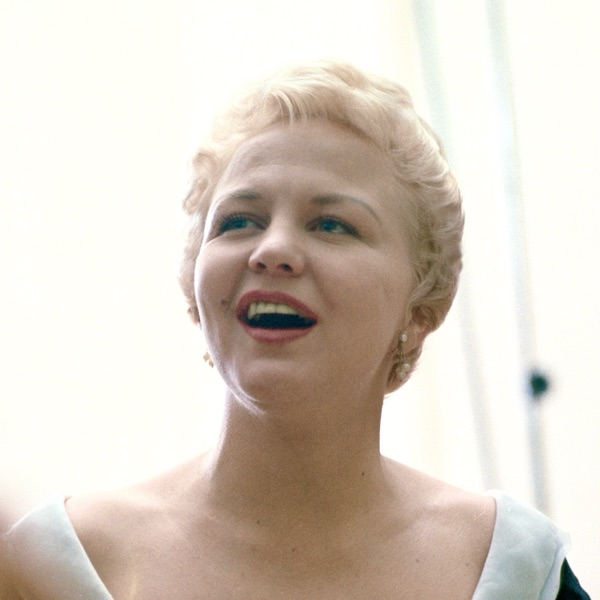
Peggy Lee
jazz vocalist
Jamestown, United States · 1920 – 2002
Peggy Lee is a musician from Jamestown, United States, active 1920–2002. Their discography on Gatefold includes 24 records. They also recorded with The Benny Goodman Sextet.
45
Albums tracked
97
In collections
1920
Since
Biography
Dave Dexter Jr. at Capitol didn't initially know what to do with a singer who refused to belt. She spent her early years fighting the big band instinct to shout over the brass, choosing instead to lean so close to the mic that you can hear the spit on her teeth. It was a minimalist gamble in an era of maximalist swing. She wasn't just a singer; she was a ruthless editor of her own performances, cutting out every unnecessary vibrato until only the bone remained. She wrote her own hits when the labels were still treating vocalists like interchangeable hood ornaments. That business sense kept her relevant when the rock and roll shift tried to bury the standards, though she definitely hit some rough water trying to stay hip in the late sixties. She wasn't above a gimmick—look at the fake applause dubbed onto 'Beauty and the Beat!'—but when she stripped it back to a bassline and a finger snap, she was the smartest person in the room.
Bio from The Clerk
The Arc of Peggy Lee
The pivots — what forced Peggy Lee to reinvent.
The Goodman Finishing School
Stepping into Helen Forrest's shoes in Benny Goodman's band in 1941 was a suicide mission for most, but Lee survived by doing the opposite of her predecessors. She learned to use the microphone as an instrument to compensate for her lack of volume, creating a hushed, conversational style that forced the audience to stop clinking glasses and actually listen. The 1942 hit 'Why Don't You Do Right?' proved that a white girl from North Dakota could handle Kansas City blues without sounding like a parody. This era was about restraint and rhythm, proving she could lead a sextet through a groove without ever breaking a sweat.
The Decca Noir Shift
A contract dispute with Capitol sent her to Decca in 1952, where she immediately junked the pop fluff for 'Black Coffee.' She brought in a small jazz combo instead of a bloated orchestra, insisting on a smoky, after-hours atmosphere that defined the 'cool' vocal movement. The title track is the blueprint for every late-night torch record that followed, ditching the bright lights for a dim-room aesthetic. You hear her taking full control of the arrangements here, moving away from the girl-singer trope into a serious bandleader role.
The Minimalist Fever
Returning to Capitol in the late fifties, she stripped the stage bare for the 'Fever' sessions, which famously featured only her voice, Joe Mondragon’s bass, and Shelly Manne’s drums. She wasn't interested in the wall of sound; she wanted the space between the notes to do the heavy lifting. This was a calculated pivot back to her jazz roots while the rest of her peers were getting buried under strings. It turned a R&B cover into a high-art piece of percussion-driven pop that still sounds like a masterclass in tension.
The Lieber and Stoller Gamble
By 1969, most of her contemporaries were irrelevant, but she linked up with songwriters Jerry Leiber and Mike Stoller for 'Is That All There Is?' after hearing the demo in their office. It was a bizarre, nihilistic cabaret piece that the label hated, yet she insisted on the deadpan, spoken-word delivery that felt closer to Brechtian theater than a pop chart-topper. The session utilized an orchestration that felt like a drunken circus, marking her final evolution into a character actress who happened to sing. It saved her career by leaning into the absurdity of aging in a youth-obsessed industry.
Influences
- Billie Holiday — Lee explicitly cited hearing Holiday's records as the moment she realized she didn't have to shout to be heard. You hear it in the behind-the-beat phrasing and the way she treats lyrics like a private confession rather than a public performance.
- Lil Green — Lee's first major hit, 'Why Don't You Do Right?', was a direct cover of Lil Green's 1941 Bluebird recording. Lee lifted the vocal inflection and the weary, cynical attitude of the original almost note-for-note.
- Bessie Smith — Before she was a pop star, she was obsessed with Smith’s Columbia 78s, which taught her the structural foundations of the blues. Even on her most polished Capitol tracks, there's a grit in her lower register that comes straight from the Empress of the Blues.
- Mildred Bailey — As a singer for the Benny Goodman band, Lee was following the trail blazed by Bailey, the first 'girl singer' to front a big band. She adopted Bailey’s precision and light, clear tone but stripped away the sugary vibrato for something colder.
- Louis Armstrong — Lee credited Armstrong’s trumpet playing for her sense of rhythmic timing and breath control. She learned to sing like a horn player, often mimicking his habit of floating over the bar line to create a sense of effortless swing.
Peggy Lee — solo
Their records — most-collected first.

Black Coffee With Peggy Lee
1953

Is That All There Is?
1969
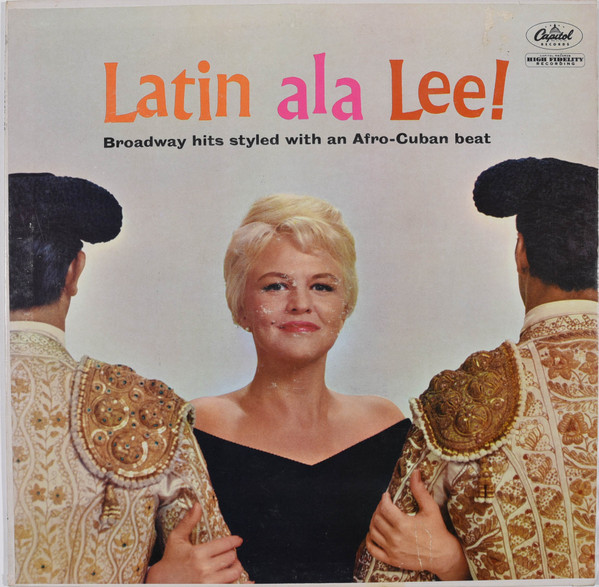
Latin Ala Lee!
1960

Beauty And The Beat! (Recorded Live At The National Disc Jockey Convention In Miami, Florida)
1959

Jump For Joy
1958

Mink Jazz
1963
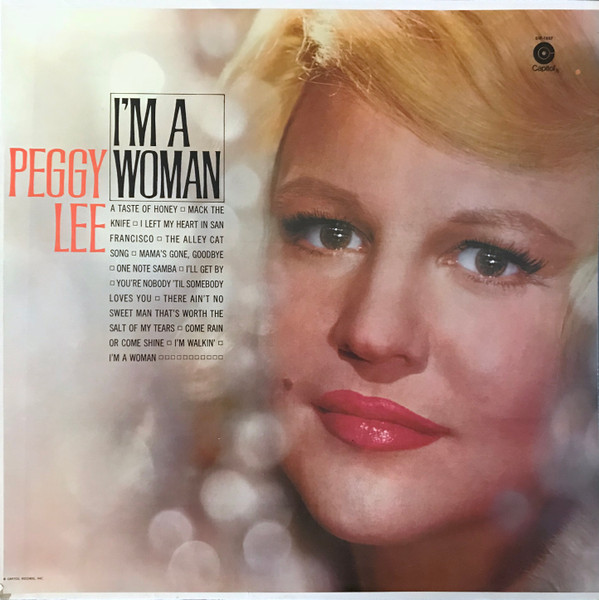
I'm A Woman
1963
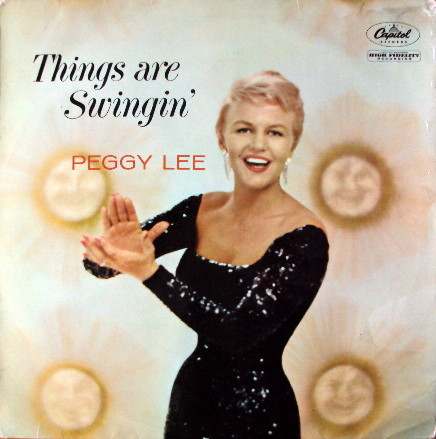
Things Are Swingin'
1958

Let's Love
1974

Norma Deloris Egstrom From Jamestown North Dakota
1972

Sugar 'N' Spice
1962

All Aglow Again!
1960

Bridge Over Troubled Water
1970

The Hits Of Peggy Lee
1968

Big Spender
1966

In The Name Of Love
1964

Blues Cross Country
1962

Bewitching Lee!
1962

I Like Men
1959

Sea Shells
1958

Dream Street
1957

Mañana
1999

Lovers Rendez Vous
1981

Peggy Lee's Greatest!
1979
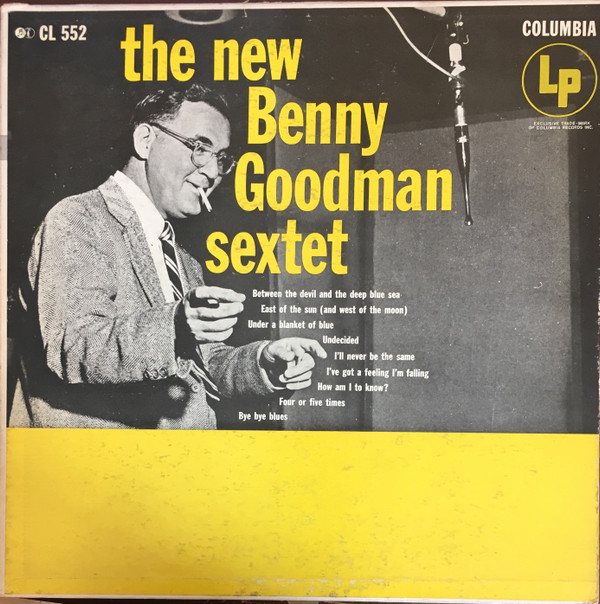
The Benny Goodman Sextet
A project Peggy Lee was part of.

Related artists
Around the web
Follow every record they touch.
Start your shelf and Gatefold tracks Peggy Lee's new pressings, tour dates, and the whole discography — automatically.
Start your shelf →Free forever. Works with 10 records or 10,000.