
Artist
Orange 9mm
United States · Formed 1994
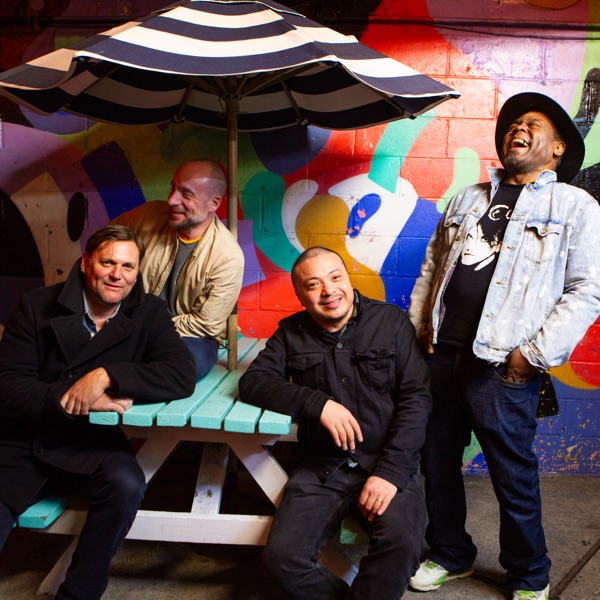
Orange 9mm is a music group from United States, active since 1994. Their discography on Gatefold includes 4 records.
4
Albums tracked
15
In collections
1994
Since
Biography
Chaka Malik walked away from Burn and the heavy lifting of the Revelation Records roster because he wanted something that actually swung. The 1994 self-titled EP was tracked with Don Fury—the guy who basically built the New York Hardcore sound in a dingy Little Italy basement—but Chaka wasn't looking for another mosh part clinic. He brought in Chris Traynor from Fountainhead to inject a metallic, textured groove that didn't sound like the usual Gorilla Biscuits worship. It was lean, loud, and felt more like the asphalt of NYC than the suburban angst of the peers they left behind. Then the major label money showed up. Elektra signed them and shoved them into the studio with Dave Jerden, the guy who made Jane’s Addiction and Alice in Chains sound like high-definition filth. That jump changed their DNA, trading the raw basement grit for a polished, aggressive throb that tried to bridge the gap between the CBGB matinee and the Lollapalooza main stage. It worked until it didn't—Traynor eventually bailed for Bush, and the band started chasing the industrial-hop trends of the late 90s, losing that sharp, rhythmic edge that made the early 12-inch singles essential.
Bio from The Clerk
The Arc of Orange 9mm
The pivots — what forced Orange 9mm to reinvent.
The Don Fury Basement Days
The 1994 EP captured a band still connected to the New York Hardcore scene but desperate to outgrow its rigid boundaries. Recording with Don Fury meant working in a space that prioritized raw energy over clinical precision, resulting in a snap and pop that highlighted Larry Gorman’s syncopated drumming. You can hear the transition in real-time as Malik moves from the direct shouts of his past to a more rhythmic, melodic cadence. It’s the sound of a band figuring out how to be heavy without being generic.
The Jerden Polish
Moving to Elektra for Driver Not Included meant a massive shift in production scale, with Dave Jerden bringing the same thick, compressed guitar wall he used on Dirt. The sessions focused on making the band sound massive, pushing Traynor’s inventive guitar work to the front and smoothing out the jagged edges of the debut. This era turned the band into a touring machine, opening for everyone from Quicksand to Helmet while trying to maintain their credibility in a rapidly commercializing scene. The tension between their hardcore roots and the high-production gloss created their most commercially successful but polarizing material.
The Electronic Pivot
By the time they got to Pretend I'm Human in 1999, the lineup had fractured and the influence of the burgeoning nu-metal and trip-hop scenes took over the songwriting process. The band moved away from the guitar-driven dynamics of the early years to experiment with samples, loops, and a more streamlined, radio-friendly approach. It was a chaotic period defined by label shifts and a search for a new identity that didn't rely on the Traynor-Malik chemistry. The result was a record that sounded like the end of an era, reflecting the identity crisis that swallowed most post-hardcore bands at the turn of the millennium.
Influences
- Bad Brains — Chaka Malik has cited HR’s vocal elasticity as the blueprint for his own transition from straightforward shouting to a more rhythmic, soulful delivery. You hear it in the way he navigates the pocket of 'Cutting Stick,' choosing to flow with the bass rather than just bark over the drums. It’s that DC-to-NY lineage of refusing to be boxed into a single tempo.
- The Stooges — Chris Traynor explicitly pointed to Ron Asheton’s raw, unhinged guitar leads as a primary influence on the feedback-heavy textures of the early Orange 9mm sessions. The dissonant, squealing leads on the self-titled EP owe everything to the 'Fun House' school of controlled chaos. It gave the band a psychedelic edge that most of their straight-edge-adjacent peers lacked.
- Quicksand — The band toured extensively with Quicksand and shared the same DNA of deconstructing hardcore into something more groove-oriented and mid-tempo. Walter Schreifels practically mentored the scene's shift toward the 'post-hardcore' sound that Orange 9mm adopted on Driver Not Included. You can hear that influence in the way they lock into a repetitive, hypnotic riff and let the tension build instead of rushing to a breakdown.
- Public Enemy — The rhythmic structure of the band’s early work was heavily informed by the Bomb Squad’s dense, noisy production style, which Malik referenced as a goal for their own intensity. On tracks like 'High Speed Chase,' the interplay between the bass and drums mimics a sampled loop more than a traditional rock rhythm section. It brought a hip-hop sensibility to the kit without resorting to cheesy rap-rock tropes.
- Jane's Addiction — The choice of Dave Jerden as producer for their major-label debut was a direct attempt to capture the atmospheric, tribal heavy-metal swing of Nothing's Shocking. Malik’s vocal experimentation on Tragic leans into the high-register, melodic style that Perry Farrell popularized in the late 80s. It shifted the band from the pit to the arena, trading grit for a more expansive, art-rock ambition.
Discography
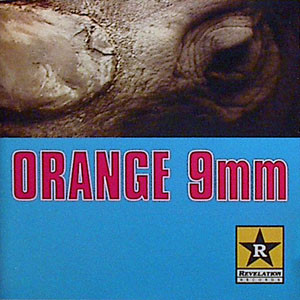
Their records — most-collected first.


Related artists
Around the web
Follow every record they touch.
Start your shelf and Gatefold tracks Orange 9mm's new pressings, tour dates, and the whole discography — automatically.
Start your shelf →Free forever. Works with 10 records or 10,000.