
Artist
Nu Genea
Italian group, fka as Nu Guinea
Napoli, The Gambia
Nu Genea is a music group from Napoli, The Gambia. Their discography on Gatefold includes 4 records.

4
Albums tracked
19
In collections
—
Since
Biography
Lucio Aquilina and Massimo Di Lena moved to Berlin to find a sound, but they ended up digging through the crates for the stuff they’d ignored back home in Naples. They ditched the sterile, generic techno grids that were clogging up the German clubs and started obsessing over 1970s Neapolitan funk and the greasy, Mediterranean disco that had been gathering dust for decades. It wasn’t a nostalgic trip for the sake of it; they were hunting for that specific, humid groove that happens when Italian pop meets Afrobeat and jazz-funk. They rebranded from Nu Guinea to Nu Genea because they didn't want to be another pair of European dudes cosplaying as 'global' explorers. Instead, they leaned hard into the local dialect and the chaotic energy of the Vesuvius-adjacent street life. It’s a hyper-local sound that somehow works everywhere because they’re not just sampling old records—they’re hiring the old session players to recreate that specific, sun-drenched dirt in the studio.
Bio from The Clerk
The Arc of Nu Genea
The pivots — what forced Nu Genea to reinvent.
The Berlin Hardware Days
Living in Berlin forced them to work with limited gear and a focus on the dancefloor. The self-titled 2014 EP was a hardware-heavy exercise in deep house that sounded more like the local scene than their own roots. You can hear the Roland TR-808 and the analog synths doing the heavy lifting before they decided that the soul was missing from the machines. It was a necessary technical phase, but they were clearly still searching for a voice that didn't just sound like a Berghain side-room.
The Tony Allen Connection
Everything changed when they got Tony Allen into a studio in Paris for the World Spiritual Classics series. Working with the man who literally invented the Afrobeat drum pattern forced them to stop being programmers and start being bandleaders. They built The Tony Allen Experiments around his unreleased drum takes, layering vintage synthesizers over his organic polyrhythms. This was the moment they realized that the funk they wanted required a human pulse rather than a quantized loop.
The Neapolitan Homecoming
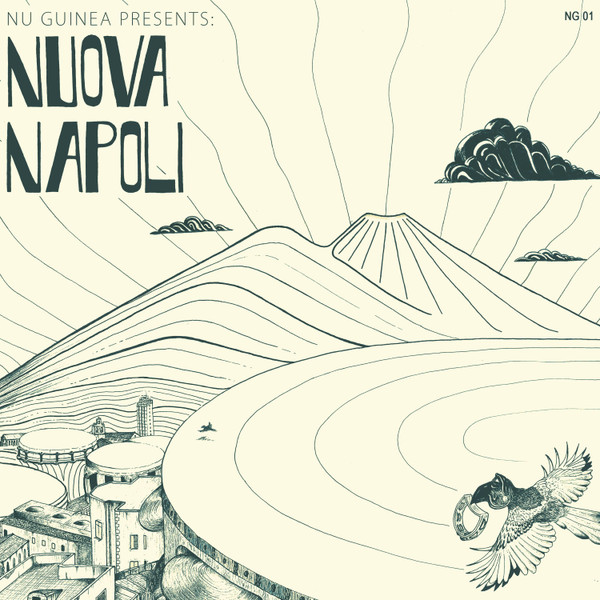
Nuova Napoli was the pivot where they stopped looking outward and started digging into the Vesuvian lava. They moved away from instrumental experiments and brought in local vocalists like Fabiana Martone to sing in the Neapolitan dialect. By the time they reached Bar Mediterraneo, the sound had fully transitioned from electronic music to a live-band ensemble that felt like an alternate history where the 70s never ended. The production shifted toward a warm, wide-open mix that prioritizes live percussion and slap-bass over the 4/4 thump.
Influences
- Tony Allen — The duo recorded an entire tribute album with his drum tracks and cited his rhythmic displacement as the foundation for their transition into live instrumentation. You hear his ghost in every syncopated snare hit on Nuova Napoli. Without Tony’s patterns, they’d still be making generic house music.
- Napoli Centrale — Massimo Di Lena has repeatedly pointed to James Senese’s 1970s fusion outfit as the blueprint for blending Neapolitan identity with jazz-rock. The grit and the horn arrangements on Bar Mediterraneo are a direct lineage from Senese’s saxophone wails. It's the sound of the city's blue-collar soul.
- Pino Daniele — They’ve specifically referenced his album Nero a Metà as the gold standard for Italian soul production. The way they layer vocal melodies over Mediterranean grooves is a direct lift from Daniele’s ability to make the Neapolitan dialect sound like a funk instrument. He proved you could be local and global simultaneously.
- Tullio De Piscopo — As a drummer and percussionist who worked with everyone from Astor Piazzolla to local pop stars, De Piscopo’s 'Stop Bajon' is the DNA of the Nu Genea sound. They chase that exact 'Italo-disco meets world percussion' vibe he perfected in the early 80s. The heavy, driving percussion on 'Ddoje Facce' is a straight-up nod to his style.
- Fela Kuti — Beyond the Tony Allen connection, they’ve cited Fela’s structural approach to long-form jams as a major influence on their live arrangements. You hear the Afrobeat brass stabs and the interlocking guitar scratches throughout their catalog. They treat the groove as a circular, hypnotic force rather than a standard pop structure.
Discography
Their records — most-collected first.


Related artists
Around the web
Follow every record they touch.
Start your shelf and Gatefold tracks Nu Genea's new pressings, tour dates, and the whole discography — automatically.
Start your shelf →Free forever. Works with 10 records or 10,000.