
Artist
Nick Hakim
United States
Nick Hakim is a musician from United States. Their discography on Gatefold includes 4 records.

4
Albums tracked
11
In collections
—
Since
Biography
Born to Chilean and Peruvian parents and based in Brooklyn -- though Washington, D.C. is his hometown -- Nick Hakim arrived in 2014 as a purposefully raw and refined balladeer with an old soul. Prior to his breakout year, he appeared on Gizmo's Red Balloon album beside the likes of Gwen Bunn and Casey Benjamin, but 2014 was when he released a pair of warmly received EPs. The predominantly acoustic Where Will We Go, Pt. 1 (July) and Where Will We Go, Pt.
The Arc of Nick Hakim
The pivots — what forced Nick Hakim to reinvent.
The Tape-Hiss Bedroom EPs
Between 2013 and 2014, Hakim was tracking Where Will We Go in a Boston room using cheap gear and sheer isolation. He kept the vocal takes buried deep under analog delay and heavy reverb. This era was about small spaces, tape saturation, and a distinct lack of polished studio sheen. The result was a pair of EPs that sounded like a long-lost 1970s private-press soul record found in a damp basement.
The Green Twins Studio Metamorphosis
Moving to Brooklyn changed the scale of his sound. Hakim took the blueprint of his home recordings into actual studios, dragging along weird outboard gear and recruiting live players. He started manipulating his own master tapes, slowing down tracks, and running finished mixes through pitch-benders. Green Twins became a masterclass in psychedelic soul, balancing his raw vocals with complex, shifting studio arrangements.
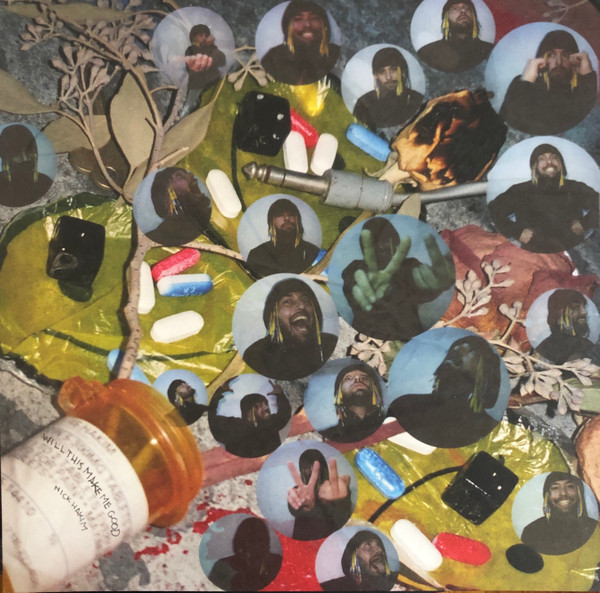
The Aggressive Static of Will This Make Me Good
By 2020, the warm nostalgia of his debut got stripped away for something much harsher. Hakim processed his vocals until they sounded like they were coming through a blown-out shortwave radio. He traded the sweet, psych-soul melodies for dissonant synthesizers and erratic drum programming. It was a polarizing, abrasive pivot that threw casual fans off but proved he was entirely uninterested in playing the safe indie-soul card.
Influences
- Shuggie Otis — Hakim has cited Otis's home-recorded masterpiece Inspiration Information as a direct blueprint for his own DIY production style. You hear this in the drum machine patterns and the lazy, warm keyboard chords on Green Twins. Both artists share that same obsession with solitary bedroom studio tracking.
- Robert Wyatt — Hakim has kept Wyatt's solo catalog in heavy rotation during interviews, pointing to the former Soft Machine drummer's melancholic, vulnerable vocal delivery. You can hear Wyatt's eccentric phrasing and sparse, off-kilter arrangements all over the balladry on Will This Make Me Good. It is the art of making a slow song sound incredibly unsettling.
- Marvin Gaye — The late-period, heavily layered vocal arrangements on Gaye's Vulnerable album are a major touchstone for Hakim's approach to backing vocals. You hear it in the way Hakim stacks his own voice in dense, close-harmony choral arrangements that sound like they are floating above the instrumentation. It is soul music built on layers of internal dialogue.
- RZA — Hakim has pointed to the gritty, unpolished sampling aesthetic of the early Wu-Tang Clan records as a major influence on his drum production. Instead of clean rhythm tracks, Hakim deliberately degrades his drum samples to mimic that dusty, mid-90s SP-1200 crunch. It gives his indie-soul tracks a heavy, hip-hop-adjacent backbone.
- Al Green — The intimate, dry vocal tracking Willie Mitchell engineered for Green at Royal Studios in Memphis is a direct ancestor to Hakim's close-mic technique. You hear it on the Where Will We Go EPs, where Hakim sings right on the edge of the capsule, capturing every breath. It creates an intense, almost uncomfortable level of physical proximity.
Discography
Their records — most-collected first.



Related artists
Frequent collaborators
Around the web
Follow every record they touch.
Start your shelf and Gatefold tracks Nick Hakim's new pressings, tour dates, and the whole discography — automatically.
Start your shelf →Free forever. Works with 10 records or 10,000.