
Artist
The Neon Judgement
Belgian new wave band
Leuven, Belgium · 1981 – 2015
The Neon Judgement is a music group from Leuven, Belgium, active 1981–2015. Their discography on Gatefold includes 13 records.
13
Albums tracked
2
In collections
1981
Since
Biography
The early sessions in Leuven were built on the cheap architecture of the Roland TR-808 and a primitive Roland SH-09. Dirk Da Davo and TB Frank weren't trying to be synth-pop stars; they were playing cold, mechanical rock and roll because they couldn't afford a drummer or a full band. By the time they hit the mid-80s, they had locked into a sound that was essentially 'Digital Rockabilly' — a term they actually used to describe the friction between those stiff, programmed beats and a distorted Gretsch guitar. It was a localized Belgian response to the gloom of the UK scene, but stripped of the gothic theatrics and replaced with a sweaty, back-alley grit. They hit their stride on Play It Again Sam just as the Electronic Body Music scene was hardening into something rigid and boring. The Neon Judgement refused to stay in the box, dragging in brass sections and a strange obsession with Americana that confused the leather-clad industrial crowd. They had a rough patch in the 90s where the experimental edge dulled into something a bit too polished, and the breakups and reunions since have been a bit of a rollercoaster. But when they were on, specifically during that 1985–1989 run, they were the only band making the machines sound like they were actually bleeding.
Bio from The Clerk
The Arc of The Neon Judgement
The pivots — what forced The Neon Judgement to reinvent.
The 808 Minimalists
From 1981 to 1984, the band operated as a skeletal unit, relying on the TR-808’s boom and snap to provide a backbone for their dark, repetitive riffs. This era peaked with 'Suffering,' where the production is so sparse you can hear the hiss of the cheap amps between the synth pulses. They were the bridge between the nihilism of punk and the emerging coldwave sound, proving you didn't need a massive studio to sound menacing. It is the sound of two guys in a basement making the absolute most out of the few pieces of gear they could drag down the stairs.
The Digital Rockabilly Peak
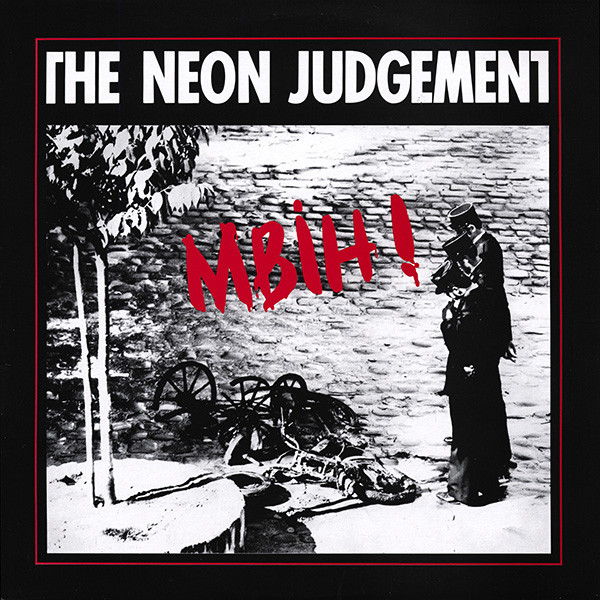
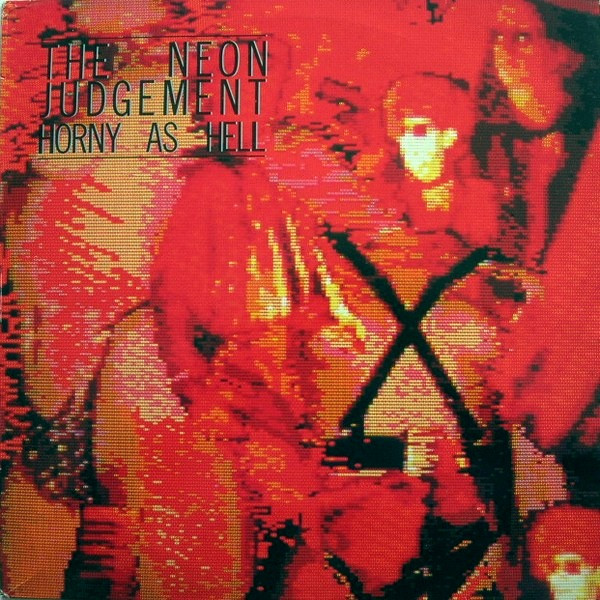
The shift came with records like MBIH! and Horny as Hell, where the band fully embraced a swaggering, greasy aesthetic that shouldn't have worked with sequencers. They brought in distorted guitars and a vocal delivery that owed more to Gene Vincent than Kraftwerk, creating a bizarre hybrid that became their signature. This period saw them moving away from the icy detachment of their peers toward a more aggressive, rhythmic drive. You hear it most clearly in the way the mechanical beats fight against the loose, swing-heavy guitar lines.
The Genre Blur
By the late 80s and early 90s, specifically around The Insult, the band started pulling in session players and experimenting with jazz and blues elements. This was a direct result of their desire to break out of the industrial ghetto, leading to a much thicker, more complex production style. While some of the raw energy was sacrificed for technical proficiency, it showed a band refusing to be a heritage act for the EBM crowd. The hardware got more expensive, the songs got longer, and the 'Digital' part of their identity started to compete with a much messier, human influence.
Influences
- Suicide — The band frequently cited Alan Vega and Martin Rev as the blueprint for the two-man-plus-machine setup. You hear it in the menacing, repetitive synth loops and TB Frank’s vocal affectations. They took the New York street-thug energy and rewired it for the Belgian club circuit.
- The Stooges — Dirk Da Davo has pointed to Iggy Pop’s raw, confrontational performance style as a primary motivator for their live shows. The influence isn't in the gear, but in the dirty, unpolished guitar tone and the refusal to keep the music 'clean' or polite. It’s the garage rock spirit forced through a sequencer.
- Kraftwerk — The Belgian scene was obsessed with the precision of the Dusseldorf masters, and The Neon Judgement used that clockwork foundation as their starting point. They took the rigid sequencing of Man-Machine and deliberately tried to break it with human error and distortion. It provided the skeletal structure for their early 808-heavy work.
- The Cramps — Their 'Digital Rockabilly' tag was a direct nod to the psychobilly revival led by Lux Interior and Poison Ivy. They covered 'TV Set' and lifted the swampy, reverb-drenched guitar atmosphere that defined the mid-80s records. It’s what kept them from sounding like just another coldwave synth band.
- The Velvet Underground — The band often referenced Lou Reed's urban storytelling and the use of drones as a major influence on their songwriting. You can hear the 'Sister Ray' DNA in their longer, hypnotic tracks where the repetition is the point. They traded the viola for a synthesizer but kept the same dark, art-damaged heart.
Discography
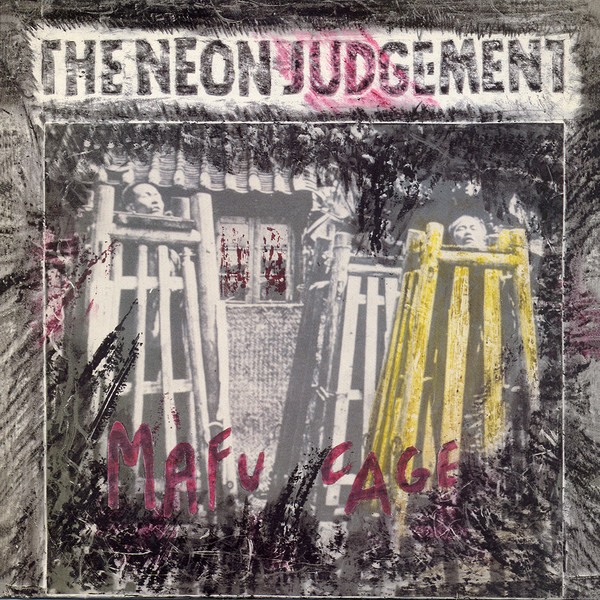
Their records — most-collected first.






Related artists
Around the web
Follow every record they touch.
Start your shelf and Gatefold tracks The Neon Judgement's new pressings, tour dates, and the whole discography — automatically.
Start your shelf →Free forever. Works with 10 records or 10,000.