
Artist
Morphine
Cambridge, United States · 1990 – 1999
Morphine is a music group from Cambridge, United States, active 1990–1999. Their discography on Gatefold includes 12 records.

12
Albums tracked
176
In collections
1990
Since
Biography
Mark Sandman ripped the strings off a Fender Precision bass until only two were left, tuned them to a sliding fifth, and decided that was enough to build a world. He wasn't looking for a wall of sound; he wanted the floor to drop out from under you. Dana Colley’s baritone sax didn’t just play melodies—it acted as the rhythm guitar, the lead, and the distorted atmosphere all at once. They didn't have a guitarist because Sandman knew a guitar would just get in the way of that low-end vacuum. They recorded the early stuff at Fort Apache in Cambridge with Paul Q. Kolderie and Sean Slade, the same duo who caught Radiohead’s 'Creep.' It was a Boston thing—dark, sweaty, and remarkably disciplined. Sandman ran his two-string bass through a Premier Twin-8 amp from the fifties, pushing that small speaker until it sounded like a ghost in a junk drawer. They caught lightning for three records before the major label money at DreamWorks tried to polish the grime off. It didn't work. The grit was the point.
Bio from The Clerk
The Arc of Morphine
The pivots — what forced Morphine to reinvent.
The Two-String Architecture
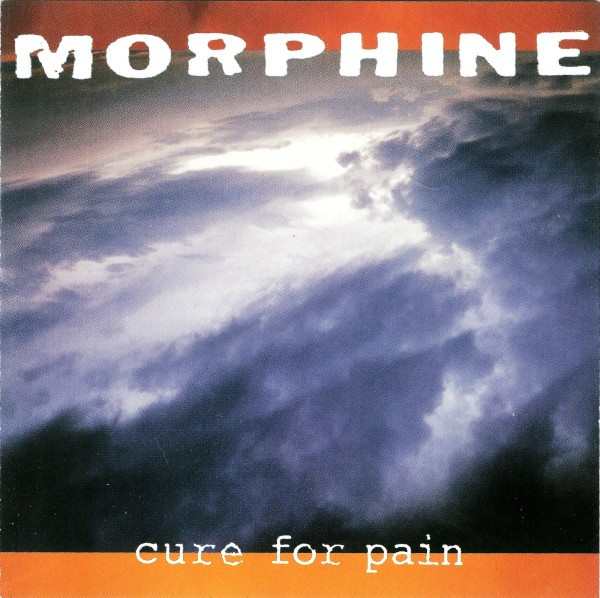
After Treat Her Right folded, Sandman stripped the gear down to the bone at his home studio, The Joint. He brought in Jerome Deupree to provide a jazz-inflected shuffle that didn't crowd the frequencies, creating a void for the slide bass to inhabit. Good and Cure for Pain are the documents of this discovery, where the lack of high-end frequencies makes every snare hit sound like a gunshot in an alleyway. It was a rejection of the grunge sprawl happening elsewhere in '93, opting for a noir minimalism that felt older than it actually was.
The Major Label Pivot
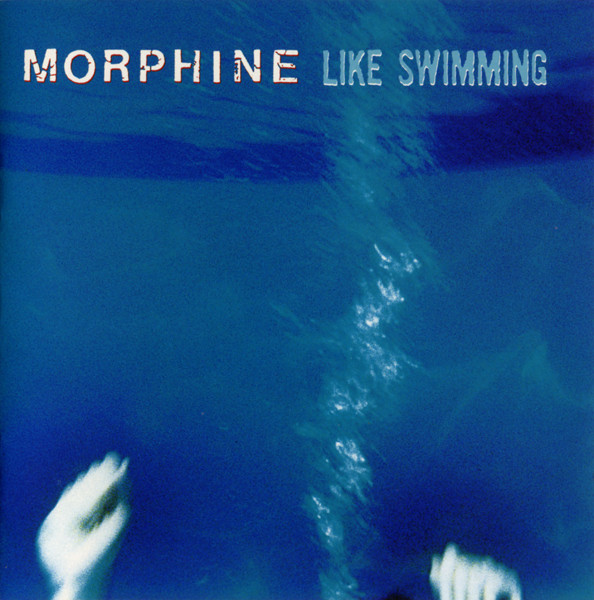
Moving to DreamWorks for Like Swimming meant better microphones and more time, but it also introduced a slicker separation in the mix that arguably tamed the beast. Billy Conway took over the throne permanently, bringing a more steady, rock-leaning punch to the kit that grounded Sandman's increasingly abstract lyrics. You can hear the struggle between their basement-tape origins and the demands of a high-fidelity studio on tracks like 'Early to Bed.' They were trying to grow the sound without losing the claustrophobia that made them famous, a balancing act that defined their final years.
The Palestrina Tragedy
The end came mid-set on a stage in Italy when Sandman’s heart gave out, leaving The Night as a posthumous final statement. The record features more layers—organs, strings, and female backing vocals—suggesting Sandman was finally ready to let the light into the room. It’s a dense, beautiful mess that feels like a map to a future the band never got to inhabit. Since then, Colley and Deupree have kept the flame alive in various configurations, but the original low-rock alchemy died in that Roman heat.
Influences
- Howlin' Wolf — Sandman cited the Wolf's raw, repetitive stomp as the blueprint for his 'low rock' philosophy. You hear it in the growl of the baritone sax, which mimics the grit of Wolf’s vocal delivery and the primal thump of Chess Records sessions.
- The Stooges — The band famously covered 'I Wanna Be Your Dog,' stripping away the fuzz guitar to reveal the song's skeletal, rhythmic obsession. They took Iggy's nihilism and replaced the high-speed chaos with a slow-motion, heroin-chic swagger.
- Tom Waits — Sandman shared Waits' obsession with junkyard percussion and the noir aesthetic of the beatnik underground. The DNA of records like Swordfishtrombones is all over Morphine’s structural oddities and Sandman’s lyrical focus on the losers and the late-night dwellers.
- Miles Davis — Dana Colley utilized a dual-sax technique inspired by the jazz avant-garde, but it was Miles’ 'Birth of the Cool' era that dictated the band's use of space. They understood that the notes you don't play are just as heavy as the ones you do.
- Link Wray — The menace in Sandman’s slide bass comes directly from Wray’s distorted, menacing guitar instrumentals like 'Rumble.' It’s about the attitude of the riff and the physical vibration of the speaker rather than technical wizardry.
Discography
Their records — most-collected first.






Related artists
Around the web
Follow every record they touch.
Start your shelf and Gatefold tracks Morphine's new pressings, tour dates, and the whole discography — automatically.
Start your shelf →Free forever. Works with 10 records or 10,000.