
Artist
Modern English
Colchester, United Kingdom · Formed 1979
Modern English is a music group from Colchester, United Kingdom, active since 1979. Their discography on Gatefold includes 10 records.

10
Albums tracked
50
In collections
1979
Since
Biography
Hugh Jones walked into the studio for the 'After the Snow' sessions and told the band to quit trying so hard to be scary. They were a 4AD band from Colchester who spent their first few years obsessed with feedback and jagged, industrial-adjacent post-punk. Jones stripped away the grit, dialed in the acoustic guitars, and pushed Robbie Grey to actually sing instead of barking over the noise. It was a calculated move away from the art-school darkness of their debut, and it gave them a hit that would eventually pay their mortgages for forty years. By the mid-80s, the wheels were coming off because the pressure to replicate that one massive pop moment was suffocating. They jumped to TVT and started making records that sounded like they were chasing a radio format that didn't want them anymore. 'Stop Start' was the breaking point where the original chemistry just evaporated. It took decades of being a legacy act before they realized that their best work happened when they were just five guys in a room leaning into their own nervous energy.
Bio from The Clerk
The Arc of Modern English
The pivots — what forced Modern English to reinvent.
The 4AD Post-Punk Purists
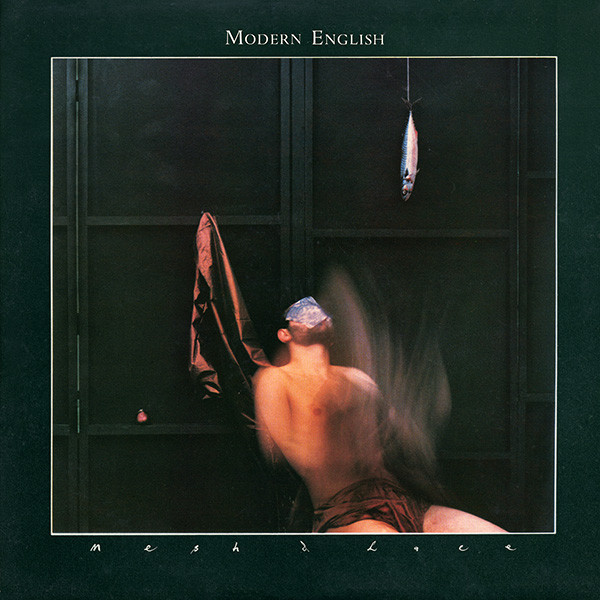
Before the radio hits, Modern English were part of the initial 4AD stable alongside Bauhaus and The Birthday Party. On their debut, 'Mesh & Lace', they used cold, flange-heavy guitars and abrasive rhythms to create something genuinely claustrophobic. It was a moment where the band prioritized atmosphere and dissonant textures over traditional hooks. You can hear the influence of the Colchester scene's bleakness in every jagged snare hit and shout.
The Hugh Jones Pivot
Producer Hugh Jones shifted the band’s focus from art-school noise to melodic clarity at Rockfield Studios. He introduced acoustic layering and more expansive, pastoral arrangements that softened their sharper edges without losing the melancholic core. This era birthed 'After the Snow' and 'Ricochet Days', arguably their creative peak where the synths and guitars finally found a symbiotic balance. It was a massive commercial gamble that transformed them from underground goths into new wave staples.
The Major Label Grind
The jump to Sire and later TVT saw the band lose their grip as the production became slicker and the songwriting felt forced. 'Stop Start' was a miserable experience that lacked the organic interplay of their early years, leading to a decade of breakups and revolving door lineups. They even re-recorded 'I Melt With You' in 1990 just to capitalize on the nostalgia cycle, a move that signaled the creative well had temporarily run dry. The focus shifted from innovation to survival in a changing industry.
The Original Five Reunion
After years of Robbie Grey touring with various backing musicians, the original lineup finally reconvened to reclaim their sound. They stopped trying to be a pop band and went back to the moody, driving post-punk roots that made 'Mesh & Lace' interesting in the first place. This late-stage revival resulted in 'Take Me to the Trees' and '1 2 3 4', records that sound remarkably vital because they stopped hiding the grey hair and the grit. It’s the sound of a band finally comfortable with their own history.
Influences
- Joy Division — Robbie Grey has frequently cited 'Unknown Pleasures' as the record that changed his perspective on how much space a song could occupy. You hear it in the early, propulsive basslines of Michael Conroy on 'Mesh & Lace'. They took the bleak, Manchester minimalism and brought it to the suburbs.
- Wire — The band’s early approach to 'clipped' songwriting and short, sharp shocks of noise was a direct byproduct of Wire's '154'. The rhythmic shifts and refusal to lean on traditional choruses on their first LP are straight out of the Colin Newman playbook. They shared a certain art-house detachment that defined the late-70s UK scene.
- David Bowie — Gary McDowell has credited the 'Berlin Trilogy' era of Bowie for the band's fascination with combining electronics with jagged guitar work. The textural experimentation on 'Low' provided the blueprint for how they used synthesizers as atmospheric tools rather than lead instruments. It gave them permission to be weird before they were catchy.
- The Velvet Underground — Like most of the 4AD roster, Modern English leaned on the VU's mastery of the drone and the steady, driving beat. You can hear the Cale-era influence in their longer, repetitive tracks where the tension builds through sheer persistence. It's that specific New York art-rock DNA filtered through a British rainy day.
- The Doors — Robbie Grey often points to Jim Morrison as his primary vocal influence for the darker, more baritone delivery found on their debut. The way Grey navigates the more psychedelic, rambling sections of their early live sets mirrors the theatricality of 'The Soft Parade'. It’s the bridge between 60s mysticism and 80s cynicism.
Discography
Their records — most-collected first.




Related artists
Around the web
Follow every record they touch.
Start your shelf and Gatefold tracks Modern English's new pressings, tour dates, and the whole discography — automatically.
Start your shelf →Free forever. Works with 10 records or 10,000.