
Artist
Miracle Legion
New Haven, United States · Formed 1983
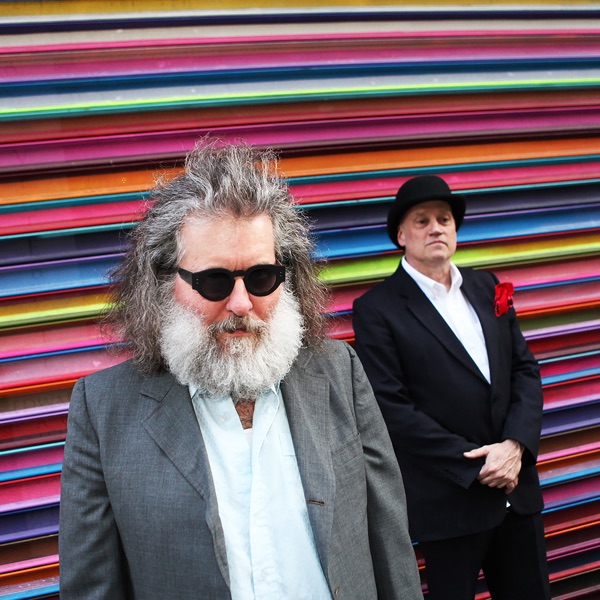
Miracle Legion is a music group from New Haven, United States, active since 1983. Their discography on Gatefold includes 6 records.
6
Albums tracked
15
In collections
1983
Since
Biography
Miracle Legion spent their entire run being called the American Smiths or the next R.E.M., which was a lazy cop-out by critics who couldn't handle New Haven jangle that had actual dirt under its fingernails. When they tracked The Backyard EP in 1984, they didn't have the luxury of Athens mythology or Morrisey's budget. It was just Mark Mulcahy's desperate, cracked vocal delivery and Ray Neal's acoustic-electric weave bouncing off the walls of a cheap studio. It was urgent, raw, and completely devoid of eighties synth bloat. Then the industry did what it always does to bands with a cult following: it choked them out. A disastrous deal with Morgan Creek Records put them in a multi-year legal headlock that killed their momentum right after the brilliant, stripped-down Me and Mr. Ray. By the time they escaped to release Portrait of a Damaged Family on Mulcahy's own label in '96, the alternative boom had already crested and receded. They didn't get rich, but they left behind a catalog of brilliant, bruised guitar pop that still sounds like a cold New England autumn.
Bio from The Clerk
The Arc of Miracle Legion
The pivots — what forced Miracle Legion to reinvent.
The Jangle Duo Spark
Before they were a full touring machine, the core of Miracle Legion was just Mark Mulcahy and Ray Neal operating out of Connecticut. The Backyard EP in 1984 caught college radio by storm because Neal's 12-string chimed like Johnny Marr but with a distinctly blue-collar, Northeast grit. This era was defined by minimal rhythm sections and raw space. You hear it in the title track's naked nostalgia, which relied on open chords and sheer emotional projection rather than studio trickery.
The Major Label Chokehold
Signing to Morgan Creek Records was supposed to be the big breakthrough, resulting in 1992's Drenched. Producer John Porter, famous for his work with The Smiths, was brought in to polish their sound for commercial alternative radio. While the record contains some of Mulcahy's strongest writing, the clean, big-budget production stripped away the nervous, home-cooked energy of their early Rough Trade releases. The ensuing legal battle with the label essentially froze the band in place for four crucial years.
The Indie Reclamation
After years of litigation, the band finally clawed back their freedom to release Portrait of a Damaged Family in 1996 on Mulcahy's own Mezzotint label. They didn't have major label cash anymore, so they recorded it in a loose, living-room atmosphere that brought back their original, unpolished charm. It was a victory lap that doubled as a swan song. The album has a ragged, bitter, yet beautiful warmth that proved they never needed the industry's validation in the first place.
Influences
- The Smiths — Ray Neal openly cited Johnny Marr's intricate, non-blues guitar work as a major blueprint for his own style. You can hear this direct influence in the swirling, arpeggiated guitar lines on 'The Backyard.' It's the same melodic, chime-heavy approach that Marr used to define eighties indie-pop.
- R.E.M. — The band toured with R.E.M. during the mid-eighties and shared a mutual admiration, with Michael Stipe publicly championing their early records. The influence shows up in the cryptic, poetic lyricism of Mark Mulcahy and the acoustic-electric drive of 'Butterflies.' Both bands shared a love for the underground folk-rock tradition.
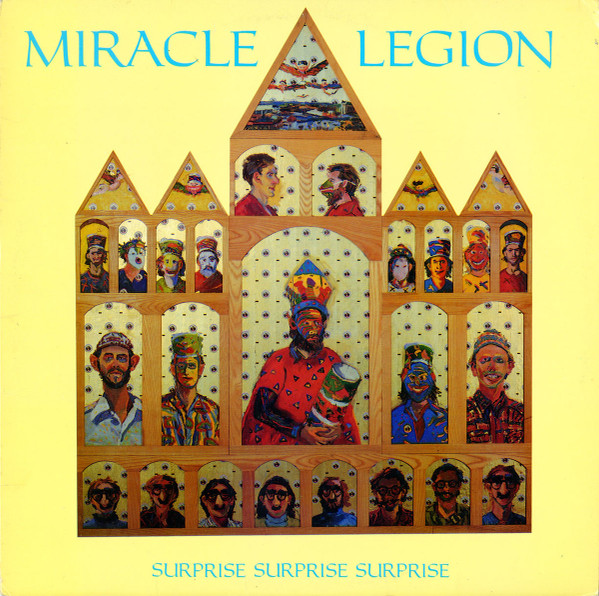
- The Byrds — The Byrds' pioneering use of the Rickenbacker 12-string guitar is the undisputed source code for Miracle Legion's guitar tone. You hear it all over 'Surprise Surprise Surprise,' where Ray Neal's clean, ringing chords mimic Roger McGuinn's folk-rock jangle. It's the absolute foundation of their sound.
- Bob Dylan — Mark Mulcahy has frequently referenced Dylan's phrasing and direct, narrative songwriting as a massive personal influence. On tracks like 'All for the Best,' Mulcahy's nasal, conversational delivery channels Dylan's mid-sixties storytelling style. It gave their jangle-pop a sharp, literary edge.
- The Velvet Underground — The band covered 'Femme Fatale' live and in the studio, pointing directly to Lou Reed's deadpan simplicity. The Velvet Underground's influence is felt in the darker, droning undertones of songs like 'Storyteller.' They took the pretty jangle and dragged it through the Velvets' gritty, street-level realism.
Discography
Their records — most-collected first.


Related artists
Around the web
Follow every record they touch.
Start your shelf and Gatefold tracks Miracle Legion's new pressings, tour dates, and the whole discography — automatically.
Start your shelf →Free forever. Works with 10 records or 10,000.