
Artist
Little Feat
Los Angeles, United States · Formed 1969
Little Feat is a music group from Los Angeles, United States, active since 1969. Their discography on Gatefold includes 24 records.

28
Albums tracked
295
In collections
1969
Since
Biography
Frank Zappa kicked Lowell George out of the Mothers of Invention for writing a song about weed, or maybe for being too good to be a sideman. It didn’t matter. George took Roy Estrada with him, grabbed Bill Payne and Richie Hayward, and tried to make a weirdo country-rock record that nobody bought. The first self-titled album is scruffy and smells like the desert, but it wasn't until George discovered the 11/16 time signature and New Orleans syncopation that the band actually found its pulse. By the mid-70s, they were the best session band in the world that happened to have their own name on the sleeve. Lowell was sliding a 11/16 socket wrench across his strings to get that sustain, creating a sound so slick it almost slid off the turntable. But the drugs and the ego-clashing turned the studio into a war zone. When Lowell died in '79, the heart stopped beating, and while the 80s comeback with Craig Fuller had its moments, it was a different machine entirely. The real shit is that five-year run where they were too funky for the folkies and too strange for the radio.
Bio from The Clerk
The Arc of Little Feat
The pivots — what forced Little Feat to reinvent.
The Neon Frontier
The early years were a identity crisis fueled by Zappa’s shadow and Warner Bros. not knowing how to market a band that sounded like a dusty radiator. On the first two records, you hear them trying to fit into the Laurel Canyon scene while Lowell George was busy sabotaging the folk-rock tropes with slide guitar parts that sounded like a car crash in slow motion. It was jagged, experimental, and lacked the grease that eventually made them famous. These sessions were the sound of a band learning how to breathe together before they decided to stop being polite.
The Chicken Shack Grease
Everything changed when Roy Estrada bailed for Captain Beefheart’s band and Kenny Gradney, Sam Clayton, and Paul Barrère stepped in. This was the birth of the second lineup, the one that actually mattered, where they traded the desert psych for a deep, swampy New Orleans pocket. Dixie Chicken is the pivot point where the rhythm section started playing behind the beat so far they were almost in the next room. It turned Little Feat into a funk band disguised as a rock group, defined by Clayton’s congas and Payne’s barrelhouse piano.
The Fusion Fracture
By 1975, the camaraderie was rotting from the inside as Bill Payne and Paul Barrère started leaning into jazz-fusion textures that Lowell George hated. The Last Record Album and Time Loves a Hero are the sound of a band pulling itself apart, with George’s gritty songwriting getting buried under slick, complex arrangements and polished production. You can hear the tension in the tracks—Lowell was showing up less, the songs were getting longer, and the grease was being replaced by studio gloss. It’s a technical marvel, but the dirt that made them special was being washed away by the minute.
Influences
- The Mothers of Invention — Lowell George and Roy Estrada were both members during the Burnt Weeny Sandwich era. You hear it in the weird time signatures and the refusal to play a straight blues shuffle. Zappa taught them that precision was a weapon.
- Howlin' Wolf — Little Feat covered 'Forty-Four Blues' on their debut and George constantly cited Wolf’s gravelly delivery as his vocal North Star. The sheer weight of that Chess Records stomp is the foundation for their heaviest grooves. It’s the grit beneath the slide work.
- Allen Toussaint — They recorded at Toussaint’s Sea-Saint Studios and basically tried to become his house band in spirit. The syncopated, second-line piano style of Bill Payne is a direct lift from Toussaint’s New Orleans arrangements. It’s why they sound more like Louisiana than Los Angeles.
- The Byrds — They shared a label and a scene, and the early Feat records were clearly trying to subvert the country-rock blueprints laid down by Sweetheart of the Rodeo. George took that high-lonesome sound and ran it through a distorted amp. It’s the California DNA they couldn’t fully escape.
- Muddy Waters — Lowell George’s slide style was a high-tech evolution of Muddy’s electric Delta blues. He took the basic language of the slide and added a compressor pedal to get that infinite, glass-smooth sustain. You don't get 'Sailin' Shoes' without Muddy's 'Rollin' and Tumblin' in the background.
Discography
Their records — most-collected first.
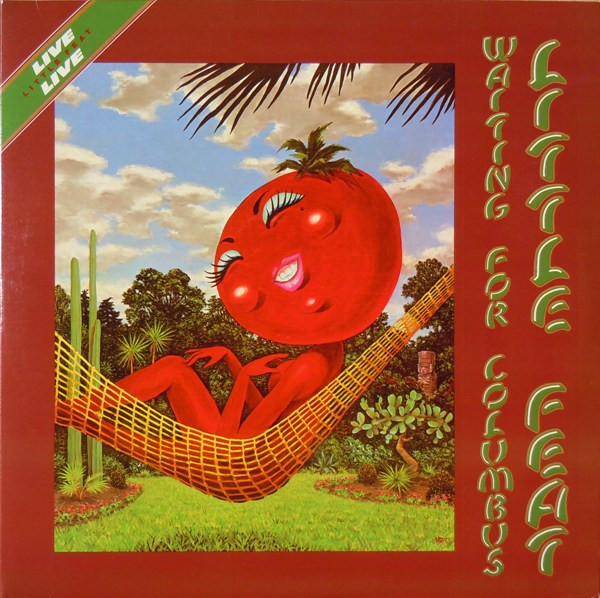
Waiting For Columbus
1978
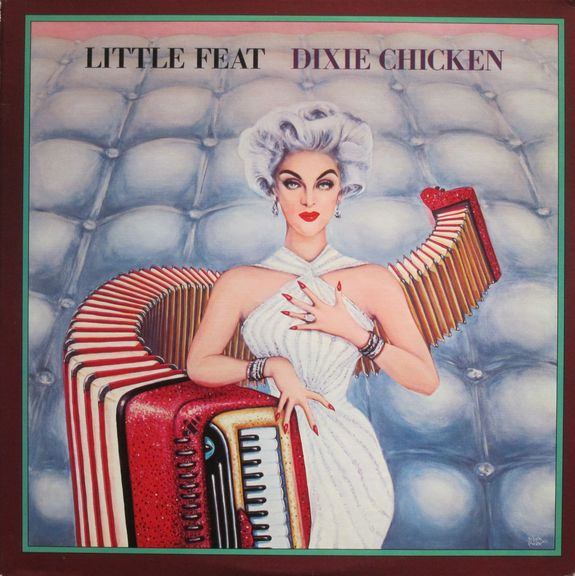
Dixie Chicken
1973
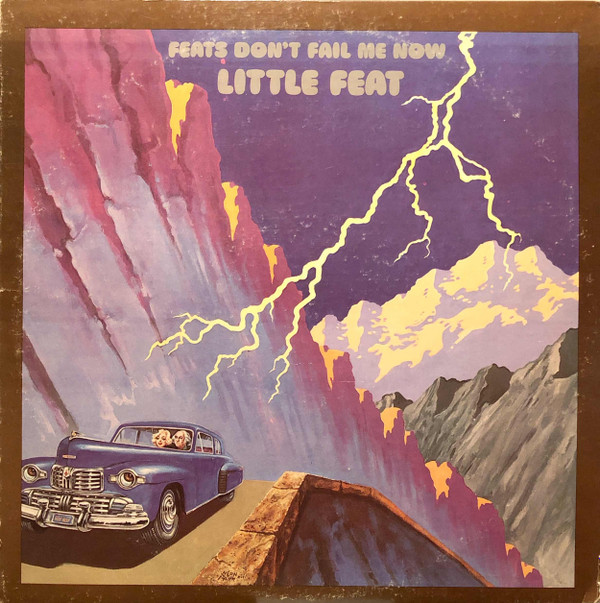
Feats Don't Fail Me Now
1974
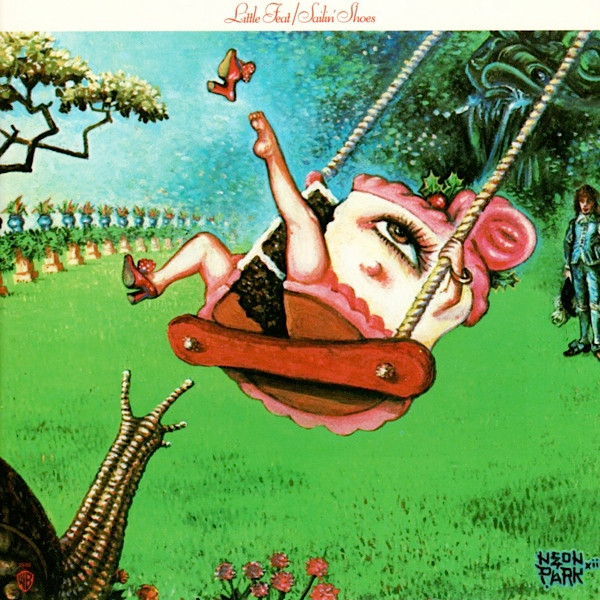
Sailin' Shoes
1972
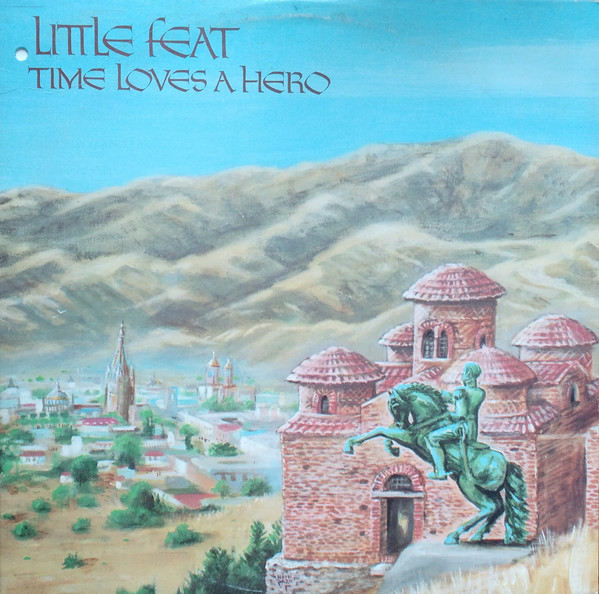
Time Loves A Hero
1977
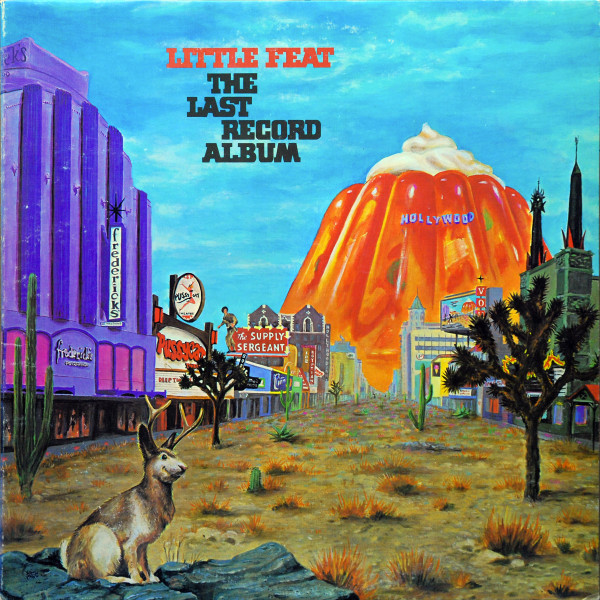
The Last Record Album
1975
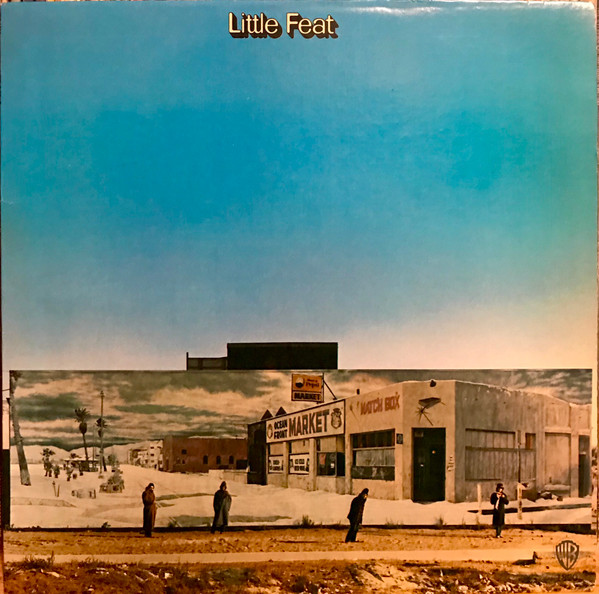
Little Feat
1971
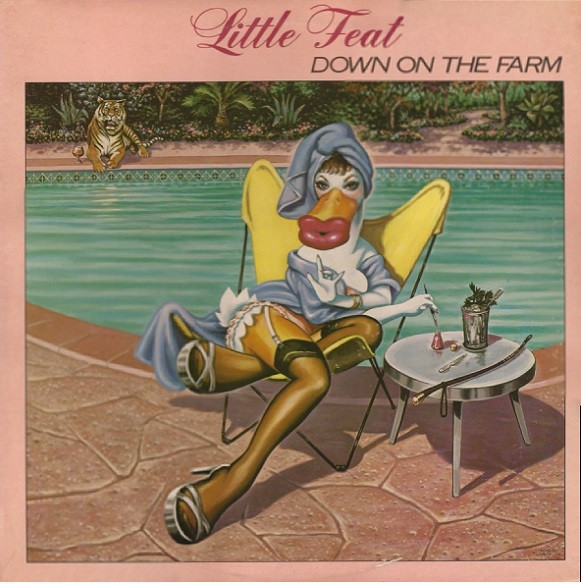
Down On The Farm
1979

Hoy-Hoy!
1981
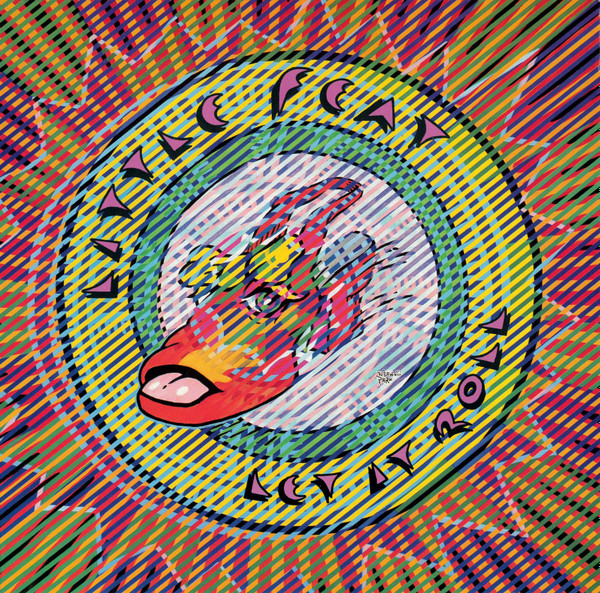
Let It Roll
1988

Electrif Lycanthrope Live At Ultra-Sonic Studios, 1974
2021
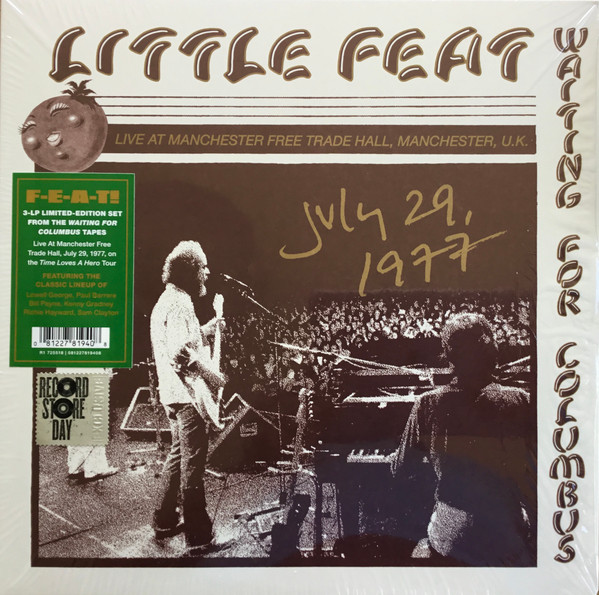
Live At Manchester Free Trade Hall, Manchester, U.K. July 29, 1977
2023

Representing The Mambo
1990
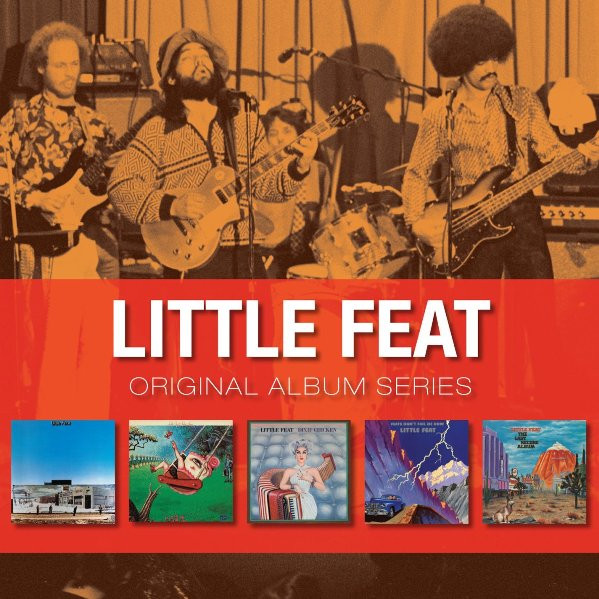
Original Album Series
2009

Under The Radar
1998

As Time Goes By: The Best Of Little Feat
1986

Strike Up The Band
2025

Highwire Act - Live In St. Louis 2003
2004

Chinese Work Songs
2000

Ain't Had Enough Fun
1995
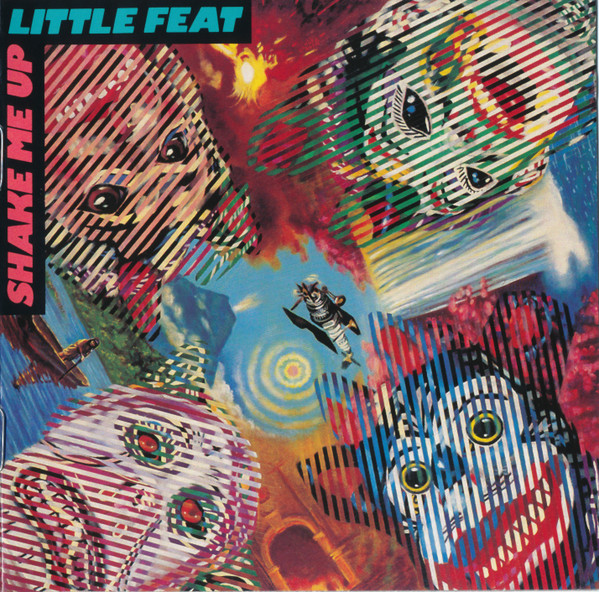
Shake Me Up
1991

2 Originals Of Little Feat
1975

Sam's Place
2024
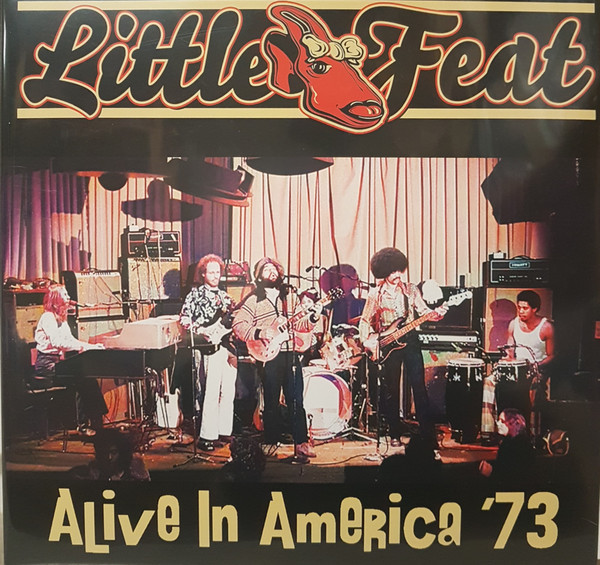
Alive In America '73
2023
Related artists
Around the web
Follow every record they touch.
Start your shelf and Gatefold tracks Little Feat's new pressings, tour dates, and the whole discography — automatically.
Start your shelf →Free forever. Works with 10 records or 10,000.