
Artist
Larry Norman
San Jose, United States · 1947 – 2008
Larry Norman is a musician from San Jose, United States, active 1947–2008. Their discography on Gatefold includes 24 records. They also recorded with People!.

37
Albums tracked
42
In collections
1947
Since
Biography
Larry Norman tracked his masterpiece Only Visiting This Planet at Trident Studios in London with George Martin's chief engineer, Ken Scott, twiddling the dials. Scott was literally fresh off engineering Hunky Dory and Ziggy Stardust for David Bowie. Norman didn't want the polite, acoustic strumming of typical church folk. He wanted the raw, theatrical glam rock shaking the UK charts, and he got it by hiring the same session guys who were playing with Elton John and Lou Reed. The result was a loud, brilliant contradiction: a guy singing about Jesus while his band kicked out filthy, T. Rex-style guitar hooks. He was too weird for the church crowd, who hated his long hair and bluesy grit. He was too preachy for the mainstream, who didn't want to hear about salvation between beer runs. That tension fueled his best work before ego and bad business decisions derailed his Solid Rock label in the late seventies. The back half of his massive catalog is a messy maze of bootlegs, self-released live tapes, and re-recordings that can scare off casual listeners. But those early seventies records remain some of the most fascinating, defiant rock and roll ever committed to tape.
Bio from The Clerk
The Arc of Larry Norman
The pivots — what forced Larry Norman to reinvent.
The Psychedelic Pop Prelude
Before going solo, Norman fronted the San Jose band People!, who scored a massive hit with a cover of the Zombies' 'I Love You' in 1968. The band was a tight, sun-drenched psych-pop outfit, but the ride ended when the other members embraced Scientology and tried to force Norman into the fold. Norman walked away right as Capitol Records was ready to push them to the next level. You can hear this era's heavy vocal harmonies and baroque structures bleeding directly into his first solo effort, Upon This Rock, in 1970.
The Trident Trilogy
Between 1972 and 1976, Norman relocated to London to record a trilogy of albums that defined his legacy, culminating in Only Visiting This Planet and So Long Ago the Garden. Working with Ken Scott at Trident Studios allowed him to bypass the low-budget, amateur production that plagued American Christian music. He utilized world-class session players like John Wetton and B.J. Cole, creating a lush, sneering glam-rock sound that was utterly distinct from his peers. The songs were sharp, satirical, and production-wise, they stood shoulder-to-shoulder with the best art-rock of the era.
The Blues-Rock Split
By 1981, Norman's label Solid Rock had imploded amidst financial disputes and personal fallouts with artists like Randy Stonehill. He retreated to a raw, stripped-down blues-rock style for the album Something New Under the Son, which abandoned the grand orchestration of his London days for dusty, slide-guitar-driven roadhouse rock. The record was recorded on a shoestring budget and sounded like it was tracked in a garage. This marked his permanent transition into the independent wilderness, far away from the polished contemporary Christian music industry he had accidentally helped create.
Influences
- The Beatles — Norman openly obsessed over their vocal arrangements and production styles, even tracking his early solo material in their style. You hear this directly on the track 'Reader's Digest' from Only Visiting This Planet, which is a frantic, direct homage to the medley structure of Abbey Road. His use of dry, close-miked drums and sudden tape edits mirrors Geoff Emerick's engineering work.
- Bob Dylan — Norman adopted Dylan's nasal, half-spoken vocal delivery and sharp, cynical lyricism to deliver his messages. The sprawling, wordy arrangement of 'Great American Novel' is a direct lift of Dylan's mid-sixties protest folk style. Norman took Dylan's template of the poetic street preacher and simply substituted the politics for theology.
- The Rolling Stones — Norman frequently cited the Stones as the benchmark for rock swagger and used their greasy, blues-based rhythm section as a template for his rock tracks. On 'Why Should the Devil Have All the Good Music?', the driving piano and loose, chucking guitar riffs are modeled directly after Sticky Fingers-era Keith Richards. He wanted that same dangerous, alcohol-soaked groove in his spiritual tracks.
- The Beach Boys — During his tenure in the band People!, Norman worked directly within the California vocal-harmony tradition pioneered by Brian Wilson. You can hear those complex, multi-part vocal stacks on early tracks like 'I Am a Servant' and 'The Uniform.' Norman used these sweet, sunshine-pop harmonies to sugarcoat his otherwise biting, apocalyptic lyric sheets.
- Elvis Presley — Norman saw Elvis perform live in the fifties, an experience he credited with showing him how music could move a crowd through sheer physical presence. He copped Presley's dramatic vocal hiccups and rockabilly phrasing on early cuts like 'Baby's Got the Blues.' It was Elvis's late-fifties gospel records that convinced Norman that sacred lyrics could coexist with a heavy rhythm section.
Larry Norman — solo
Their records — most-collected first.

So Long Ago The Garden
1973

Something New Under The Son
1981

Only Visiting This Planet
1972

Street Level
1970
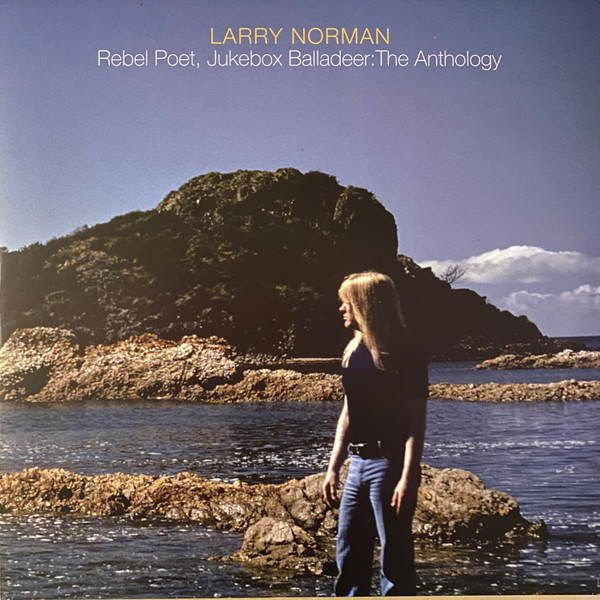
Rebel Poet, Jukebox Balladeer: The Anthology
2008
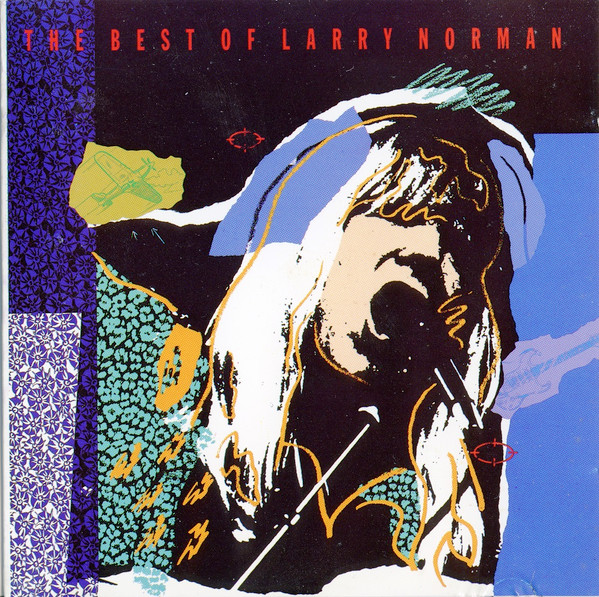
The Best Of Larry Norman
1990

Home At Last
1989

Down Under But Not Out
1986

Bootleg
1972

Upon This Rock
1970

LN UK 77
2023

One Night In Norway - 1991
2023

Live At Flevo
1990

Stop This Flight
1986

Rehearsal 4 Reality
1986

Quiet Night
1984

The Story Of The Tune
1983

Come As A Child
1983

Larry Norman And His "Friends On Tour"
1981

The Israel Tapes
1980

Roll Away The Stone (And Listen To The Rock)
1980

Larry Norman
1977

Streams Of White Light Into Darkened Corners (Part One)
1977

In Another Land
1976
People!
A project Larry Norman was part of.


Related artists
Frequent collaborators
Around the web
Follow every record they touch.
Start your shelf and Gatefold tracks Larry Norman's new pressings, tour dates, and the whole discography — automatically.
Start your shelf →Free forever. Works with 10 records or 10,000.