
Artist
L7
Los Angeles, United States · Formed 1985
L7 is a music group from Los Angeles, United States, active since 1985. Their discography on Gatefold includes 19 records.

19
Albums tracked
107
In collections
1985
Since
Biography
Donita Sparks and Suzi Gardner were already running around Echo Park with fuzzy guitars before the term 'grunge' became a marketing hook. They spent the late 80s as the odd ones out on Epitaph—a metal-adjacent punk band with a dual-guitar attack that was too heavy for the skate punks and too dirty for the hair metal crowd. By the time they recorded Bricks Are Heavy with Butch Vig, they weren't just some novelty; they were a goddamn tank. Vig brought the same compressed, radio-ready polish he gave Nirvana, but L7’s sludge was harder to sanitize, which is why that record still sounds like a brick to the teeth. The industry tried to paint them as a Riot Grrrl act, but that was bullshit. They were a rock and roll band, plain and simple, more interested in the Stooges and Motorhead than manifestos. While the media obsessed over the shock tactics—like the tampon incident at Reading or the raffle for a vasectomy—they were quietly one of the tightest rhythmic units in the country. Dee Plakas is the most underrated drummer of that entire decade, providing a massive, behind-the-beat swing that kept their dirges from getting stuck in the mud.
Bio from The Clerk
The Arc of L7
The pivots — what forced L7 to reinvent.
The Epitaph Lean Years
Before the major label frenzy, L7 was grinding it out on Epitaph with a self-titled debut produced by Brett Gurewitz that sounds more like a chaotic garage session than a polished punk record. Roy Koutsky was still on drums then, giving the band a faster, almost thrashy edge that they would eventually trade for a slower, heavier groove. You can hear the raw friction of a band trying to find their footing while being surrounded by the upbeat SoCal hardcore scene, making them the black sheep of the label from day one.
The Butch Vig Polish
Everything changed when they signed to Slash and hooked up with Butch Vig at Smart Studios to track Bricks Are Heavy. Vig took the muddy basement sound of their early years and tightened the screws, layering the guitars into a massive wall of fuzz that actually worked on commercial radio. This was the moment Jennifer Finch’s distorted bass lines became the literal backbone of their sound, turning 'Pretend We're Dead' into a global anthem that bridged the gap between underground slime and stadium rock.
The Post-Grunge Hangover
By the time The Beauty Process arrived in '97, the scene was dying and Jennifer Finch had walked out during the sessions, leaving the band to finish the record as a trio. They brought in Joe Barresi to engineer, leaning into a darker, more lo-fi aesthetic that felt like a deliberate retreat from the gloss of the mid-90s. It’s a bitter, heavy record that sounds like a band tired of the industry circus, trading the pop hooks for a gritty, mid-tempo trudge that reflected the exhaustion of a decade on the road.
Influences
- The Stooges — Suzi Gardner has repeatedly cited Raw Power as the blueprint for her guitar tone. You hear it in the relentless, three-chord down-strokes and the unhinged, distorted soloing that defines 'Shove.' They took the Iggy Pop school of nihilism and applied it to 90s sludge.
- The Ramones — The band famously covered 'Suzy Is a Headbanger' and borrowed their entire sense of rhythmic economy from the Forest Hills four. L7 stripped away the bloated solos of 80s metal in favor of the Ramones' rapid-fire delivery and deadpan humor. It’s the difference between showing off and just hitting the strings as hard as possible.
- The Runaways — Joan Jett eventually produced and played on L7 tracks because the lineage was so obvious. You hear it in the gang-vocal choruses and the 'us against the world' gang mentality that Lita Ford and Joan Jett established in the 70s. They were the spiritual heirs to that Sunset Strip gutter-rock crown.
- Black Sabbath — L7 leaned into the tritone and the slow-motion riffage that most punk bands were too scared to touch. Songs like 'Wargasm' owe everything to Tony Iommi’s heavy, tuned-down sludge. They were one of the few bands in the 90s who understood that playing slow could be more aggressive than playing fast.
- Motörhead — The band’s obsession with road-worn rock and roll and Lemmy’s distorted bass tone is baked into their DNA. Donita Sparks frequently pointed to Motörhead as the benchmark for a band that never compromised their grit for a trend. The sheer volume and grease of their live show is a direct descendant of the Bomber tour era.
Discography
Their records — most-collected first.

Bricks Are Heavy
1992

Hungry For Stink
1994
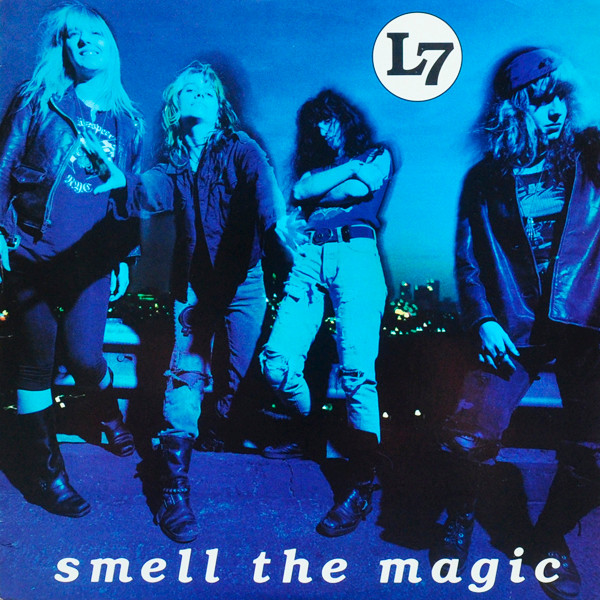
Smell The Magic
1990

L7
1988

The Beauty Process: Triple Platinum
1997

The Best Of L7 - The Slash Years
2000
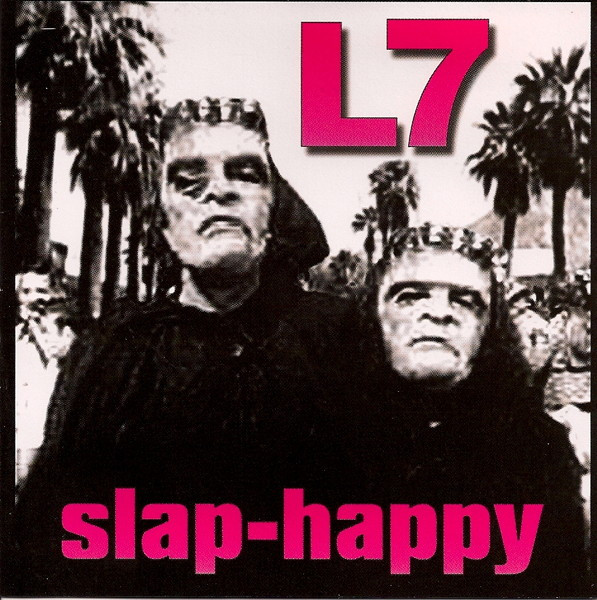
Slap-Happy
1999

Pretend We're Dead
1992

Shove b/w Packin' A Rod
1990

Wargasm (The Slash Years 1992-1997)
2021

Everglade
1992

Fake Friends
2020

Scatter The Rats
2019

Stuck Here Again
1994

Monster
1992

Detroit
2018

Wireless
2016

Hollywood Palladium
2014

Live. Omaha To Osaka
2000
Related artists
Around the web
Follow every record they touch.
Start your shelf and Gatefold tracks L7's new pressings, tour dates, and the whole discography — automatically.
Start your shelf →Free forever. Works with 10 records or 10,000.