Artist
Kiki Hitomi
Kiki Hitomi is a musician. Their discography on Gatefold includes 1 record. They also recorded with WaqWaq Kingdom, King Midas Sound and Black Chow.

7
Albums tracked
8
In collections
—
Since
Biography
She didn't show up looking for polite crossover appeal. Kiki Hitomi cut her teeth in mid-2000s London running low-end frequencies through blown-out PA systems, yelling over breakcore grit and sub-bass terror alongside Gorgonn in Dokkebi Q. It was harsh, unvarnished noise tailored for sweatbox basement sessions. When Kevin Martin drafted her into King Midas Sound alongside Roger Robinson, her voice stopped acting as a battering ram and became a smoky, melancholic drift over suffocating analog reverb. She proved right away that you don't need to project at top volume to completely own a room drowned in low-end. The real left turn came after packing up for Berlin and linking up with Jan Gleichmar, the mastermind behind the 8-bit dub outpost Jahtari. Instead of recycling standard roots tropes or chasing UK club trends, Hitomi cracked open the 1950s postwar Japanese songbook and fed traditional enka melodies into chiptune samplers and vintage digital delays. The result was raw, unpretentious, and completely out on its own limb. She treats Commodore 64 bleeps, King Tubby tape echo, and dramatic Showa-era vocal vibrato like they belonged on the exact same corner.
Bio from The Clerk
The Arc of Kiki Hitomi
The pivots — what forced Kiki Hitomi to reinvent.
Enka Dub Mastery
Relocating to Berlin unlocked a hybrid style nobody else was crazy enough to try. Working closely with Disrupt at Jahtari headquarters, she recorded the 2016 full-length Karma no Kusari, bridging Showa-era Japanese minor-key melodrama with 80s Casio dancehall and 8-bit chip music. It wasn't pastiche; it sounded like vintage Tokyo radio pulled straight through a Kingston echo chamber, featuring a posthumous drop from The Spaceape. That record remains a singular, brilliant anomaly in modern bass culture.
Influences
- Masaaki Hirao — Hitomi explicitly drew from postwar Japanese pop and kayokyoku pioneers, even recruiting Hirao to appear on Karma no Kusari. You can hear his classic melodic framing anchoring her phrasing on cuts like 'Pink No Kimono.' It gave her left-field digital dub an undeniable Showa-era backbone.
- King Tubby — The entire foundation of her solo and collaborative work leans on the space, dropouts, and spring reverbs invented at 18 Dromilly Avenue. Listen to the tape flutter and sudden bottom-end pulls on 'Yellow Bamboo.' She treats Kingston sound-system engineering like standard grammar.
- Hibari Misora — Hitomi cited the golden age of enka as the primary vocal model for her Berlin work. The deliberate vibrato and tragic, longing inflections on Karma no Kusari pull directly from Misora's legendary mid-century playbook. It's theatrical torch-song discipline dropped right into an 8-bit rhythm track.
- Prince Jammy — Before King Jammy went full digital with the Sleng Teng riddim, his stripped-back Casio-and-delay mixing rewired Jamaican studios. Hitomi and Disrupt build their sound around the very same punchy, plastic drum machine presets on Karma no Kusari. It's 1985 sound clash minimalism pushed to its logical extreme.
- The Bug — Kevin Martin wasn't just a bandmate in King Midas Sound and Black Chow; his sound design fundamentally altered how she approached bass frequencies. You hear his brutalist, room-shaking weight behind her vocals on their 2013 collaborative single 'Freakshow.' He taught her how to sit calm right in the middle of total low-end devastation.
Kiki Hitomi — solo
Their records — most-collected first.
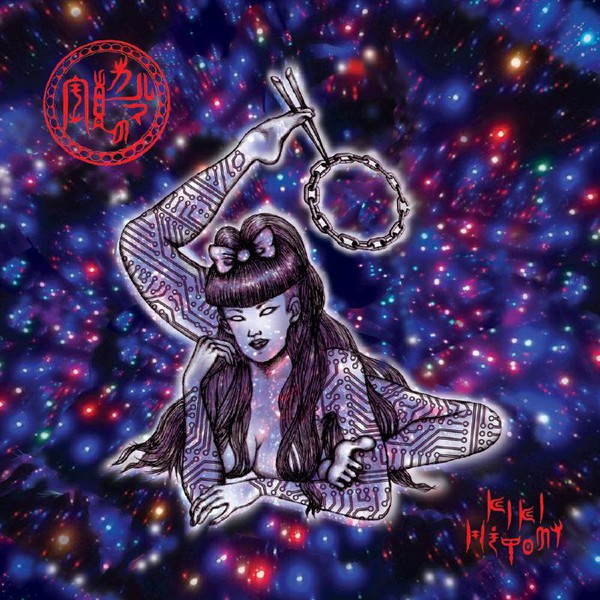
WaqWaq Kingdom
A project Kiki Hitomi was part of.


King Midas Sound
A project Kiki Hitomi was part of.


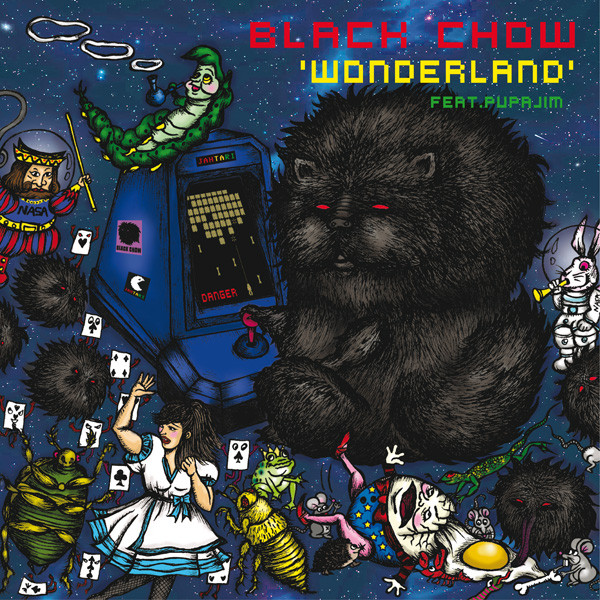
Black Chow
A project Kiki Hitomi was part of.
Related artists
More projects
Frequent collaborators
Around the web
Follow every record they touch.
Start your shelf and Gatefold tracks Kiki Hitomi's new pressings, tour dates, and the whole discography — automatically.
Start your shelf →Free forever. Works with 10 records or 10,000.