
Artist
Jonathan Larson
White Plains, United States · 1960 – 1996
Jonathan Larson is a musician from White Plains, United States, active 1960–1996. Their discography on Gatefold includes 3 records.

3
Albums tracked
4
In collections
1960
Since
Biography
Larson ran electric cables from a backroom closet into an unheated SoHo loft just to power a couple of cheap synthesizers and an old cassette recorder. That was the setup. Broadway in the late eighties was choking on British megamusicals and sterile orchestrations, while this guy was waiting tables at the Moondance Diner and trying to wedge Kurt Cobain and the Police into traditional song structures. He had no safety net, no massive production budget, and no patience for theatre that ignored people dying on his block. The tragedy is almost too neat for the suits: the man collapsed from an aortic aneurysm on January 25, 1996, the night before the first off-Broadway preview of his life's work. He never saw the Tonys, the Pulitzer, or DreamWorks bankrolling the two-disc cast recording. What survives is a raw, jagged, borderline-desperate bridge between garage rock and show tunes that caught lightning in a bottle precisely because it was written on borrowed time.
Bio from The Clerk
The Arc of Jonathan Larson
The pivots — what forced Jonathan Larson to reinvent.
The Downtown Breakthrough
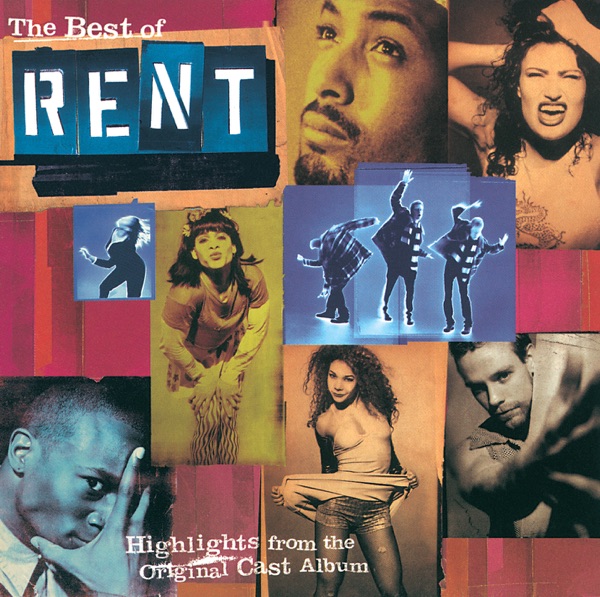
After years of burning his hands on diner grills and pitching sci-fi projects nobody would fund, Larson dropped everything to write an update of Puccini set in the Alphabet City squatters' scene. He paired distorted guitar leads with gospel belts, capturing the grief and defiance of the East Village during the peak of the AIDS crisis. The payoff arrived right as he died, resulting in the massive 1996 release of Rent by DreamWorks Records. You hear the sheer, frantic momentum on tape: a cast shouting over feedback like their lives depended on every single bar.
The Posthumous Monologue
Five years after his death, playwright David Auburn took Larson's old solo rock monologue from 1990 and retrofitted it for a three-person cast. The resulting off-Broadway cast album for tick, tick... BOOM! hit shelves in 2001 via RCA Victor, revealing the composer's terrified, funny, ticking-clock anxieties about turning thirty without making it. Stripped of the massive ensemble noise of Rent, the arrangements zero in on tight pop hooks and Stephen Sondheim neuroses. It proved the guy wasn't just a one-off Broadway phenomenon, but a sharp pop craftsman working through existential dread.
From Basement Demos to the Canon
Archivists and theatre lifers spent the next two decades digging through Larson's cassette tapes and forgotten files to prove there was a deeper vault. In 2007, PS Classics put out Jonathan Sings Larson, letting people finally hear his raw home-computer keyboard demos and strained, earnest vocals without Broadway gloss. That thread led straight to 2019's The Jonathan Larson Project, where Charlie Rosen and Jennifer Ashley Tepper arranged cut songs and abandoned projects like Superbia. By the time the 2021 tick, tick… BOOM! film soundtrack dropped with big studio backing, his personal demo tape aesthetic had been fully canonized into the modern theatre playbook.
Influences
- Stephen Sondheim — Larson submitted work to Sondheim early on, receiving encouraging letters and mentorship that kept him from quitting. You hear the hyper-dense, complex interior rhymes and metric anxiety running underneath every pop hook in tick, tick... BOOM! Even when Larson was trying to rock, he was building engines the way Sondheim taught him.
- The Who — Larson cited Pete Townshend's Tommy as the hard proof that rock dynamics and ambitious narrative arcs could survive on the same stage. You hear it across Rent in the aggressive power chords, open guitar voicings, and the raw rock-opera drive of tracks like 'One Song Glory.' Townshend gave him the license to play theatre songs loud as hell.
- Billy Joel — Larson's keyboard playing relied on the driving, percussive left-hand rhythms Joel made famous across seventies FM radio. Songs like 'Why' and 'Louder Than Words' rely entirely on that piano-man storytelling cadence and propulsive pop-rock chord changes. It grounded his work in pure, accessible American pop songwriting.
- The Police — Larson routinely cited Stewart Copeland and Sting's post-punk band as one of his primary modern listening obsessions while building his rhythm section arrangements. The jittery hi-hat patterns and dub-influenced bass movement turn up directly across 'You'll See' and 'Rent.' He ripped the punchy, tight rhythm section of late-seventies new wave and dragged it onto a stage.
- Giacomo Puccini — Larson explicitly lifted the entire dramatic skeleton, character dynamics, and thematic beats of Rent directly from Puccini's 1896 opera La Bohème. He even lifted the melody of 'Musetta's Waltz' directly into the guitar solo of 'La Vie Bohème.' It was the classical blueprint he spent half a decade translating into downtown Manhattan street noise.
Discography
Their records — most-collected first.


Related artists
Frequent collaborators
Around the web
Follow every record they touch.
Start your shelf and Gatefold tracks Jonathan Larson's new pressings, tour dates, and the whole discography — automatically.
Start your shelf →Free forever. Works with 10 records or 10,000.