
Artist
John Hartford
New York City, United States · 1937 – 2001
John Hartford is a musician from New York City, United States, active 1937–2001. Their discography on Gatefold includes 21 records.

21
Albums tracked
30
In collections
1937
Since
Biography
John Hartford was a goddamned steamboat pilot trapped in a Nashville songwriter’s body. He walked into RCA in 1967 and handed them 'Gentle on My Mind,' which Glen Campbell turned into a massive retirement fund for John, but the suits didn't know what to do with the man himself. He was too weird for the Opry and too clean for the hippies at first, spending those early years recorded with excessive Nashville polish that almost smothered his idiosyncratic timing and dry-as-dust wit. He eventually realized that he could use that royalty money to stop playing the industry game entirely. He bought his freedom, grew the beard, and ditched the session orchestras for a bunch of long-haired virtuosos. He stopped caring about the charts and started caring about the river and the fiddle, proving that you could be a traditionalist and a total freak at the exact same time without compromising a single note.
Bio from The Clerk
The Arc of John Hartford
The pivots — what forced John Hartford to reinvent.
The RCA Nashville Straightjacket
From 1967 to 1970, RCA tried to market Hartford as a standard-issue folk-pop crooner with high-gloss production on records like Earthwords & Music. You can hear him fighting the arrangements, trying to slip his riverboat cadence past producers who wanted him to be the next big crossover act. He was writing hits for everyone else while his own albums were buried under strings and corporate expectations. The money from the Glen Campbell cover gave him the leverage to finally walk away from the Nashville assembly line.
The Aereo-Plain Shift
In 1971, Hartford moved to Warner Bros. and hooked up with producer David Bromberg, Vassar Clements, and Tut Taylor to record Aereo-Plain. This wasn't just a record; it was the birth of Newgrass, recorded live-to-tape with a loose, hazy atmosphere that let the players breathe. You hear it in the way they mess with bluegrass structures, injecting humor and a hippie sensibility that terrified the traditional bluegrass gatekeepers. It’s the sound of a man finally breathing the air he wanted to breathe.
The Solo River Studies
By the mid-70s on albums like Mark Twang, Hartford stripped everything back to just his voice, a fiddle or banjo, and a plywood board to dance on for percussion. He became obsessed with the history of the Illinois and Mississippi rivers, turning his discography into a living archive of riverboat lore. This was the most honest version of John, using a single mic to capture the rhythmic foot-tapping that defined his live sets. He stopped chasing the industry entirely and became the river’s unofficial historian.
Influences
- Earl Scruggs — Hartford frequently cited Scruggs as his primary gateway into the banjo, even interviewing him later in life to document his technique. You hear it in the precision of Hartford's three-finger roll, which remained the bedrock of his playing even when he went off the rails into experimental territory. He took the Scruggs foundation and applied it to songs about back-alley Nashville and riverboat engines.
- Pete Seeger — Hartford grew up listening to Seeger’s records and later performed with him, inheriting that specific brand of populist storytelling. You hear it in the way Hartford treats his audience as participants rather than just consumers. Seeger taught him that a song could be a historical document and a tool for social connection simultaneously.
- Uncle Dave Macon — The vaudevillian energy of Uncle Dave Macon is all over Hartford’s live performances and his 1970s solo output. Like Macon, Hartford wasn't afraid to be a clown or a dancer while playing world-class banjo. He channeled that old-time Grand Ole Opry showmanship into something that felt modern and slightly dangerous.
- Ed Haley — Hartford spent the end of his life obsessed with this blind fiddler, eventually recording a massive multi-volume tribute to him. You hear Haley’s influence in the specific, crooked phrasing of Hartford’s later fiddle work. He didn't just cover the tunes; he tried to inhabit Haley's technical DNA to keep a dying style of playing alive.
- Benny Martin — Martin was the guy who taught Hartford how to play the 'tiptoe' fiddle style and was a constant reference point in Hartford's instructional talk. The swing and the rhythmic drive in Hartford's bowing are direct descendants of Martin’s hot-fiddling approach. It’s that percussive attack that allowed John to carry a whole stage by himself with just one instrument.
Discography
Their records — most-collected first.
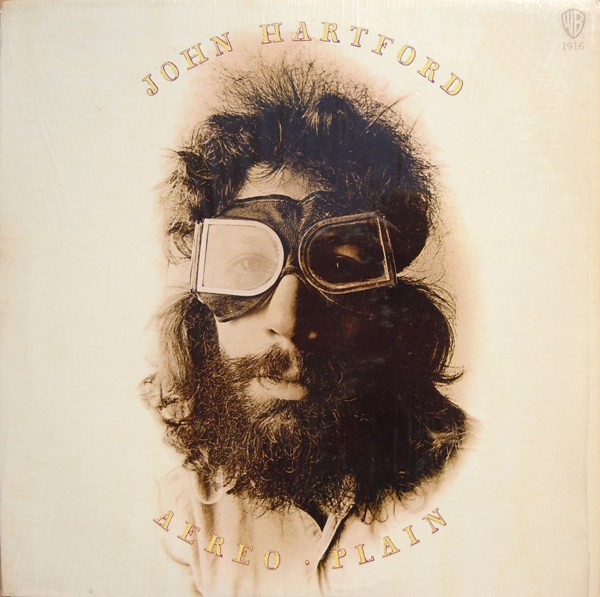
Aereo-Plain
1971

Mark Twang
1976

The Love Album
1968

John Hartford
1969

You And Me At Home
1980

Slumberin' On The Cumberland
1979
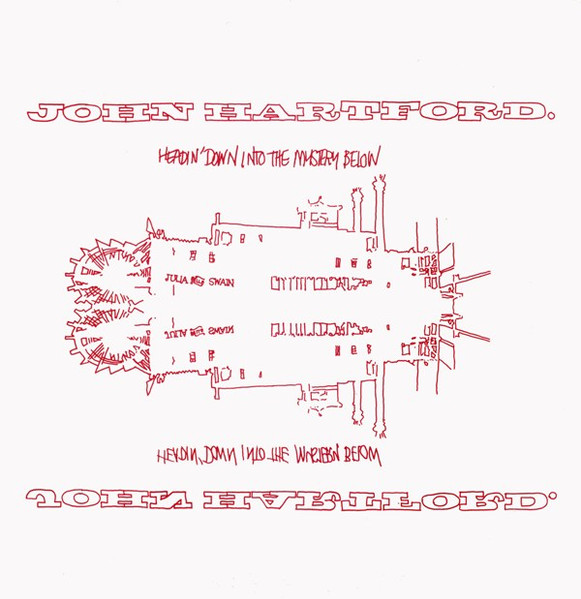
Headin' Down Into The Mystery Below
1978

All In The Name Of Love
1977

"Gentle On My Mind" And Other Originals By John Hartford
1968

Gum Tree Canoe
1984

Nobody Knows What You Do
1976

Hartford, Rice & Clements
2011

Steam Powered Aereo-Takes
2002

The Walls We Bounce Off Of
1994

Hartford & Hartford
1991

Down On The River
1989

Annual Waltz
1987

Morning Bugle
1972

Earthwords & Music
1967

John Hartford Looks At Life
1967

Catalogue
Related artists
Around the web
Follow every record they touch.
Start your shelf and Gatefold tracks John Hartford's new pressings, tour dates, and the whole discography — automatically.
Start your shelf →Free forever. Works with 10 records or 10,000.