
Artist
Heems
rapper from NYC
Queens, United States · b. 1985
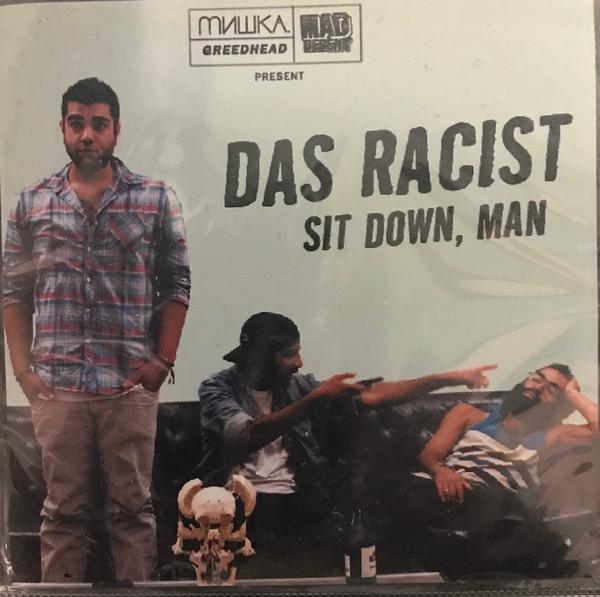
Heems is a musician from Queens, United States, active since 1985. Their discography on Gatefold includes 1 record. They also recorded with Das Racist.

4
Albums tracked
13
In collections
1985
Since
Biography
Himanshu Suri was burning out on Wall Street before he started uploading joke-rap MP3s recorded on cheap laptop mics. Das Racist blew up on the back of internet irony, but the joke hid a razor-sharp post-colonial critique that most critics completely missed because they were too busy laughing at 'Combination Pizza Hut Taco Bell.' When that partnership fell apart in a mess of money disputes and canceled shows, he was left with the wreckage of a hype cycle and a massive substance abuse problem. He fled to Bombay to record Eat Pray Thug, tracking his vocals in a haze of raw anxiety and cultural displacement. Heems isn't interested in pristine vocal booths or polished pop hooks. His best work sounds like a guy yelling over a chaotic street market while a drone beat loops on an old MPC. It is messy, political, and completely unbothered by what the mainstream rap establishment thinks of it.
Bio from The Clerk
The Arc of Heems
The pivots — what forced Heems to reinvent.
The Post-Internet Hangover
After Das Racist abruptly split on stage in Munich, Suri retreated to his solo tapes, dropping Wild Water Kingdom in late 2012. He brought in producers like Harry Fraud and Beautiful Lou to anchor his stream-of-consciousness rants about gentrification and post-9/11 paranoia. You can hear the transition from internet prankster to exhausted cynic right here. The beats are murky, the jokes are darker, and the humor starts to feel like a defense mechanism.
The Bombay Exorcism
Suri went to India to dry out and write Eat Pray Thug, his official studio debut. Released in 2015, the record was produced by Dev Hynes and board veteran Gordon Voidwell, giving the tracks a jagged, art-pop edge. It was billed as his swan song to rap, heavy with the trauma of growing up brown in New York after the towers fell. The record is brutal, uncomfortable, and utterly devoid of the irony that made him famous.
The Mid-career Resurrection
After nearly a decade away from solo records to run labels and work executive jobs, Suri returned in 2024 with LAFANDAR, produced entirely by Lapgan. The collaboration stripped away the commercial ambitions of his mid-2010s work and replaced them with dusty, sample-heavy Indian psych-rock and classical loops. The rapping is sharper and more relaxed. He sounds like a guy who finally stopped running from his own legacy and decided to just have fun with the mic again.
Influences
- Kool G Rap — Suri has repeatedly cited Kool G Rap as the foundation of his multi-syllabic Queens rhyming style. You hear this influence in the dense internal rhyme schemes on Wild Water Kingdom. He takes the classic Queens street-corner flow and bends it to fit his own hyper-educated, anxious inner monologue.
- De La Soul — Das Racist's entire sample-heavy, collage-style aesthetic was built on the blueprint laid down by Paul's Boutique and 3 Feet High and Rising. Suri pointed to their sample-heavy, pop-culture-obsessed approach as the license he needed to mix high and low art. On tracks like 'Womyn,' the structural debt to De La's playful, non-linear songwriting is obvious.
- M.I.A. — Maya Arulpragasam showed how to weaponize South Asian identity inside Western electronic and hip-hop beats, a blueprint Heems followed directly. He signed to her label, NEET, for his early solo work and toured with her extensively. Her influence is heavy on his aggressive, boundary-pushing production choices and blunt political lyricism.
- Ghostface Killah — Suri's habit of listing obscure consumer goods, food brands, and hyper-specific neighborhood landmarks comes straight from the Ironman playbook. Heems's stream-of-consciousness rants mirror the Staten Island legend's abstract lyricism. You can hear this in the chaotic, associative wordplay on 'Supa Dupa Lemonade.'
- Saul Williams — The intersection of punk, spoken-word poetry, and hip-hop that Williams pioneered directly shaped Suri's vocal delivery on Eat Pray Thug. Williams actually appeared on 'Patriot Act,' a track that deals with the immediate aftermath of 9/11. The raw, unpolished, sermon-like delivery on that track is a direct nod to Williams's performance style.
Heems — solo
Their records — most-collected first.

Das Racist
A project Heems was part of.


Around the web
Follow every record they touch.
Start your shelf and Gatefold tracks Heems's new pressings, tour dates, and the whole discography — automatically.
Start your shelf →Free forever. Works with 10 records or 10,000.