
Artist
Heavy Pettin’
Glasgow, United Kingdom • Formed 1981
Heavy Pettin’ is a music group from Glasgow, United Kingdom, active since 1981. Their discography on Gatefold includes 5 records.

5
Albums tracked
3
In collections
1981
Since
Biography
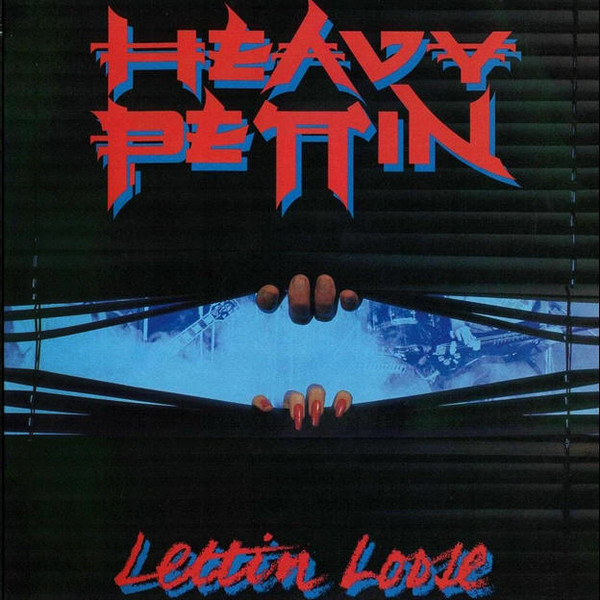
Brian May and Reinhold Mack were behind the board for the Lettin’ Loose sessions at Townhouse Studios, and it shows in every polished, over-engineered vocal stack. Polydor thought they’d found the next Def Leppard in a bunch of guys from Glasgow, but the label tried too hard to buff out the rough edges. You can hear the struggle between the band's natural pub-rock grit and the high-gloss production that dominated the early 80s. They had the hooks and the hair, but by the time Rock Ain’t Dead dropped in '85, they were caught in the gears of a major label machine that didn't know how to market Scottish metal without turning it into a pop product. The songwriting was sharp, but the timing was shit. They were too heavy for the pop charts and too slick for the NWOBHM purists. By 1989's Big Bang, the momentum was gone, leaving behind a discography that feels like a case study in how corporate polish can sometimes muffle a band’s real teeth.
The Arc of Heavy Pettin’
The pivots — what forced Heavy Pettin’ to reinvent.
The May-Mack Polish
Getting Queen’s guitarist and a premier ELO producer for your debut meant the expectations were astronomical and the budget was blown out. The 1983 sessions at Townhouse focused on massive drum sounds and vocal layering that made tracks like 'In and Out of Love' sound like they were built for arenas rather than the clubs the band was actually playing. You hear a band being groomed for American radio before they’d even toured the States properly. The result was a record that sounded expensive but lacked the raw, dangerous energy of their live sets.
The Pop-Metal Stall
For Rock Ain’t Dead in '85, the band leaned into the melodic hard rock boom, but the production by Tony Platt couldn't hide the fact that the scene was getting crowded. They moved away from the faster NWOBHM-adjacent riffs toward a mid-tempo strut that felt calculated to appease Polydor. Despite the catchy choruses, the record failed to ignite the US market, leaving them in a creative limbo where the hooks were there but the grit was gone. It was the sound of a band realizing that being the 'next big thing' has a very short shelf life.
The Lost Years and The Return
After the Big Bang sessions essentially marked the end of the original run, the band drifted into the 'Prodigal Songs' era of clearing out the archives and unreleased demos. It took decades for the core of Steve Hayman and Gordon Bonnar to reactivate the name for the 2025 Rock Generation era. This pivot away from major label interference allowed them to return to a more straightforward, stripped-back hard rock sound that ignores modern trends. They stopped trying to be the Scottish Def Leppard and finally just sounded like themselves.
Influences
- Queen — Brian May didn't just produce their debut; he was a vocal admirer of the band’s melodic sensibilities. You hear the influence in the stacked harmony vocals on 'Love on the Run' and the clean, melodic phrasing of the guitar solos. It was a direct mentorship that defined their early studio sound.
- Thin Lizzy — The twin-guitar attack of Robert Getty and Gordon Bonnar was modeled directly on the Gorham/Robertson era of Lizzy. Tracks like 'Hell Is Beautiful' utilize those synchronized harmony leads that were a staple of the Irish legends. It’s the foundational DNA of their entire riff-writing process.
- AC/DC — Heavy Pettin’ frequently cited the Young brothers' simplicity as the benchmark for a good rock song. You can hear it in the stripped-down, punchy rhythm work on 'Rock Me' and their choice of Tony Platt to produce their second album. Platt was an engineer for Highway to Hell and Back in Black, and they wanted that specific dry, heavy crunch.
- Deep Purple — The band grew up on the Mk II lineup, specifically Ian Gillan’s high-register screams and Ritchie Blackmore’s neo-classical runs. Steve Hayman’s vocal delivery often pushes into that Gillan territory during the more aggressive moments of Lettin’ Loose. The organ-heavy textures on their deeper cuts are a nod to Jon Lord’s influence.
- Status Quo — Before the hair metal sheen, the band was rooted in the boogie-rock shuffle that Quo made famous in the UK. This influence is most apparent in the meat-and-potatoes 4/4 structures of their early demos and B-sides. It’s the blue-collar, pub-rock skeleton underneath the 80s production.
Discography
Their records — most-collected first.


Related artists
Around the web
Follow every record they touch.
Start your shelf and Gatefold tracks Heavy Pettin’'s new pressings, tour dates, and the whole discography — automatically.
Start your shelf →Free forever. Works with 10 records or 10,000.