
Artist
Godspeed You! Black Emperor
Montreal, Canada · Formed 1994
Godspeed You! Black Emperor is a music group from Montreal, Canada, active since 1994. Their discography on Gatefold includes 8 records.

8
Albums tracked
343
In collections
1994
Since
Biography
They cut the debut with an antique lock-groove that literally wouldn't let the turntable arm advance, forcing the needle to drag endlessly through a crushed loop of droning static. That wasn't an art stunt. It was a damn manifesto from a collective squatting in Montreal cold spaces, scoring apocalyptic street-level manifestos on junked tape machines and battered acoustic strings. Efrim Menuck, Mauro Pezzente, and Mike Moya started it out of sheer friction, dragging two drummers, screeched violins, tape loops, and 16mm film reels into a deafening wall of sound. They didn't do interviews, refused corporate sponsorship, and spent their early days getting harassed by local cops who figured an anarchic bus of scruffy Canadian musicians was an insurgent cell. What saved them from falling into standard art-school post-rock tedium was raw weight. They understood physical dynamic violence—patient, forty-minute crescendos engineered around real tape hiss and ungodly double-drum propulsion instead of slick digital loops. They burned out once after letting Steve Albini strip their room bare, vanished for nearly a decade, and returned as an unyielding drone-engine. Even into their fourth decade, they're pulling their catalog off streaming platforms and writing funeral marches for modern atrocities. It's stubborn, furious, and loud enough to rattle the fillings right out of your skull.
Bio from The Clerk
The Arc of Godspeed You! Black Emperor
The pivots — what forced Godspeed You! Black Emperor to reinvent.
The Montreal Cassette to the Lock-Groove
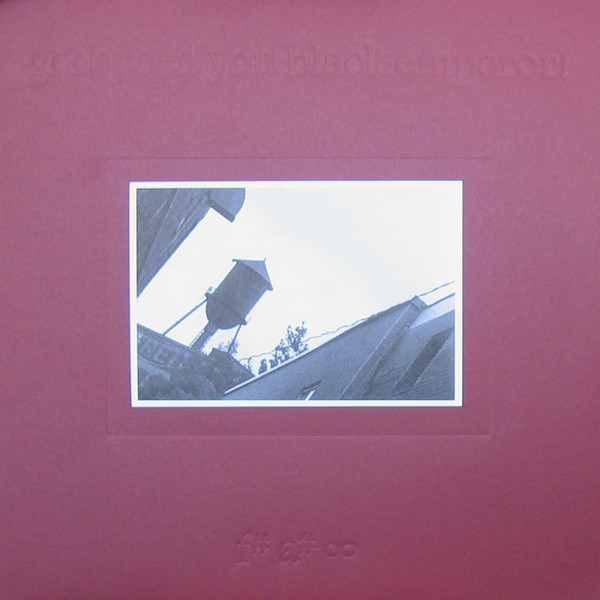
They started as a raw three-piece hawking a tiny run of the 1994 cassette All Lights Fucked on the Hairy Amp Drooling before piling bodies, violins, and projectionists into a sprawling collective. Anchored by the Montreal warehouse scene and the birth of Constellation Records, they cut 1997's F♯ A♯ ∞ as an ominous, field-recording-drenched wake for late-capitalist rot. The vinyl edition ended with a physical locked groove that trapped the turntable arm in an endless drone loop. It established their weapon: combining street preaching, screeched strings, and heavy guitar builds into an hour of cinematic dread.
The Golden Crescendos
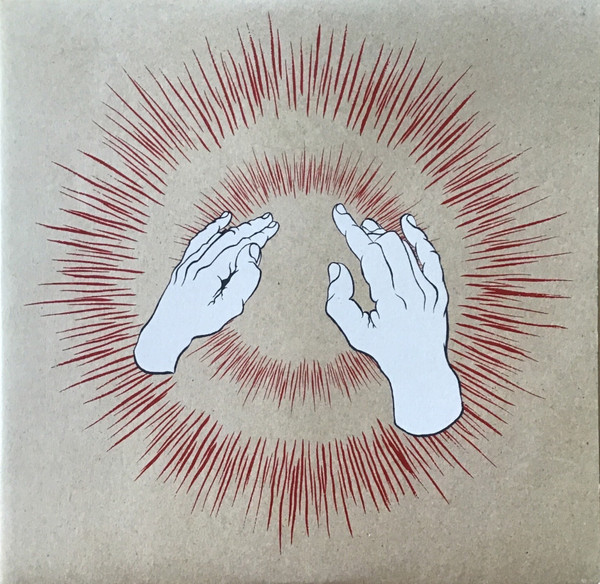
By late 1998, the band stabilized into a crushing nine-member lineup featuring Sophie Trudeau's searing violin, Norsola Johnson's cello, and the dual-drum attack of Aidan Girt and Bruce Cawdron. They sharpened their melodic focus on the 1999 EP Slow Riot for New Zero Kanada before dropping the massive double-album Lift Yr. Skinny Fists Like Antennas to Heaven! in 2000. It's the peak of their spoken-word narrative era, weaving Coney Island reminiscences and grocery store announcements straight into oceanic dynamic peaks. The record became their definitive statement, turning sheer volume shifts into pure emotional catharsis.
The Albini Scorched-Earth Session and Hiatus
Tired of cinematic post-rock clichés, the band headed south to Electrical Audio in Chicago to track with Steve Albini. The resulting 2002 album, Yanqui U.X.O., completely ditched the found-sound voiceovers and melodic prettiness in favor of cold, jagged, politically barbed guitar noise. Albini’s bone-dry drum sound and stripped-back tracking exposed the band's sheer skeletal heaviness, but the emotional friction wore them down. Burned out from global touring and suffocated by their own mythology, the band walked away into an indefinite hiatus in 2003.
The Sludge-Drone Resurgence
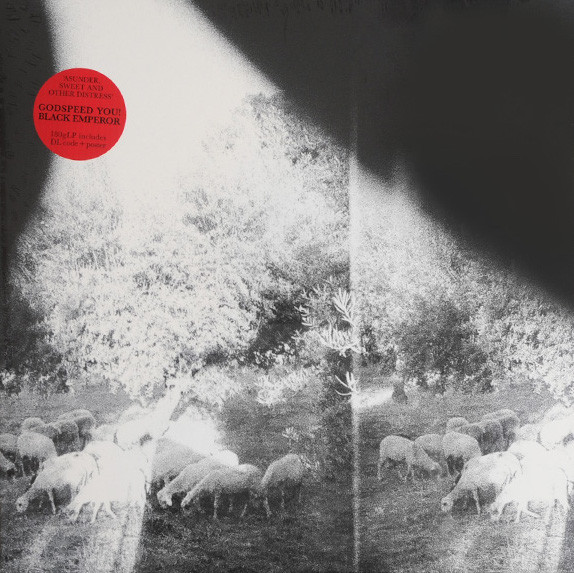
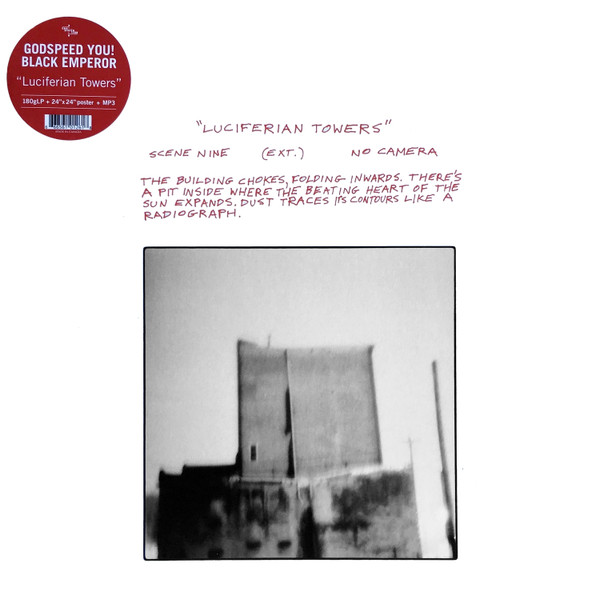
After seven quiet years, the collective reconvened in late 2010 to curate an All Tomorrow's Parties festival and brought original guitarist Mike Moya back into the fold. They walked into the studio to unleash 2012's ’ALLELUJAH! DON’T BEND! ASCEND!, an album dominated by monolithic, heavy-riff drone epics that earned them Canada's Polaris Music Prize—which they promptly used to fund music education in Quebec prisons. They doubled down on this churning, single-movement weight with engineer Greg Norman for 2015's ‘Asunder, Sweet and Other Distress’, and followed it with 2017's brass-laced “Luciferian Towers”. It proved they weren't interested in a nostalgic victory lap, turning instead toward heavy, sludgy dirges.
State's End and the Gaza Wake
Teaming up with Montreal engineer Jace Lasek at their home base Hotel2Tango, the group navigated pandemic isolation to track 2021's G_d’s Pee AT STATE’S END!, capturing emergency shortwave radio signals amidst howling guitar noise. Lasek returned behind the board for 2024's “NO TITLE AS OF 13 FEBRUARY 2024 28,340 DEAD”, a devastating record explicitly mourning the slaughter in Gaza. By 2025, they reinforced their scorched-earth anti-capitalist stance by yanking their core catalog off mainstream streaming services in favor of Bandcamp. It is the sound of an aging, uncompromising machine refusing to yield an inch of moral ground.
Influences
- Ennio Morricone — Menuck and Moya have frequently cited Morricone's wide-open spaghetti western scores as the direct foundation for their melodic sweep. You hear it immediately in the twangy, lonely, reverb-soaked guitar lines that introduce 'The Dead Flag Blues' and 'East Hastings'. It gives their apocalyptic Montreal urban sprawl the cinematic horizon of a scorched desert.
- Glenn Branca — Branca's downtown New York guitar symphonies wrote the rulebook for massed, unison-tuned electric guitars creating acoustic dissonance through volume. Godspeed lifted that exact dynamic staging, stacking Moya, Menuck, and David Bryant to form roaring tidal waves of overtones on tracks like 'Moya'. It's the structural link between academic minimalism and brutal street-level rock.
- Slint — Slint mapped out the quiet-to-deafening post-rock dynamic shift on their 1991 touchstone Spiderland. Godspeed took that slow-simmer tension, muted spoken narration, and sudden explosion of drums and expanded it into twenty-minute orchestral arrangements. You can hear that distinct post-hardcore cadence all over the rhythm section on Slow Riot for New Zero Kanada.
- Swans — Michael Gira's early Swans pulverized audiences through sheer, repetitive physical endurance and monolithic bass frequencies. Godspeed adopted that same confrontational, trance-inducing weight in their rhythm section, turning Thierry Amar and Mauro Pezzente's basslines into heavy, cyclic punishment on records like Yanqui U.X.O. It's less about traditional rock pacing and entirely about acoustic bludgeon.
- Neu! — Klaus Dinger's relentless, motorik pulse provided the forward momentum Godspeed needed to keep their mammoth compositions from collapsing under their own weight. Bruce Cawdron and Aidan Girt locked into that hypnotic, four-four endurance drive across side-long tracks like 'Sleep' and 'Like Antennas to Heaven...'. It turned extended art jams into freight trains running straight downhill.
Discography
Their records — most-collected first.


Related artists
Around the web
Follow every record they touch.
Start your shelf and Gatefold tracks Godspeed You! Black Emperor's new pressings, tour dates, and the whole discography — automatically.
Start your shelf →Free forever. Works with 10 records or 10,000.