
Artist
George Russell
American jazz pianist and composer
Cincinnati, United States · 1923 – 2009
George Russell is a musician from Cincinnati, United States, active 1923–2009. Their discography on Gatefold includes 10 records. They also recorded with George Russell Sextet.

11
Albums tracked
9
In collections
1923
Since
Biography
George Russell spent a chunk of the early fifties in a tuberculosis ward, and while most guys would’ve just rested, he spent that time mapping out a mathematical blueprint for how music actually works. He wasn't interested in just playing the changes like every other bebop cat on 52nd Street. He came out with the Lydian Chromatic Concept of Tonal Organization, a heavy-as-hell theory book that basically told the jazz world they were thinking about scales all wrong. It wasn't academic posturing; it was a survival manual for guys who were tired of hitting a wall with standard chords. He wasn't a virtuoso piano player and he knew it. He was a thinker who used the studio and the ensemble as his actual instrument. When he finally got into the booth, he was treated like a scientist, leading small groups and big bands through arrangements that felt like they were vibrating on a different frequency. He’s the reason Miles Davis stopped thinking about vertical chord changes and started thinking about horizontal modes. Without Russell’s brain, Kind of Blue probably sounds like a tired hard-bop session instead of a masterpiece.
Bio from The Clerk
The Arc of George Russell
The pivots — what forced George Russell to reinvent.
The Smalltet and the Concept
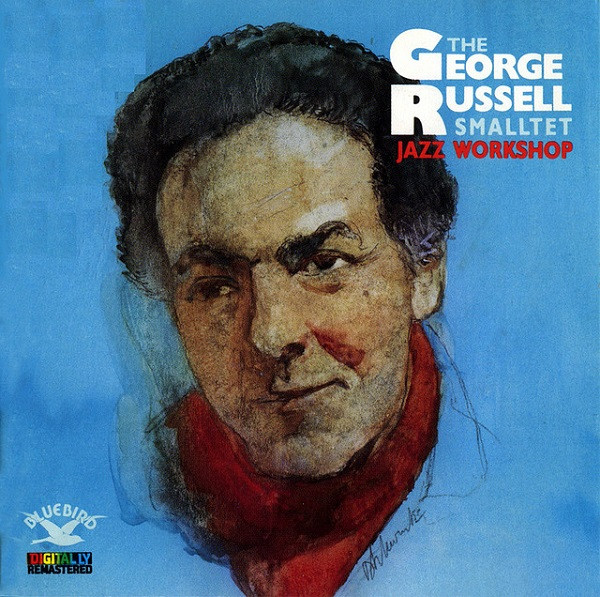
Russell gathered a group of hungry young players like Bill Evans and Art Farmer to prove his Lydian theories weren't just math on a page. These sessions for RCA Victor and Decca broke away from the frantic pace of bebop to find a cooler, more spacious internal logic. You can hear Evans absorbing the modal freedom in real-time on tracks like 'Concerto for Billy the Kid,' where the piano isn't just soloing over rhythm, but navigating a new map. It was the moment jazz moved from the gut to the frontal lobe without losing the swing.
The Scandinavian Exile
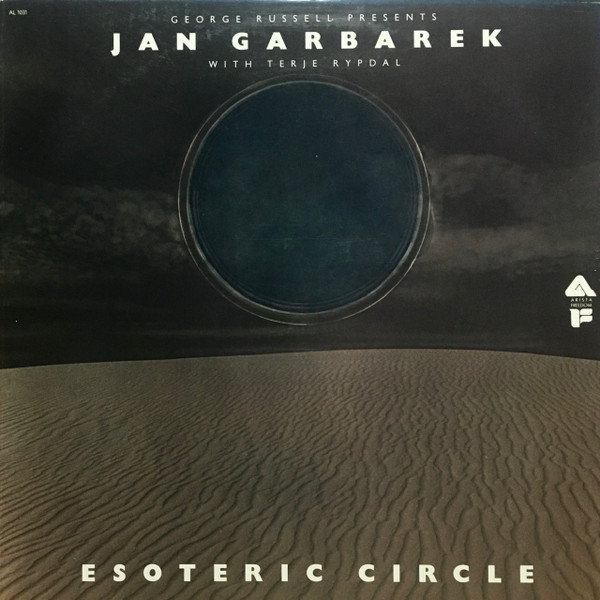
Fed up with the American industry's indifference and the lack of funding for large-scale works, Russell decamped to Europe in the mid-sixties. Settling in Sweden and Norway, he found a scene that wasn't afraid of the avant-garde or the emerging electric sounds of the era. He started incorporating rock rhythms and early electronic experiments, working with a young Jan Garbarek and Terje Rypdal. This period produced 'The Electronic Sonata for Souls Loved by Nature,' a sprawling, genre-defying mess that sounds like the future being dragged into the room by its hair.
The Living Time Orchestra
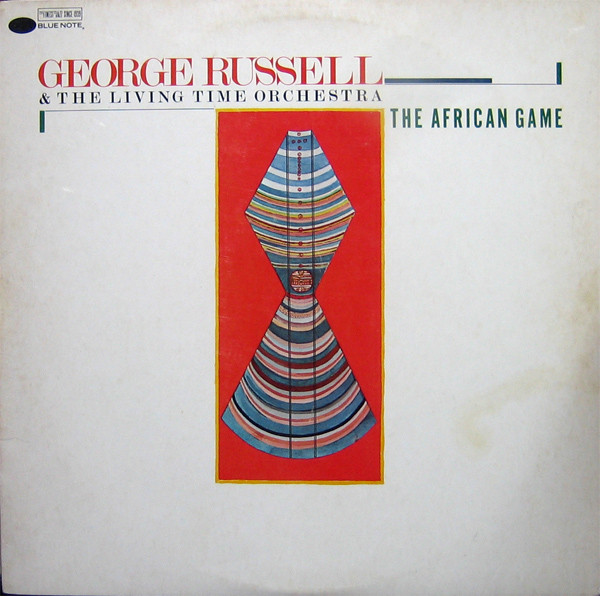
Returning to the States, Russell took his theories to the New England Conservatory and formed a massive, rotating ensemble that could handle his increasingly complex 'Vertical Form' compositions. These later years were about scale and power, captured on records like 'The African Game' for the revived Blue Note label. He was using synthesizers and African polyrhythms to create a dense, layered wall of sound that most critics didn't know what to do with. It was high-concept big band music that refused to play the nostalgia card, even when the rest of the jazz world was retreating into suits and standards.
Influences
- Lester Young — Russell explicitly cited Young’s relaxed, linear approach to melody as a primary spark for his modal theories. You hear it in how Russell prioritizes horizontal flow over the vertical stack of chords. Young’s light touch is the DNA for the entire 'cool' movement Russell helped build.
- Igor Stravinsky — Russell studied Stravinsky’s scores religiously and applied that classical rigor to jazz orchestration. The jarring, polytonal shifts in 'New York, N.Y.' are a direct result of Russell's obsession with 20th-century Russian composition. It’s jazz played with a symphonic brain.
- Fletcher Henderson — Before he was a theorist, Russell was a big band drummer and arranger who studied the architecture of Henderson’s swing. He took Henderson’s call-and-response foundations and twisted them into his own complex, overlapping structures. He kept the big band format but gutted the interior logic.
- Dizzy Gillespie — Gillespie gave Russell his first big break by commissioning 'Cubana Be, Cubana Bop' for his orchestra in 1947. This was the first time Russell experimented with modal scales and Afro-Cuban rhythms on a large stage. Dizzy’s willingness to let a young kid get weird with a big band changed everything.
- Coleman Hawkins — Russell was floored by Hawkins’ sophisticated, chromatic approach to harmony on the tenor sax. He took the complexity of Hawkins’ 1939 'Body and Soul' solo and tried to turn that level of harmonic density into a repeatable system. Hawkins proved jazz could be intellectually demanding and still be the blues.
George Russell — solo
Their records — most-collected first.



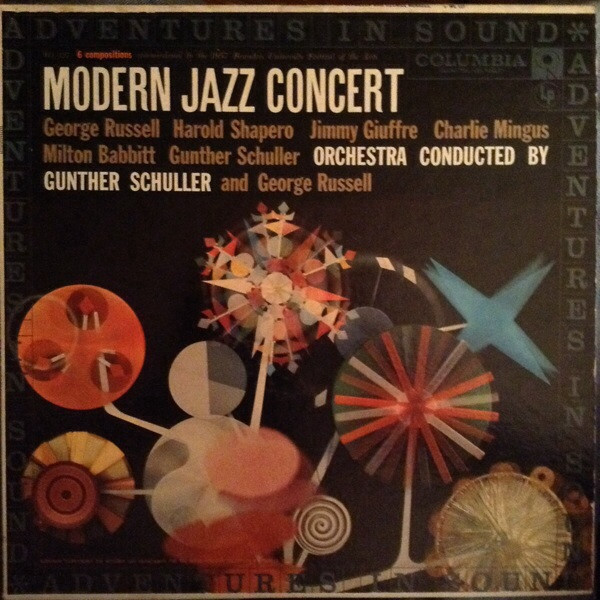
George Russell Sextet
George Russell under another name — MusicBrainz marks this project eponymous.

Related artists
Around the web
Follow every record they touch.
Start your shelf and Gatefold tracks George Russell's new pressings, tour dates, and the whole discography — automatically.
Start your shelf →Free forever. Works with 10 records or 10,000.