
Artist
Galactic
New Orleans funk & jazz jam band
New Orleans, United States · Formed 1994
Galactic is a music group from New Orleans, United States, active since 1994. Their discography on Gatefold includes 12 records.
12
Albums tracked
18
In collections
1994
Since
Biography
Stanton Moore doesn’t play the drums; he interrogates them with a second-line syncopation that most rock drummers couldn't touch with a roadmap. Galactic started as a bunch of college kids from Loyola who realized they could make a living being the house band for the most debauched city in America. They didn't invent the New Orleans funk revival, but they sure as hell digitized it when everyone else was still trying to find a copy of The Meters’ 'Cissy Strut.' They’re the rare case of a jam band that actually understands the 'band' part—a tight, professional unit that survives because they own their own club, Tipitina’s, and they know exactly how to handle a room of three thousand sweaty tourists. Theryl 'Houseman' deClouet was the soul anchor they needed to sound legitimate in the beginning. When he left due to health issues, the band didn't try to replace him with another frontman; they turned the whole project into a revolving door of guests. That’s when the hip-hop influences and the brass-hop sound really took over. They shifted from being a retro-funk outfit to a high-speed production team that happens to play live instruments. Some of the later records feel a bit too much like a New Orleans tourism board compilation, but when they hit a pocket with someone like Irma Thomas or Juvenile, they remind you that the Crescent City isn't a museum.
Bio from The Clerk
The Arc of Galactic
The pivots — what forced Galactic to reinvent.
The Houseman Years
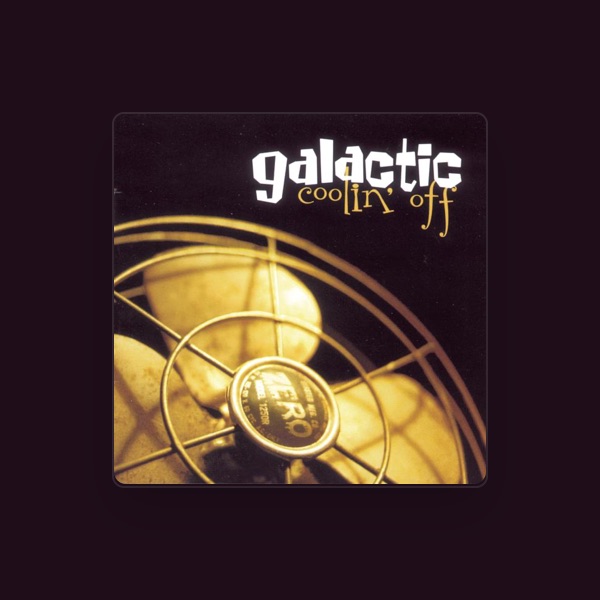
Securing Theryl deClouet on vocals gave the young instrumentalists the grit and gravel required to play the clubs on Frenchman Street without looking like tourists. This era is defined by the analog warmth of records like 'Coolin' Off,' where the band stayed strictly in the pocket of 1970s soul and R&B. You hear a band trying to prove they've done the homework, keeping the arrangements lean and the solos focused on the groove rather than the virtuosity. It was the foundation that kept them from drifting off into aimless noodle-rock territory.
The Digital Bounce Pivot
After Houseman’s departure, the band stopped looking backward and started looking at what was happening in the 9th Ward. The 2007 album 'From the Corner to the Block' saw them bringing in rappers like Chali 2na and Lyrics Born, effectively turning the band into a live MPC. Ben Ellman started taking over production duties, leaning harder into distortion and heavy compression that mimicked the grit of a hip-hop record. This shift saved them from becoming a legacy act, forcing the rhythm section to play with the rigid precision of a loop.
The Curatorial Phase
When the band bought the legendary Tipitina’s in 2018, their transformation into the gatekeepers of New Orleans sound was complete. Recent albums like 'Already Ready Already' function as curated showcases for local vocalists like Princess Shaw and Erica Falls, moving the core band into a sophisticated backing role. The production is polished to a high sheen now, trading the basement sweat for a professional, studio-first approach. It’s less about the jam and more about the three-minute pop-funk song structure.
Influences
- The Meters — The foundational blueprint for the band's syncopation and Jeff Raines’ clean, percussive guitar scratching. Galactic has covered 'Africa' and 'Look-Ka Py Py' since their earliest club dates. Without Zigaboo Modeliste's drumming, Stanton Moore has no North Star.
- The Dirty Dozen Brass Band — They proved that New Orleans traditionalism could be updated with bebop and funk leanings. Galactic frequently tours with them and shares horn arrangements that prioritize a wall-of-sound energy over polite jazz solos. You hear it in the way the brass section punches through the mix on 'Ruckus.'
- James Brown — The band’s entire philosophy on the 'One' and disciplined rehearsal comes from the JB’s playbook. They’ve consistently cited Brown's 1960s-era rhythm sections as the standard for how a band should lock together. It’s the reason their live shows feel like a relentless machine rather than a loose collective.
- Professor Longhair — Rich Vogel’s keyboard work is a direct lineage from the rhumba-boogie-woogie style popularized by Fess. The triplets and New Orleans piano rolls on tracks like 'Tipitina' are a literal homage to the man who defined the city's keyboard sound. It's the DNA of the band's melodic identity.
- Public Enemy — The band has cited the Bomb Squad's dense, noisy production as a major influence on their mid-career shift toward hip-hop. This manifests in the distorted horn lines and aggressive, non-traditional textures found on 'From the Corner to the Block.' They treated the horns like they were dissonant samples.
Discography
Their records — most-collected first.
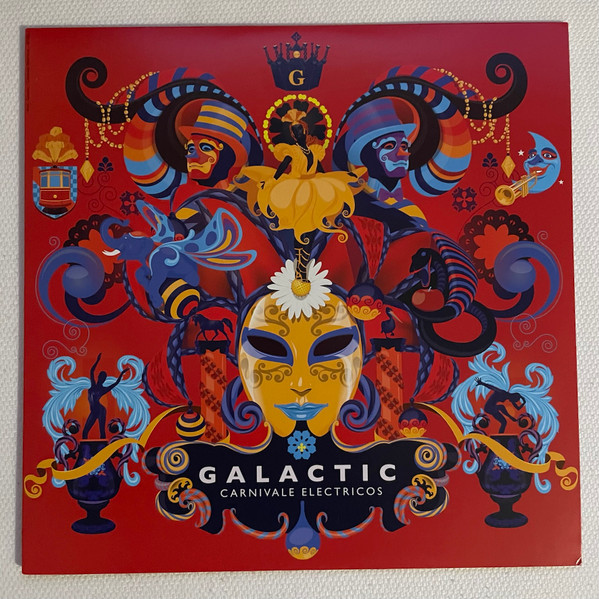
Carnivale Electricos
2012

Audience With The Queen
2025

Already Ready Already
2019
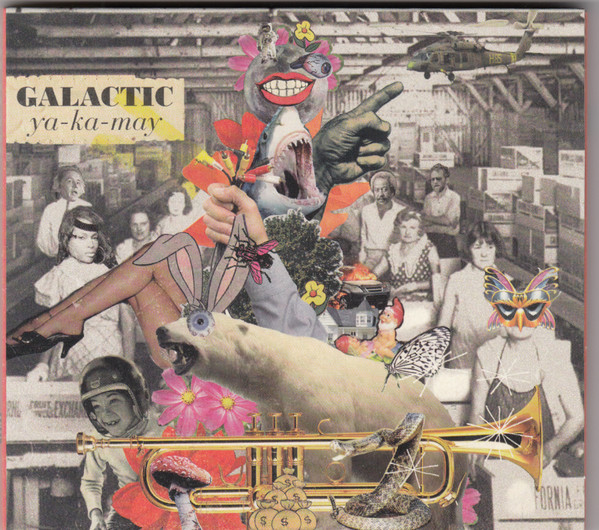
Ya-Ka-May
2010

Coolin' Off
1996

Into The Deep
2015
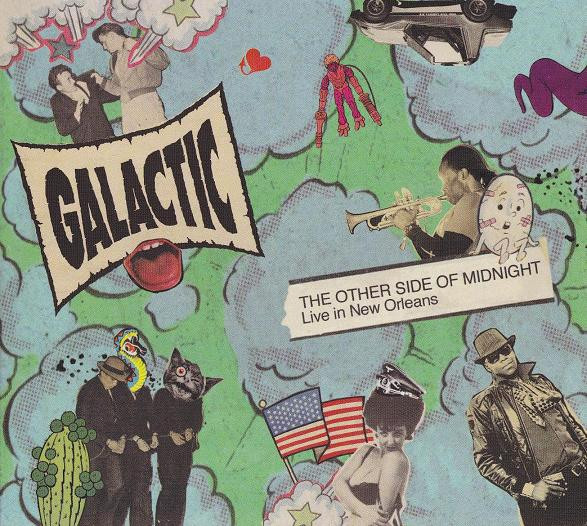
The Other Side Of Midnight (Live In New Orleans)
2011

From The Corner To The Block
2007

We Love 'Em Tonight (Live At Tipitina's)
2001

Late For The Future
2000

Crazyhorse Mongoose
1998

Ruckus
Related artists
Frequent collaborators
Around the web
Follow every record they touch.
Start your shelf and Gatefold tracks Galactic's new pressings, tour dates, and the whole discography — automatically.
Start your shelf →Free forever. Works with 10 records or 10,000.