
Artist
Eurythmics
Sunderland, United Kingdom · 1980 – 2005
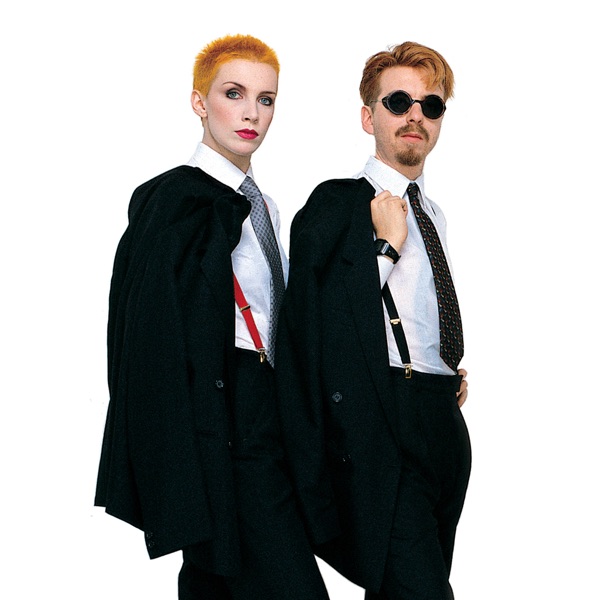
Eurythmics is a music group from Sunderland, United Kingdom, active 1980–2005. Their discography on Gatefold includes 24 records.
39
Albums tracked
402
In collections
1980
Since
Biography
Dave Stewart and Annie Lennox crawled out of the wreckage of The Tourists with a bank loan and a Teac 8-track recorder. They hunkered down in a timber-framed warehouse in Chalk Farm, ignoring the glossy studio polish of the era to mess with a Movement Systems Drum Computer and a Roland SH-101. It wasn't about being pop stars—it was about being a two-person manufacturing plant. They were making cold, industrial-flecked synth-pop because they couldn't afford a full band or a proper engineer, and that desperation is exactly why the early stuff has that eerie, claustrophobic bite. By the mid-80s, they leaned hard into the American soul machine and almost lost the plot in the process. You can hear the struggle between their experimental roots and the demand for stadium anthems on records like Revenge, where the guitars get louder and the production gets slicker than a used car salesman. They hit a wall when the business side choked the life out of the partnership, leading to a decade-long silence that most people expected to be permanent. They eventually patched it up for a final acoustic-leaning run, but the real meat is in those early years when they were still scavenging for sounds in a basement.
Bio from The Clerk
The Arc of Eurythmics
The pivots — what forced Eurythmics to reinvent.
The Conny Plank Experiment
They headed to Cologne to record In the Garden with Conny Plank, the man who shaped the sound of Kraftwerk and Neu!. Plank brought in Holger Czukay and Jaki Liebezeit from Can, resulting in a record that sounds more like German krautrock than British pop. The tracks are built on hypnotic, repetitive rhythms and jagged textures that the label had no clue how to market. It’s the sound of a duo trying to disappear into the machinery before they realized they were too good at writing hooks to stay underground.
The Bedroom Tech Breakthrough
After the debut tanked, they took total control and moved into a small attic space above a picture framer's shop. Stewart obsessed over the newfound possibilities of the MCS780 drum machine while Lennox masked her depression with those legendary, detached vocal takes. This was the Sweet Dreams era, where the lack of a real studio forced them to use a single microphone and heavy DIY sequencing. You hear it in the title track’s thumping, metallic pulse—it’s cheap, brilliant, and utterly lethal because it was made in a vacuum.
The R&B Pivot
Tired of being labeled 'electro-pop,' Stewart swapped the synths for a Gretsch and dragged the operation to Paris to cut Be Yourself Tonight. They brought in the Heartbreakers' Benmont Tench and tracked 'Sisters Are Doin' It for Themselves' with Aretha Franklin to prove they could handle authentic soul. It was a massive commercial gamble that shifted their sound toward horn sections and gospel backing vocals. The cold edges were sanded off, replaced by a widescreen, Motown-indebted muscle that defined their transition into a global touring juggernaut.
Influences
- Dusty Springfield — Lennox has cited Dusty as her primary vocal blueprint for blending blue-eyed soul with a dramatic, almost theatrical delivery. You hear it in the way she phrasing 'I Saved the World Today,' favoring that controlled, smoky vibrato. It’s the bridge between 60s pop sophistication and 80s synth minimalism.
- Kraftwerk — The duo explicitly sought out Conny Plank because of his work with the Dusseldorf pioneers. The stark, mechanical precision of 'Sweet Dreams' is a direct descendant of the Man-Machine aesthetic. They took the robots' discipline and gave it a human heart.
- The Marvelettes — Before they were Eurythmics, Stewart and Lennox were obsessed with Motown’s girl-group architecture. You can hear the 'Please Mr. Postman' DNA in the call-and-response structures of their mid-80s hits. It’s what kept their pop records from becoming too self-serious or avant-garde.
- Can — The connection is literal; members of Can played on their debut album at Plank's studio. Jaki Liebezeit’s 'metronomic' drumming style informed Stewart’s approach to sequencing and rhythm loops. It’s why their early B-sides sound like jagged, psychedelic accidents rather than standard pop filler.
- David Bowie — Lennox adopted the Thin White Duke’s approach to gender-bending and visual reinvention as a career strategy. The crew-cut orange hair and tailored suits during the 'Sweet Dreams' video were a direct nod to the 'Station to Station' era. It wasn't just fashion—it was about using a persona to shield the performer.
Discography
Their records — most-collected first.

Be Yourself Tonight
1985
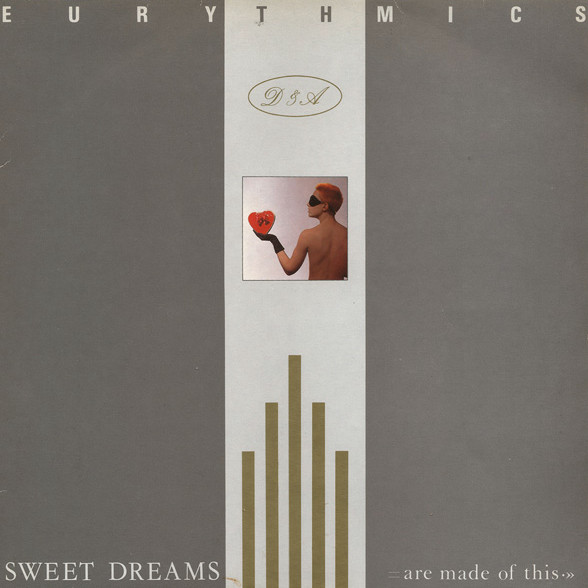
Sweet Dreams (Are Made Of This)
1983
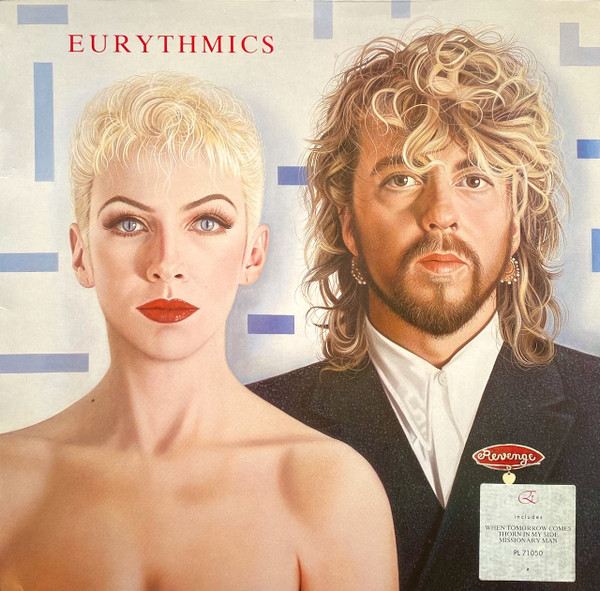
Revenge
1986
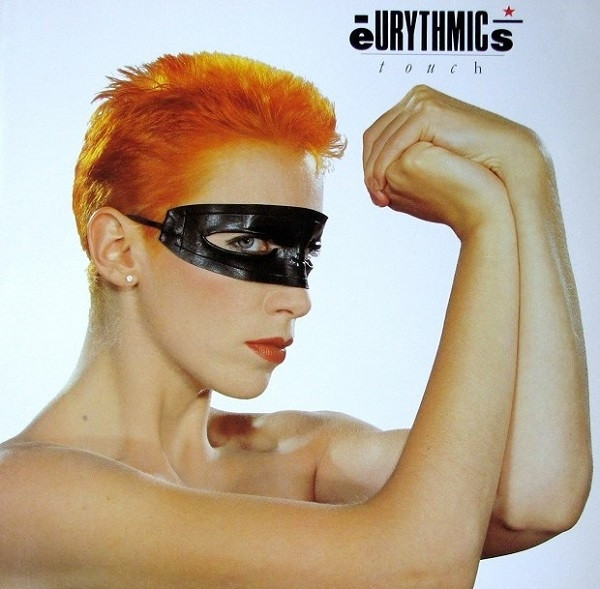
Touch
1983
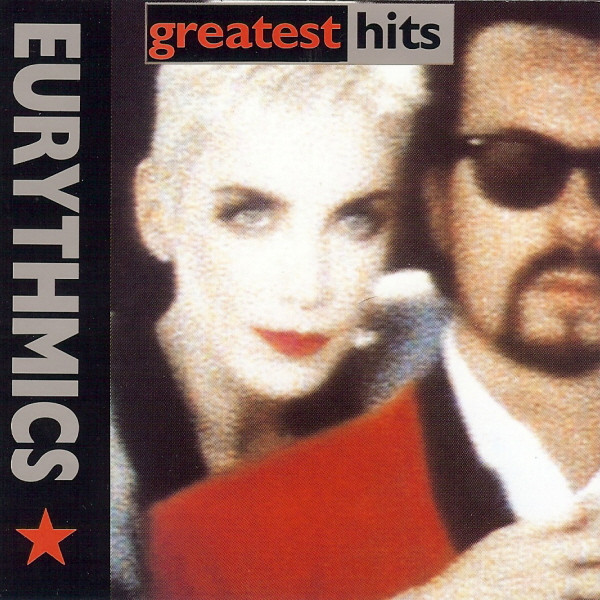
Greatest Hits
1991

Savage
1987
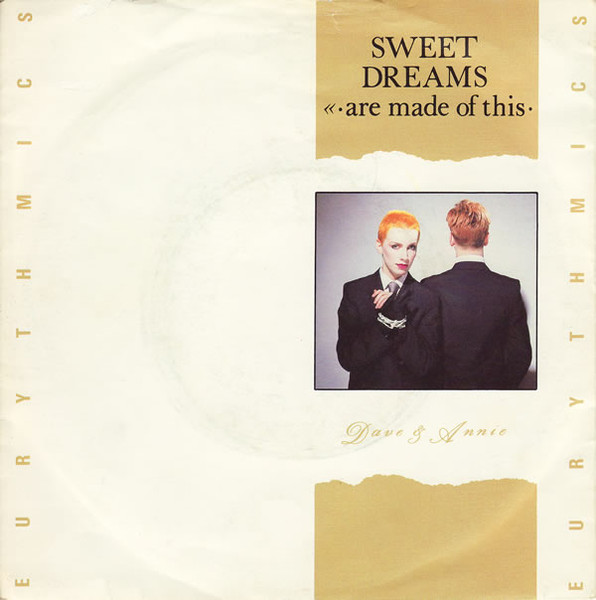
Sweet Dreams (Are Made Of This)
1983

1984 (For The Love Of Big Brother)
1984
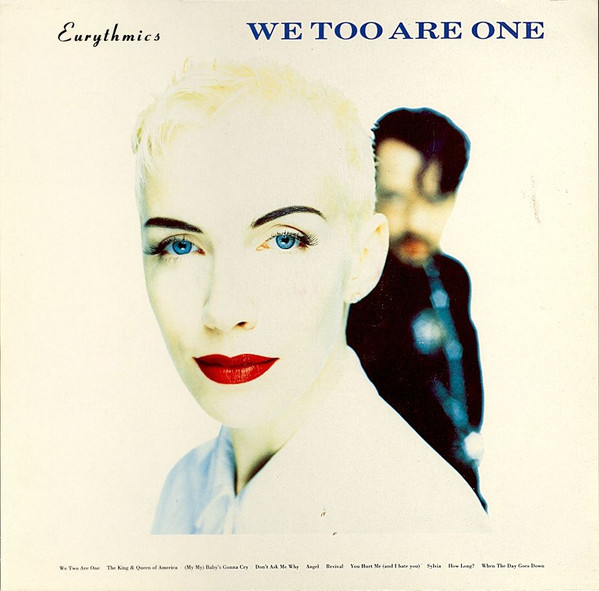
We Too Are One
1989

Sexcrime (Nineteen Eighty·Four)
1984
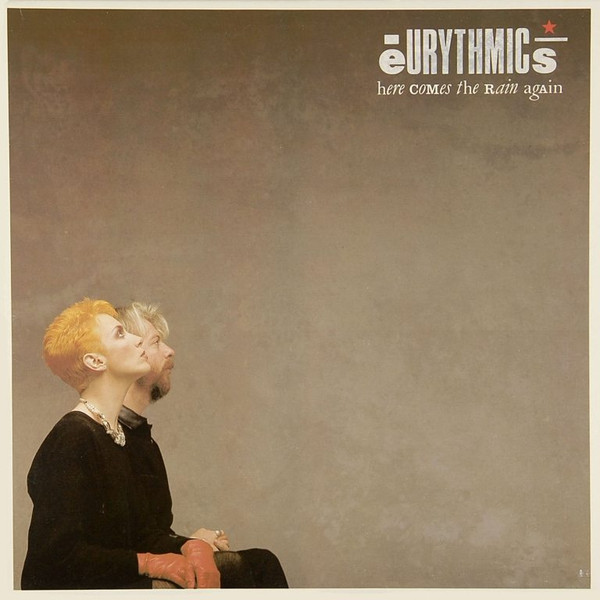
Here Comes The Rain Again
1984

Sisters Are Doin' It For Themselves
1985
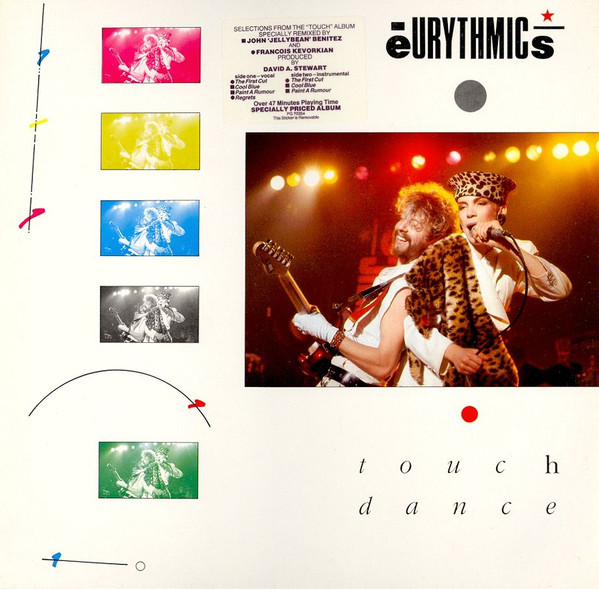
Touch Dance
1984
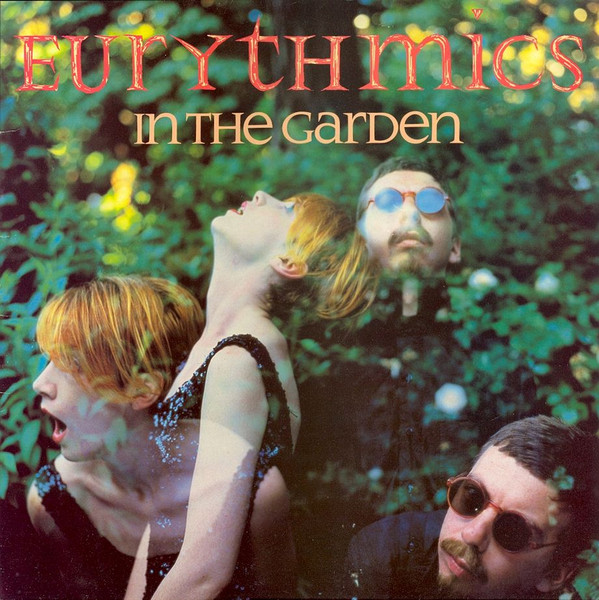
In The Garden
1981

Peace
1999
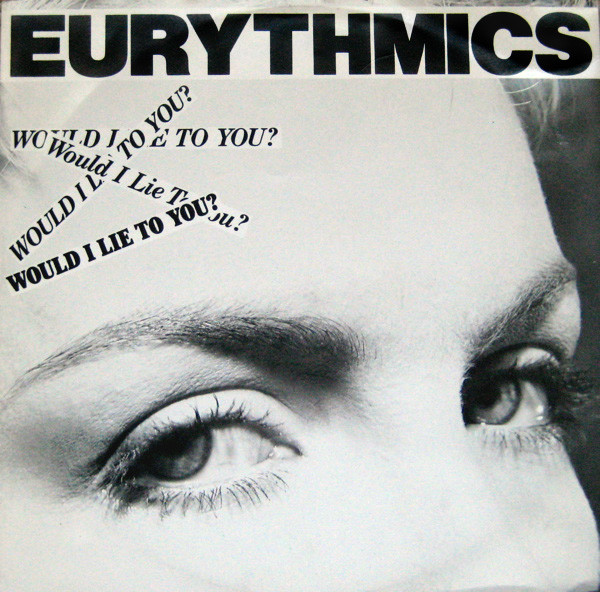
Would I Lie To You?
1985

Right By Your Side
1983

Love Is A Stranger
1982

Missionary Man
1986

There Must Be An Angel (Playing With My Heart)
1985
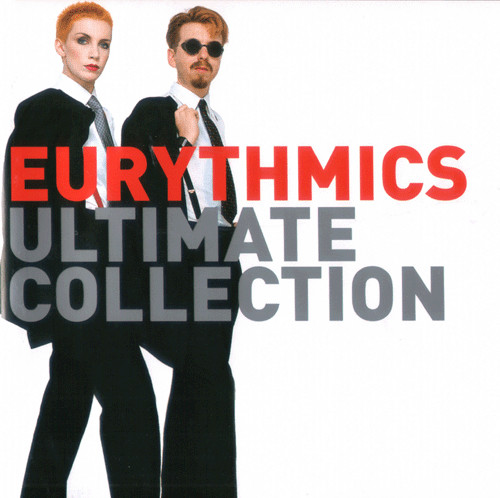
Ultimate Collection
2005

Beethoven
1987

The King And Queen Of America
1990

Don't Ask Me Why
1989
Related artists
Frequent collaborators
Around the web
Follow every record they touch.
Start your shelf and Gatefold tracks Eurythmics's new pressings, tour dates, and the whole discography — automatically.
Start your shelf →Free forever. Works with 10 records or 10,000.