
Artist
Enoch Light and the Light Brigade
New York, United States · 1959 – 1979
Enoch Light and the Light Brigade is a music group from New York, United States, active 1959–1979. Their discography on Gatefold includes 24 records.

40
Albums tracked
36
In collections
1959
Since
Biography
Enoch Light didn't care about the music. He cared about your living room speaker setup and the distance between your left ear and your right ear. In 1959, he took a 35mm magnetic film recorder—which had way more dynamic range and less hiss than standard tape—and used it to engineer records designed specifically to show off the brand-new home stereo system. His Command Records label became the gold standard for high-fidelity nerds who wanted to hear bongos leaping from the left channel to the right channel like a sonic ping-pong match. He recruited top-tier New York studio aces like guitarist Tony Mottola and drummer Bobby Rosengarden, forcing them to play bizarre, hyper-separated arrangements. This wasn't jazz. It was an engineering stunt masquerading as easy listening, and it made Light a fortune. The gatefold sleeves were printed on thick, coated cardboard with abstract art by Josef Albers because Light knew that upscale suburbanites wanted their living rooms to look as modern as their stereos sounded.
Bio from The Clerk
The Arc of Enoch Light and the Light Brigade
The pivots — what forced Enoch Light and the Light Brigade to reinvent.
The 35mm Stereo Boom
In 1959, Light abandoned standard magnetic tape for 35mm film recording at Fine Recording Studios in New York. Working with engineer Robert Fine, he realized the wider track width eliminated tape print-through and allowed for extreme transient peaks without distortion. The result was Provocative Percussion, a record that weaponized stereo separation by throwing radical panning tricks directly into the listener's face. You hear this engineering feat in the razor-sharp snap of the snare and the dry, isolated woodblock hits that occupy their own dedicated physical spaces in the stereo field.
The Bossa Nova Pivot
By 1962, the initial novelty of ping-pong percussion was wearing thin, so Light jumped on the rising Brazilian jazz wave. He brought in saxophonist Coleman Hawkins and guitarist Charlie Byrd to record Big Band Bossa Nova, applying his signature separation techniques to the syncopated rhythms of Rio. Instead of the raw, intimate club feel of the original Brazilian recordings, Light polished the genre into a pristine, multi-tracked studio showcase. The record proved that his high-fidelity production techniques could be adapted to contemporary international trends without losing their audiophile appeal.
The Project 3 Synth Era
After selling Command Records to ABC-Paramount, Light launched his Project 3 label in 1966 to exploit the next hardware revolution: quadraphonic sound and the Moog synthesizer. He brought in synthesist Dick Hyman to record Permissive Polyphonics in 1970, trading his acoustic big band charts for electronic oscillators. The organic warmth of his early sessions was replaced by cold, panning square waves and primitive filter sweeps designed for four-channel home audio systems. It was a desperate grab at the counterculture market that ended up sounding more like a sci-fi sound effects library than a pop record.
Influences
- Glenn Miller — Light began his career leading big bands in the 1930s and based his entire arranging style on Miller's tightly disciplined, brass-heavy swing templates. You hear this influence directly on his 1975 tribute album, Glenn Miller Original Sound, where Light attempts to recreate Miller's signature reed voicings using modern high-fidelity multi-mic setups. The precision of the ensemble playing on those tracks is a direct lift from Miller's legendary rehearsal standards.
- Les Paul — Les Paul's early 1950s multi-track guitar experiments on Capitol Records proved that the recording studio could be used as an instrument itself rather than just a document of a live performance. Light took Paul's concept of extreme close-miking and layered overdubbing and applied it to an entire big band. You hear this lineage in the dry, room-less guitar tones of Tony Mottola on the early Command LPs, which sound identical to Paul's signature dry studio sound.
- Robert Fine — Fine was the recording engineer behind Mercury Records' legendary Living Presence classical series, which pioneered the use of three-microphone stereo arrays. Light hired Fine to engineer his breakthrough Command Records sessions at Fine Recording Studios, utilizing Fine's custom-built 35mm magnetic film mixing console. The incredible dynamic range and silent backgrounds on Provocative Percussion are the direct result of Fine's proprietary technical setups.
- Pérez Prado — Prado popularized the explosive, percussion-driven mambo craze in the early 1950s, using sharp brass stabs and grunting vocal cues to punctuate the rhythm. Light capitalized on this exact Latin-jazz blueprint for his 1959 album I Want To Be Happy Cha Cha's, cleaning up Prado's sweaty, chaotic nightclub energy for the clean-cut suburban market. The arrangements swap Prado's raw street heat for clinical, highly rehearsed studio perfection.
- Josef Albers — Albers was a Bauhaus-trained master of color theory whose minimalist, geometric paintings defined mid-century abstract art. Light commissioned Albers to design the gatefold covers for the Command Records catalog to visually represent the clean, analytical separation of the audio tracks. The stark, interlocking squares on the cover of Provocative Percussion told the buyer exactly how the music was structured before the needle even hit the wax.
Discography
Their records — most-collected first.
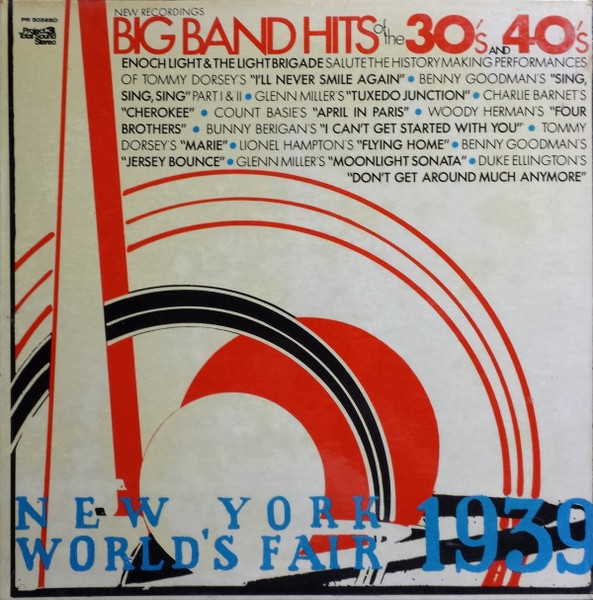
Big Band Hits Of The 30's & 40's
1971
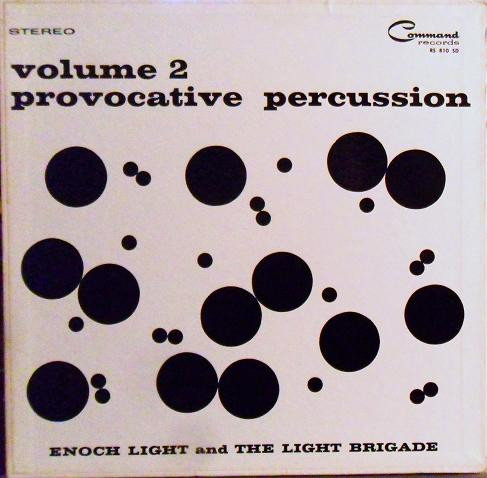
Provocative Percussion Volume 2
1960
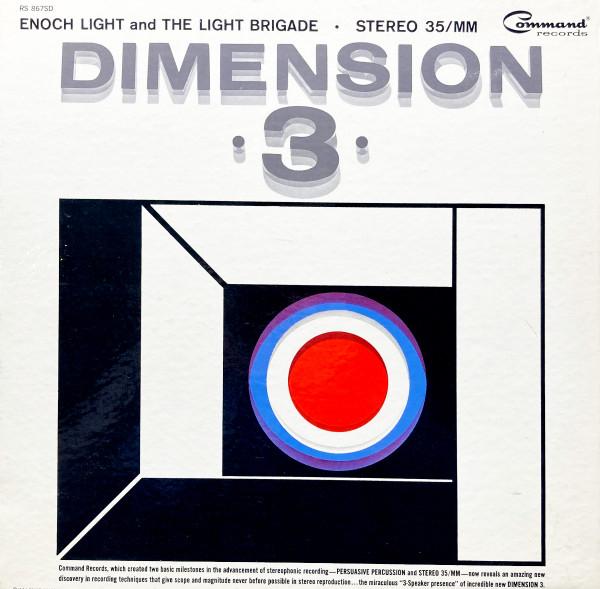
Dimension •3•
1964

Provocative Percussion (Vol. 4)
1962
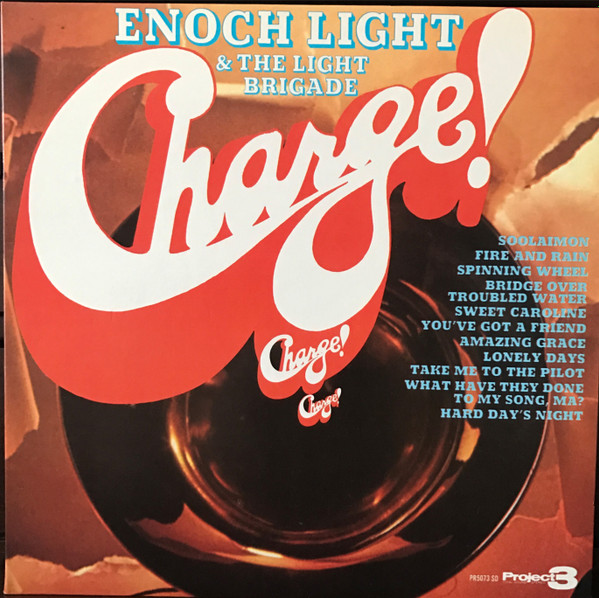
Charge!
1973

The Best Of The Movie Themes 1970
1969
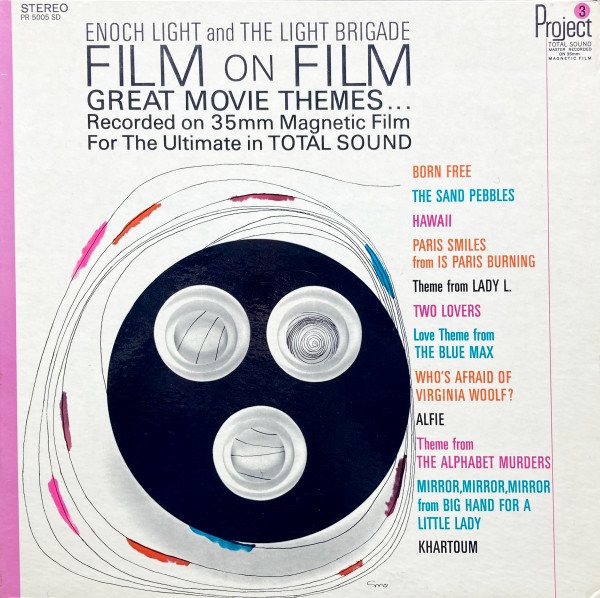
Film On Film • Great Movie Themes
1967

A New Concept Of Great Cole Porter Songs
1965

Provocative Percussion Vol. 3
1961
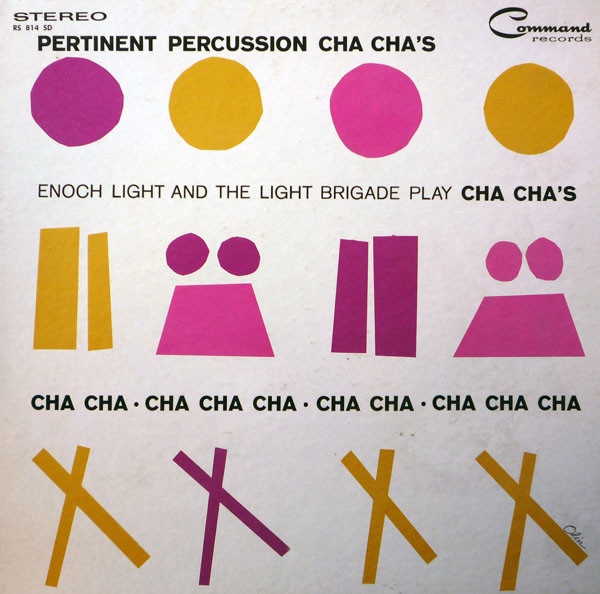
Pertinent Percussion Cha Cha's
1960

The Private Life Of A Private Eye
1959

The Big Band Hits Of The 40s & 50s
1973

Permissive Polyphonics
1971
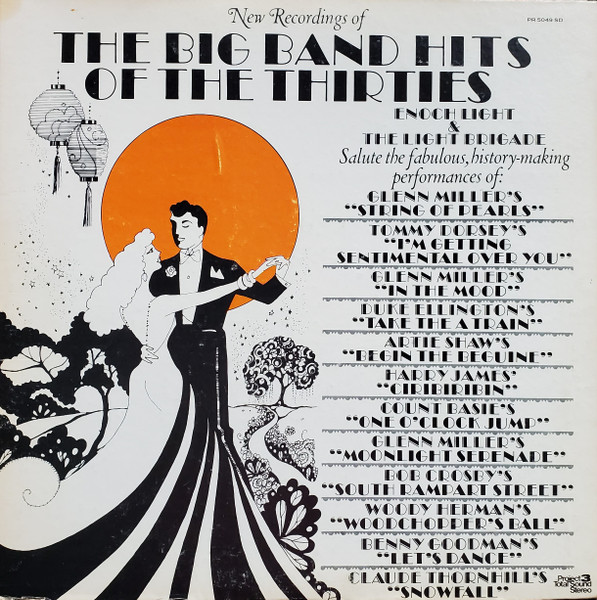
The Big Band Hits Of The Thirties
1970

Hit Movie Themes
1970

Spaced Out
1969

Spanish Strings
1966

Discotheque Vol. 2: Dance, Dance, Dance
1965

I Want To Be Happy Cha Chas
1959
The Golden Era Of Glenn Miller
1986
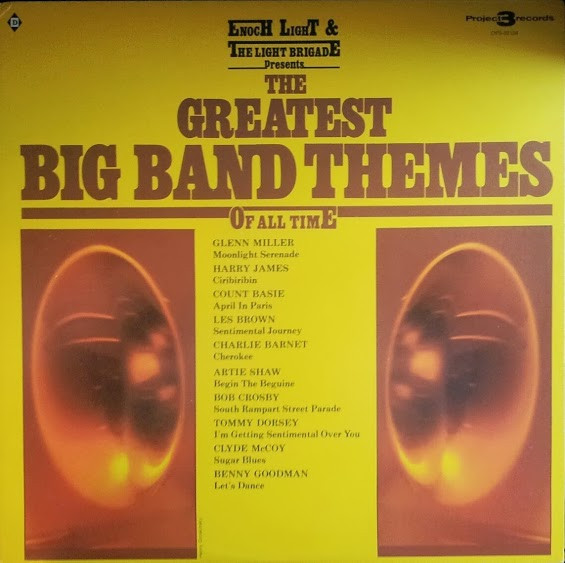
The Greatest Big Band Themes Of All Time
1981
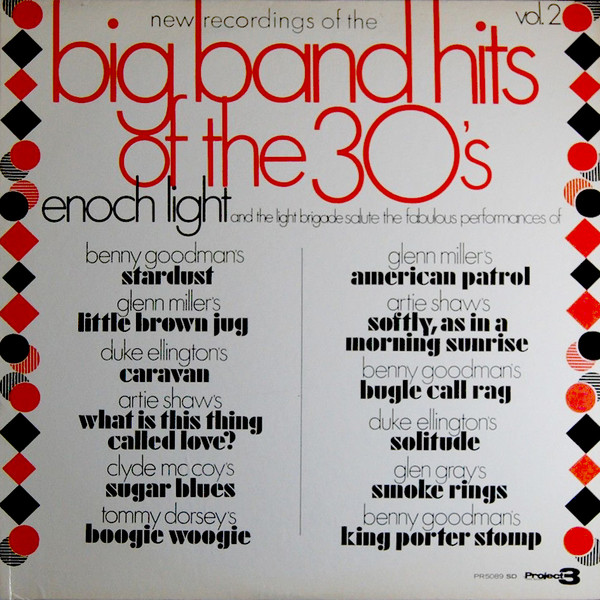
Big Band Hits Of The 30's Vol. 2
1975
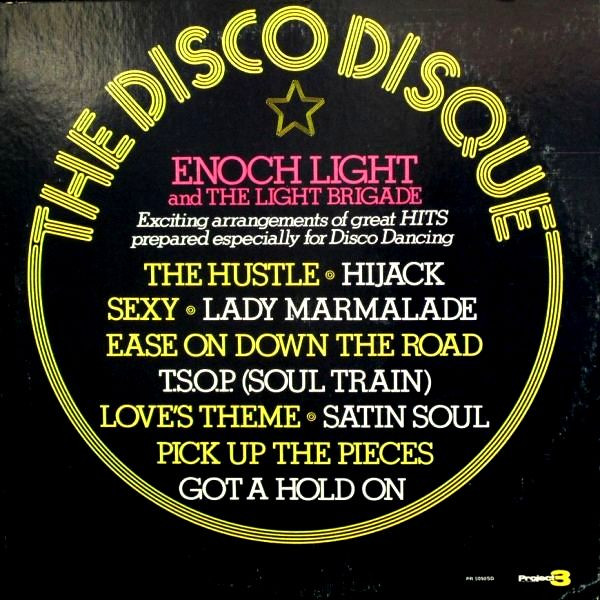
The Disco Disque
1975
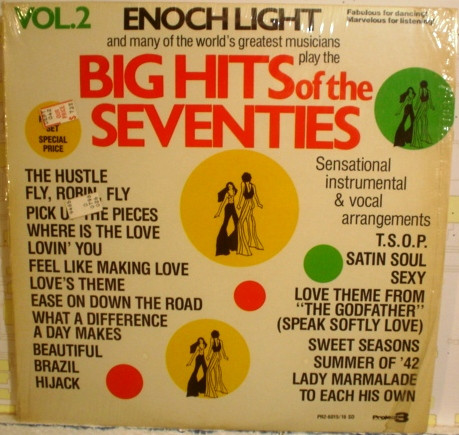
Big Hits Of The Seventies (Vol.2)
1975
Related artists
Members
Around the web
Follow every record they touch.
Start your shelf and Gatefold tracks Enoch Light and the Light Brigade's new pressings, tour dates, and the whole discography — automatically.
Start your shelf →Free forever. Works with 10 records or 10,000.