
Artist
Empire of the Sun
Sydney, Australia · Formed 2006
Empire of the Sun is a music group from Sydney, Australia, active since 2006. Their discography on Gatefold includes 6 records.

6
Albums tracked
48
In collections
2006
Since
Biography
Luke Steele was deep in the lo-fi psych-folk weeds with The Sleepy Jackson and Nick Littlemore was doing weirdo dance-pop in Pnau when they met up in Sydney to chase a vision of high-budget theatrical excess. They tracked 'Walking on a Dream' with Peter Mayes and Donnie Sloan, basically deciding that 2008 needed a soundtrack for a neon-drenched desert cult. It wasn't about being a band; it was about building a franchise out of vintage synths and elaborate headpieces that cost more than a studio session. They leaned so hard into the costumes and the 'Emperor' personas that the music almost became secondary to the aesthetic. People forget that behind the glitter, Littlemore is a disciple of early electronic sequencing and Steele is a genuine pop melodicist who can write a hook that sticks like gum to a shoe. They rode the wave of the late-2000s Australian synth explosion alongside Cut Copy and Midnight Juggernauts, but they were the only ones weird enough—or arrogant enough—to try and turn it into a blockbuster film that didn't exist.
Bio from The Clerk
The Arc of Empire of the Sun
The pivots — what forced Empire of the Sun to reinvent.
The Sleepy Jackson Collision
Steele was still signed to EMI as a folk-rocker when he and Littlemore started messing with electronic textures at Linear Recording in Sydney. This wasn't a planned career move but a byproduct of Steele's frustration with the traditional band format and Littlemore's obsession with disco production. The result was a sound that kept the acoustic guitar strums of the Sydney folk scene but buried them under layers of Yamaha DX7 and Korg Polysix leads. You can hear the tension on the debut—it’s half-indie, half-glam, and entirely focused on making the studio sound like a million-dollar spaceship.
The Big Budget Bloat
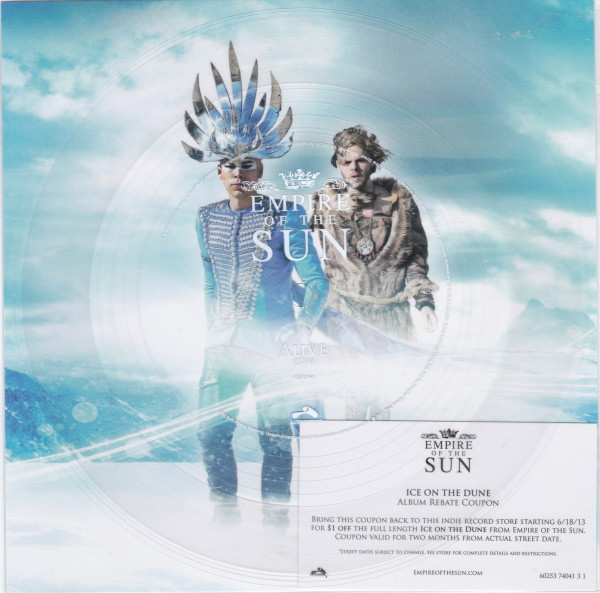
By the time 'Ice on the Dune' rolled around in 2013, the duo had fully committed to a fictional mythology that required a massive crew and global recording stops from Santa Monica to New York. The production got polished to a blinding sheen, stripping away the grit of the debut in favor of EDM-adjacent drops and compressed, stadium-ready choruses. This was the era of maximum saturation where they stopped being a studio project and became a touring spectacle. It’s the sound of a band realizing they can headline festivals if they just turn the treble up and put on more face paint.
The Two Vines Reset
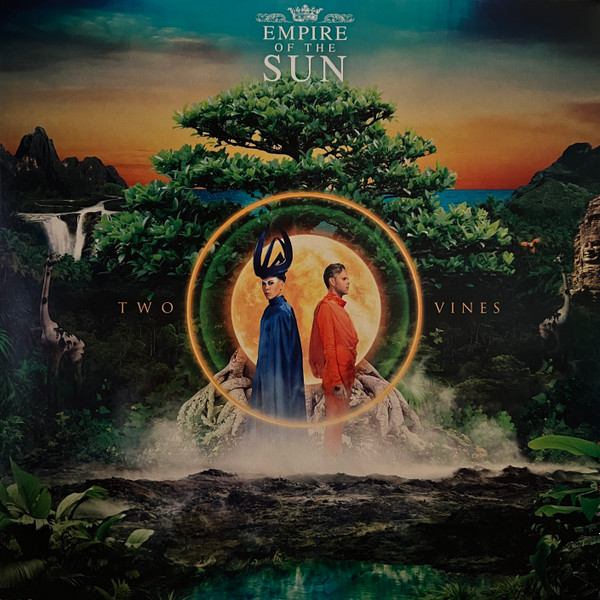
Seeking a way out of the EDM trap, they decamped to Honolulu to record at Island Sound Studios with contributions from Wendy Melvoin of The Revolution and Lindsey Buckingham. Bringing in Prince and Fleetwood Mac royalty wasn't an accident; they wanted that analog, 80s session-player warmth to ground the digital synths. The record feels more organic and spaced-out, trading the frantic dancefloor energy for a mid-tempo groove that actually lets the songs breathe. It’s the first time since the beginning that they sounded like they were playing in a room together instead of being programmed into a grid.
Influences
- Fleetwood Mac — Luke Steele has explicitly cited Lindsey Buckingham's production on Tusk as the blueprint for his 'maniacal' attention to detail. You hear it in the layered vocal harmonies and the way acoustic guitars are treated as percussive elements against electronic drums. The fact that they eventually got Buckingham to play on 'Two Vines' just confirmed the obsession.
- Prince — The duo frequently references the Minneapolis sound and Prince's 80s run as their primary aesthetic North Star. The funky, high-register synth stabs and Steele’s use of falsetto are straight out of the 1999 sessions. They even hired Wendy Melvoin to bring that specific Revolution-era guitar grit to their later work.
- Daft Punk — Littlemore has pointed to 'Discovery' as the record that showed them how to merge robotic precision with human emotion. The heavy side-chain compression on their basslines and the 'filtered' disco house vibe on 'Standing on the Shore' is a direct nod to the French duo. They took the robot-human hybrid concept and just added more feathers.
- Eurythmics — The theatricality and the synth-heavy pop arrangements of Dave Stewart and Annie Lennox informed their entire visual-sonic identity. Steele has praised their ability to be 'art-school' while still topping the charts. You can hear that 1983-era Juno synth coldness underneath the warm vocals on almost every single they’ve released.
- Hall & Oates — In interviews during the 'Walking on a Dream' era, they consistently credited the blue-eyed soul duo for their approach to songwriting structure. The tight, R&B-influenced rhythmic pockets on 'We Are The People' are a modern translation of that Philly soul-meets-new-wave hybrid. It’s basically 'I Can't Go For That' updated for a rave in the Outback.
Discography
Their records — most-collected first.




Related artists
Members
Frequent collaborators
Around the web
Follow every record they touch.
Start your shelf and Gatefold tracks Empire of the Sun's new pressings, tour dates, and the whole discography — automatically.
Start your shelf →Free forever. Works with 10 records or 10,000.