
Artist
El Ten Eleven
Los Angeles, United States · Formed 2002
El Ten Eleven is a music group from Los Angeles, United States, active since 2002. Their discography on Gatefold includes 12 records.
12
Albums tracked
20
In collections
2002
Since
Biography
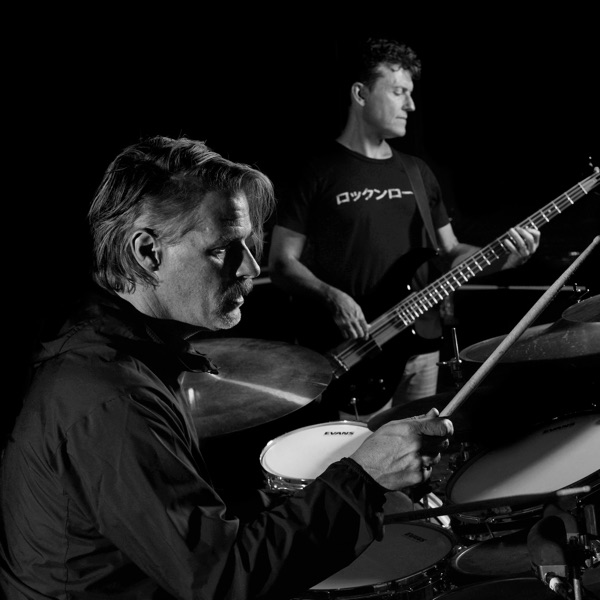
Kristian Dunn plays a Wal double-neck bass and guitar combo through a small army of Boss loop pedals, while Tim Fogarty hammers away on a mix of acoustic and electronic drum pads. That is the whole band. No laptops, no backing tracks, and no safety nets. When they cut their self-titled debut in 2004, people assumed it was a multi-tracked studio trick. It was actually just two guys sweating in a room, capturing complex, interlocking math-pop structures in real-time. The trap with the two-man setup is running out of road, and they hit that wall around 2008. They tried to fix it by going full electro-punk on cheap gear, which alienated the post-rock purists but kept them from turning into a museum piece. They recovered by leaning back into their melodic strengths, proving that their real weapon wasn't the novelty of the double-neck guitar, but Dunn's gift for writing hooks that stick in your head without needing a vocalist.
Bio from The Clerk
The Arc of El Ten Eleven
The pivots — what forced El Ten Eleven to reinvent.
The Two-Man Army
Between 2004 and 2007, Dunn and Fogarty established a strict blueprint of looping, tapping, and live drumming. The self-titled debut and Every Direction Is North were captured with minimal overdubs to prove they could pull off the complex arrangements on stage. Dunn's pristine Wal bass tones and Fogarty's organic acoustic drumming defined this era. It was clean, intricate math-rock that sounded like a four-piece band but carried the high-wire tension of two guys executing a flawless choreographic routine.
The Lo-Fi Distortion Pivot
By 2008, the clean looping formula felt too safe, prompting a hard turn on These Promises Are Being Videotaped. They ditched the pristine bass tones and acoustic drums for heavily distorted synths, effects pedals, and electronic drum pads. Recorded on a tight budget with a gritty, blown-out mix, the record split the fanbase. You can hear the strain of the transition on tracks like 'Fat Kids,' where the dancepunk rhythms almost buckle under the weight of the digital clipping.
The Melodic Recovery
Realizing the distorted dance experiment had its limits, they pivoted back to melody on 2010's It's Still Like a Secret. They didn't abandon the electronic pads but integrated them back into the lush, clean looping structures of their early work. This era balanced the warmth of their debut with the rhythmic drive of their electronic phase. Tracks like 'My Only Swerving' became indie-rock radio staples because the hooks finally outshined the technical gear gymnastics.
Influences
- New Order — Dunn has repeatedly cited Peter Hook as his primary bass influence, specifically copying his high-register melodic lead style. You hear this clearly on 'My Only Swerving,' where the bass lines function as the lead vocal melody over driving, danceable drums. They even paid direct tribute by covering 'Transitions' with a clear nod to Hooky's signature chorus-heavy tone.
- Tortoise — The Chicago post-rock pioneers established the blueprint of blending live instrumentation with electronic percussion and vibraphones. El Ten Eleven adopted this hybrid approach, particularly the use of mallet-style melodies and interlocking rhythmic patterns. The dual-drummer energy of Tortoise directly inspired Fogarty's integration of acoustic acoustic snares with synthetic rim-shots.
- The Police — Dunn has pointed to Andy Summers' use of the Echoplex and chorus pedals to fill out space in a three-piece band as a direct template for his looping rigs. The reggae-influenced up-strokes and clean, ringing chords on 'Fanshawe' are straight out of the Summers playbook. It proved that a guitarist could dominate a mix without relying on heavy distortion.
- My Bloody Valentine — Before they were a clean math-pop band, Dunn was obsessed with the dense, swirling textures of shoegaze. He utilized reverse reverb and heavy pitch-bending to emulate Kevin Shields' gliding guitar techniques using only his feet and a loop station. You can hear this wall-of-sound texture buried in the heavier climaxes of 'Every Direction Is North.'
- Kraftwerk — The German electronic icons laid the groundwork for using electronic percussion as a melodic and structural driving force rather than just a metronome. Fogarty's reliance on electronic drum pads during their mid-career pivot was a direct nod to the clean, repetitive, and synthesized beats of computer-pop. The minimalist rhythmic grid of 'Aniksha' shows this mechanical discipline in action.
Discography
Their records — most-collected first.






Related artists
Members
Around the web
Follow every record they touch.
Start your shelf and Gatefold tracks El Ten Eleven's new pressings, tour dates, and the whole discography — automatically.
Start your shelf →Free forever. Works with 10 records or 10,000.