
Artist
Die Orsons
Germany
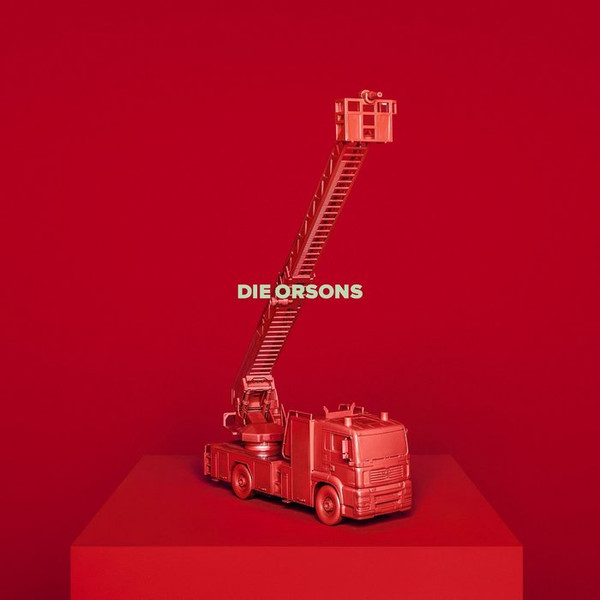
Die Orsons is a music group from Germany. Their discography on Gatefold includes 4 records.

4
Albums tracked
4
In collections
—
Since
Biography
Die Orsons is a German hip-hop group consisting of the rappers Tua, Kaas, Maeckes, and Bartek. The group is signed to the Stuttgart-based label Chimperator Productions as well as the major label Universal.
The Arc of Die Orsons
The pivots — what forced Die Orsons to reinvent.
The Chimperator Satire
The early days were defined by the DIY spirit of Chimperator and a total rejection of the 'Aggro Berlin' era of German rap. Das Album and the follow-up were basically Dadaist experiments disguised as hip-hop, recorded with a chaotic energy that felt like they were trying to see what they could get away with. You hear it in the high-pitched hooks and the frantic, almost amateurish joy that made the established scene absolutely hate them.
The Major Label Pivot
Signing to Universal for Das Chaos und die Ordnung changed the stakes, forcing them to find a middle ground between their weirdness and actual pop hooks. The production got cleaner, the concepts got tighter, and they started playing with the 'boy band' trope with enough irony to keep it from being a sellout move. This was the moment where Tua's influence as a producer really took over, shifting the sound toward a polished, electronic-heavy foundation that could actually survive a festival stage.
The Island Introspection
By Orsons Island, the colorful costumes were gone and replaced by a weird, tropical melancholia that felt like a collective comedown. They stopped trying to be the funny guys and leaned into the exhaustion of being a band that was never meant to last more than one summer. It’s their most cohesive work because they finally let the production breathe, trading the joke-a-minute pace for something that actually felt human.
Influences
- De La Soul — The group has explicitly cited the Daisy Age as the blueprint for their 'liberal' approach to hip-hop. You hear it in the skits and the willingness to be goofy without losing the respect of the heads. It’s that same Native Tongues DNA of finding peace in the middle of a genre obsessed with war.
- Kool Savas — Before the Orsons existed, Bartek (Plan B) and Kaas were deep in the orbit of Savas, who essentially set the technical standard for German rap. That influence shows up in their double-time flows and complex internal rhymes. Even when they’re rapping about nonsense, the technical execution is pure Savas-school discipline.
- James Blake — Tua has pointed to Blake’s early work as a massive influence on the electronic direction the group took later in their career. The use of negative space, distorted vocals, and heavy sub-bass on tracks like 'Ventilator' comes straight from that UK post-dubstep palette. It’s why their later records sound more like Bristol than Berlin.
- The Pharcyde — The playful, multi-vocalist chemistry and the focus on 'the loser' perspective was a direct lift from Bizarre Ride II the Pharcyde. They covered 'Runnin' in early live sessions to prove they knew the lineage. You hear that same frantic back-and-forth energy in their early Chimperator releases.
- Kanye West — The maximalist production style on 'What's Goes?' was a documented attempt to mirror the 'stadium rap' era of My Beautiful Dark Twisted Fantasy. They’ve talked about West’s shift from soul-sampling to synth-heavy art-pop as the green light they needed to abandon traditional rap structures. The ego and the irony are both dialed up to eleven in a way only a Ye fan would attempt.
Discography
Their records — most-collected first.


Related artists
Around the web
Follow every record they touch.
Start your shelf and Gatefold tracks Die Orsons's new pressings, tour dates, and the whole discography — automatically.
Start your shelf →Free forever. Works with 10 records or 10,000.