
Artist
Curse
German rapper Michael Sebastian Kurth
Minden, Germany • b. 1978
Curse is a musician from Minden, Germany, active since 1978. Their discography on Gatefold includes 10 records.

10
Albums tracked
13
In collections
1978
Since
Biography
There are several artists and bands with the name Curse. 1. Curse (born 6 September 1978 as Michael S. Kurth) is a German rapper from Minden. His stage name derives from the English pronunciation of his surname. He was active musically from a young age, performing songs such as "Zwei Mal In Den Kopf" with his band Phat Kicks in the 1990s. His debut album "Feuerwasser" (2000) presented introspective lyrics addressing personal experiences alongside
The Arc of Curse
The pivots — what forced Curse to reinvent.
The La Familia Blueprint
Curse came up through the Minden scene, anchored by a collective that prized technical proficiency and a raw, dusty boom-bap aesthetic. On Feuerwasser, the production is dense and melancholic, moving away from the lighthearted funk of early German hip-hop toward something more cinematic and introspective. You can hear him wrestling with the paradox of being a rap fan and an intellectual, a tension that defined the whole first wave of his career.
The Major Label Polish
By the time Innere Sicherheit and Sinnflut rolled around, the production budget grew and the features got bigger, including a weirdly fitting collab with Erykah Badu. This era saw him experimenting with live instrumentation and more complex song structures, moving him into the 'adult' rap category while his peers were still chasing club hits. It was a sophisticated run, but you could tell the pressure to move units was starting to grate against his need for genuine expression.
The Pop Identity Crisis
2008's Freiheit was the breaking point where the label's vision for a crossover star finally collided with his integrity. The title track was a massive hit, but it traded his signature grit for a clean, piano-driven sentimentality that felt like a different artist entirely. It led to a four-year silence because he realized he’d reached the end of that particular cul-de-sac and needed to burn the map.
The Zen Return
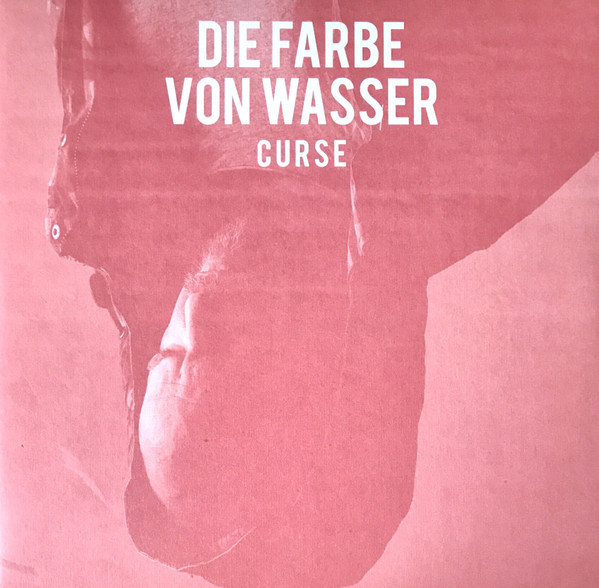
Coming back with Uns in 2014, he ditched the pop aspirations for a minimalist, almost ambient approach to rap. He stopped trying to prove he was the best lyricist in the room and started focusing on the space between the words, heavily influenced by his training in systemic coaching and meditation. The modern records like Die Farbe von Wasser feel like a guy who finally stopped fighting the industry and started recording for himself again.
Influences
- KRS-One — Curse frequently cited the 'Teacha' as his blueprint for the rapper-as-educator archetype. You hear it in his early focus on 'The 3rd Eye' and his refusal to separate rap from social philosophy. The moral weight of BDP is all over Curse’s first three albums.
- Nas — The internal rhyme schemes and the 'street scholar' perspective on Illmatic were the primary drivers for Curse’s technical development. He’s explicitly referenced Nas in interviews when discussing how to balance dense lyricism with a flow that doesn't feel like a tongue twister. It’s that Illmatic-style weary wisdom translated into German.
- A Tribe Called Quest — Curse grew up on the Native Tongues' jazz-inflected production and their rejection of hyper-masculine tropes. You hear Q-Tip’s influence in the way Curse selects samples—looking for the warmth of a Rhodes or a upright bass over a standard synth line. They gave him the permission to be 'soft' without losing his edge.
- Advanced Chemistry — Torch and the Heidelberg crew proved that German rap could be political and serious rather than just a gimmick. Curse followed their lead in using the language to dissect identity and personal history. Without 'Fremd im eigenen Land' clearing the path, Curse wouldn't have had a platform for his own social critiques.
- The Notorious B.I.G. — While he was more 'conscious' than Biggie, Curse obsessed over Wallace’s breath control and how he placed words on the beat. He has pointed to Biggie’s storytelling as the standard for how to make a narrative track feel like a movie. You can hear that rhythmic precision in the way Curse locks into a groove on a track like '10 Rap Gesetze'.
Discography
Their records — most-collected first.




Around the web
Follow every record they touch.
Start your shelf and Gatefold tracks Curse's new pressings, tour dates, and the whole discography — automatically.
Start your shelf →Free forever. Works with 10 records or 10,000.