
Artist
Conway Twitty
Friars Point, United States · 1933 – 1993
Conway Twitty is a musician from Friars Point, United States, active 1933–1993. Their discography on Gatefold includes 24 records.

58
Albums tracked
62
In collections
1933
Since
Biography
Sun Records was basically a pressure cooker in '57, and Harold Jenkins was sitting right in the middle of it. Sam Phillips didn't know what to do with a guy who had the growl of Elvis but wanted the polish of a pop crooner. So Jenkins took a map, found Conway, Arkansas, and Fargo, North Dakota, slapped the names together, and headed to MGM to cut 'It's Only Make Believe' with a massive, dripping vocal echo that sounded like it was recorded in a tiled shower. That session set the template. It was rockabilly attitude wrapped in a velvet glove. By the mid-60s, the rock and roll money dried up, and Twitty did what most rockabilly survivors couldn't do—he walked away from the teenage screamers to build a country empire from scratch. He hooked up with producer Owen Bradley in Nashville and started cutting records that traded the jukebox stomp for a darker, grown-up brand of melodrama. The transition wasn't smooth. Radio programmers thought he was a carpetbagger until 'Next in Line' hit number one in '68 and proved the rock singer had the dirt of Mississippi in his voice all along. Then came the 70s, where he transformed into the High Priest of Country Music, complete with the pompadour, the leisure suits, and a series of hyper-dramatic, borderline-transgression ballads that made suburban housewives lose their minds. He was singing about things Nashville usually couched in metaphor, putting a heavy, breathing sexuality right at the front of the mix. Critics sneered at the slickness, but the steel guitar work behind his voice was as sharp as any outlaw record coming out of Texas.
Bio from The Clerk
The Arc of Conway Twitty
The pivots — what forced Conway Twitty to reinvent.
The Rockabilly Rebel
Between 1957 and 1964, Conway was a leather-jacketed rock and roller trying to out-Elvis Elvis for MGM. He backed his band, the Lonely Blue Boys, with a blistering, triplet-heavy piano sound and a vocal delivery that relied on throat-shredding growls and sudden, dramatic drops into a low baritone register. You hear the raw desperation on tracks like 'Lonely Blue Boy' before the formula got stale and the teen-idol bubble burst. He was too country for the pop charts and too loud for the traditionalists, leaving him stranded in no man's land by the mid-60s.
The Decca Country Rebuild
In 1965, Conway tore down his career and signed with Decca, putting his fate in the hands of legendary producer Owen Bradley at Bradley's Barn. Bradley stripped away the screaming rockabilly backing and replaced it with clean, crying pedal steel from John Hughey and weeping slip-note piano. This move redefined the Nashville sound, turning Conway's rock intensity into pure country heartbreak on tracks like 'Hello Darlin''. It was a masterclass in slow-burn tension, where the silences between the notes carried as much weight as the vocals.
The Loretta Partnership
In 1971, Owen Bradley paired Conway with Loretta Lynn for 'Lead Me On,' kicking off one of the most successful duets in country history. Their voices shouldn't have worked together—Loretta was pure, unvarnished Kentucky coal dust and Conway was smooth, dramatic theatricality. Yet, their chemistry on records like 'Louisiana Woman, Mississippi Man' was instant and electric, balancing blue-collar grit with high-production polish. The collaboration kept both artists at the top of the charts and grounded Conway's increasingly theatrical solo work in hard country reality.
The High Priest of Melodrama
By 1973, Conway leaned hard into adult-oriented bedroom ballads, starting with the massive and controversial hit 'You've Never Been This Far Before.' The production became heavy, lush, and dripping with echo, utilizing spoken-word intros and heavy breathing that shocked conservative radio programmers. This was the era of the high-collared suits and the massive hair, where he abandoned traditional honky-tonk for a highly stylized, cinematic country-pop that dominated the airwaves. It was shameless, incredibly slick, and worked perfectly because Hughey's steel guitar kept the songs anchored in actual country music.
Influences
- Elvis Presley — Conway literally went to Sun Studio in 1956 after hearing 'Mystery Train' to write songs and try to capture that exact same energy. You can hear Elvis's vocal phrasing and physical hiccups all over Conway's early MGM sides like 'I Need Your Lovin'.' It was the blueprint he had to outgrow to survive.
- Lefty Frizzell — Conway studied Lefty's unique method of bending vowels and slurring words to squeeze maximum emotion out of a syllable. When Conway made the pivot back to country in 1965, he brought that distinct, lazy Frizzell drawl straight to his vocal takes on 'Look Into My Teardrops.' It was the foundation of his country delivery.
- Chuck Berry — Conway's early live sets with the Lonely Blue Boys were built entirely on the driving, guitar-led rhythm of Chuck Berry's catalog. He cut a high-octane cover of 'Sweet Little Sixteen' in 1958 that relied on the same double-stop guitar intro and kinetic energy. Berry taught him how to keep a band moving at a relentless clip.
- Roy Acuff — As a kid in Mississippi, Conway listened to Acuff on the Grand Ole Opry every Saturday night and learned the art of the dramatic, crying country vocal. Acuff's unashamedly emotional, high-register delivery shaped the way Conway approached his most desperate heartbreak ballads. You hear that old-time mountain plaintiveness buried deep beneath the slick 70s production.
- Ray Charles — Conway was deeply impacted by Ray's ability to inject raw rhythm and blues into country songs. He took notes on Charles's soul-stirring vocal climaxes and later cut a full rhythm and blues tribute album, 'R&B '63,' using those same gospel-style vocal arrangements. He wanted that same physical, visceral response from a country audience.
Discography
Their records — most-collected first.

The Very Best Of Conway Twitty
1978
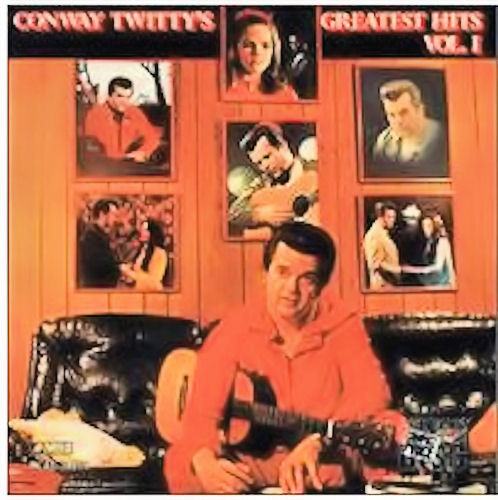
Conway Twitty's Greatest Hits Vol. I
1972

25 Number Ones
2004

#1's: The Warner Bros. Years
1988

Don't Call Him A Cowboy
1985

It's Only Make Believe / I'll Try
1958

Southern Comfort
1982

Heart & Soul
1980

Cross Winds
1979

Dynamic Duo
1977

You've Never Been This Far Before / Baby's Gone
1973

Hello Darlin'
1970

Conway Twitty's Greatest Hits...
1960

20 Greatest Hits
1993

Silver Anniversary Collection
1990

House On Old Lonesome Road
1989

She's Got A Single Thing In Mind
1989

Still In Your Dreams
1988

Fallin' For You For Years
1986

Chasin' Rainbows
1985

Conway's Latest Greatest Hits • Volume 1
1984

I Don't Know A Thing About Love (The Moon Song) / Don't Cry Joni
1984
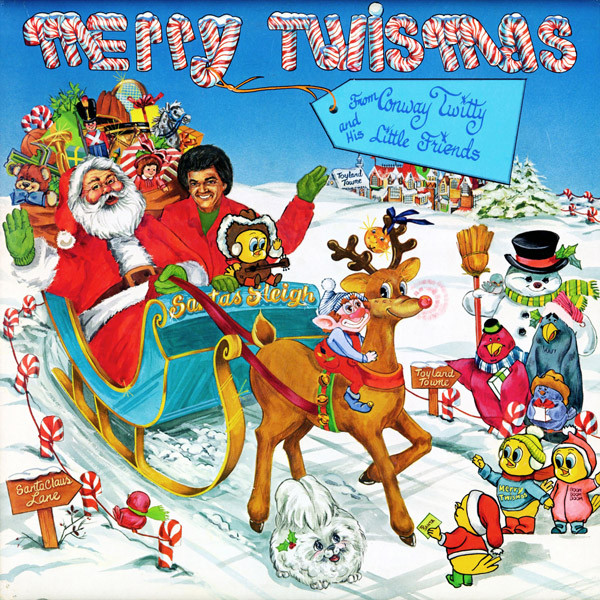
Merry Twismas From Conway Twitty And His Little Friends
1983

Dream Maker
1982
Related artists
Around the web
Follow every record they touch.
Start your shelf and Gatefold tracks Conway Twitty's new pressings, tour dates, and the whole discography — automatically.
Start your shelf →Free forever. Works with 10 records or 10,000.