
Artist
Clarence “Frogman” Henry
New Orleans, United States · 1937 – 2024
Clarence “Frogman” Henry is a musician from New Orleans, United States, active 1937–2024. Their discography on Gatefold includes 2 records.

2
Albums tracked
2
In collections
1937
Since
Biography
Clarence Henry was singing at the Tigerette Club on Bourbon Street when Paul Gayten from Chess Records caught the set and heard that weird, croaking vocal trick. They dragged him into Cosimo Matassa’s studio in 1956 with the standard-issue New Orleans heavyweights—Earl Palmer on drums and Frank Fields on bass—to cut 'Ain't Got No Home.' The label didn't think they had a hit; they thought they had a novelty act for the kids, but that session captured the absolute filth of the Crescent City shuffle before the industry cleaned it up. He wasn't just a voice actor for the funny frequencies. The guy was a legitimate piano player who had been gigging since he was fifteen, but he got stuck in the 'novelty' bin because he could mimic a frog and a girl. By the time he hit his second wind in the early sixties with Allen Toussaint and the A&R guys at Argo, he was leaning harder into the Fats Domino lane, trading the gimmicks for a sophisticated, brassy R&B that made him a bigger draw in the UK than in his own backyard.
Bio from The Clerk
The Arc of Clarence “Frogman” Henry
The pivots — what forced Clarence “Frogman” Henry to reinvent.
The Cosimo Sessions
In 1956, Paul Gayten shoved Henry into Matassa’s legendary J&M Studio to capture the raw, unpolished sound of New Orleans R&B. They built 'Ain't Got No Home' around a three-voice gimmick—his natural baritone, a falsetto, and the 'frog' voice—backed by the most dangerous rhythm section in the South. It was a chaotic, high-energy recording that relied on the room's natural compression and the players' inability to play anything that didn't swing like hell. This wasn't a polished studio production; it was a snapshot of a guy trying to survive a Bourbon Street residency by being the loudest person in the room.
The Argo Reinvention
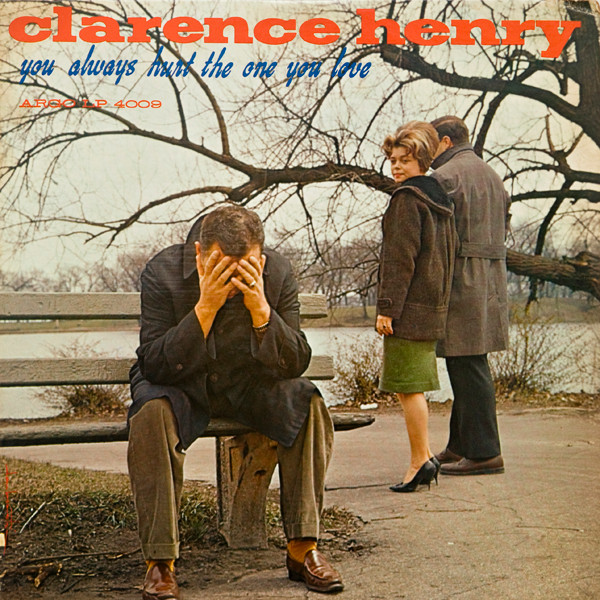
After the novelty buzz cooled, Leonard Chess moved Henry to the Argo subsidiary and put him under the direction of Bill Justis and Riley Hampton in 1961. They ditched the swamp-monster gimmicks for lush, string-heavy arrangements on tracks like 'But I Do' and 'You Always Hurt the One You Love.' Bobby Charles wrote the hits, and the production shifted from the gritty J&M stomp to a cleaner, more melodic pop-R&B hybrid. You can hear the change in his delivery; he stopped trying to out-shout the room and started phrasing like a veteran crooner, which eventually earned him an opening slot on the Beatles' 1964 tour.
Influences
- Fats Domino — Henry spent his early years studying Fats' piano triplets and easy-rolling vocal delivery. You hear it in the way he anchors the rhythm section on his early Argo sides. It's the primary blueprint for every New Orleans singer-pianist of that era.
- Professor Longhair — Henry was a disciple of Fess’s syncopated rumba-boogie piano style, which was the mandatory curriculum for any New Orleans kid in the fifties. That Caribbean-inflected 'Spanish tinge' is all over the piano breaks in Henry's debut sessions. He basically took the Professor's complexity and simplified it for the pop charts.
- Louis Armstrong — The 'Frogman' gimmick was a direct extension of the gravelly, scat-influenced vocal improvisations Armstrong made famous. Henry cited Satchmo's showmanship as the reason he felt comfortable using his voice as an instrument rather than just a delivery vehicle for lyrics. It’s the same DNA, just pitched down an octave.
- Bobby Charles — Charles wrote 'But I Do,' providing the lyrical structure that salvaged Henry's career after the novelty hits dried up. The song’s swamp-pop cadence allowed Henry to transition into the sophisticated R&B star of the 1960s. Without Charles’s pen, Henry might have stayed a one-hit wonder in the frog-mask lane.
- Paul Gayten — As a talent scout and producer for Chess, Gayten was the one who actually convinced Henry to record the frog voice on tape. He directed the early sessions and helped bridge the gap between the wild New Orleans club scene and the commercial needs of a Chicago label. He essentially acted as the architect for Henry's recording career.
Discography
Their records — most-collected first.

Around the web
Follow every record they touch.
Start your shelf and Gatefold tracks Clarence “Frogman” Henry's new pressings, tour dates, and the whole discography — automatically.
Start your shelf →Free forever. Works with 10 records or 10,000.