
Artist
City Boy
Birmingham, United Kingdom · 1975 – 1982
City Boy is a music group from Birmingham, United Kingdom, active 1975–1982. Their discography on Gatefold includes 10 records.

10
Albums tracked
12
In collections
1975
Since
Biography
Mutt Lange was running the board at Trident Studios when he laid hands on City Boy's self-titled debut in '76. He used them as a sonic lab. He spent weeks stacked-tracking the vocals of Lol Mason, Mike Slamer, and Max Thomas, obsessing over precision until they sounded like a choir of chrome-plated clones. That massive, hyper-polished vocal wall wasn't a fluke. It was the blueprint Lange later copied to turn Def Leppard and Foreigner into stadium monsters. The tragedy of City Boy is they were too clever for their own good. They were a pub-rock band with art-school brains and Queen-sized ambitions, writing multi-part suite arrangements about office drones and domestic dread. They could out-play most of the punk bands emerging next door but got completely buried by that same class of '77. To the punks, they were bloated dinosaurs. To the prog crowd, they were too pop. They got stuck in the middle, throwing complex chords and sarcastic lyrics at a crowd that just wanted three chords or a disco beat.
Bio from The Clerk
The Arc of City Boy
The pivots — what forced City Boy to reinvent.
The Mutt Lange Trident Years
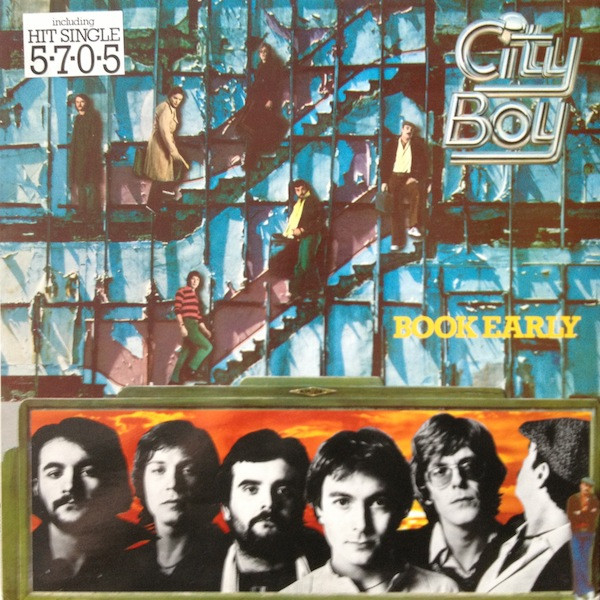
Between 1976 and 1978, Mutt Lange whipped the band into a precision machine across four albums, culminating in the lush, cynical pop of Book Early. Lange ran the band ragged in London studios, layering vocals onto 24-track tape until the oxide was literally wearing off. This era is defined by dizzying vocal arrangements, sudden time-signature shifts, and Slamer's blistering, clean guitar solos. You hear the peak of this exhausting studio perfectionism on their biggest hit, '5.7.0.5.', which almost cracked the US Top 20.
The Synth-Slick Duo Transition
By 1979, co-founders Steve Broughton and Chris Dunn bailed, forcing the remaining four-piece to pivot hard into synth-heavy new wave. They brought in keyboard player Max Thomas to fill the gaps and leaned into apocalyptic, sci-fi themes for The Day the Earth Caught Fire. Lange was still at the helm, but the guitars were dialed back to make room for pulsing synthesizers and dramatic, cinematic sound effects. It was a desperate attempt to stay relevant as the decade turned, trading their dry British humor for glossy, high-concept arena rock.
The Post-Lange Decline
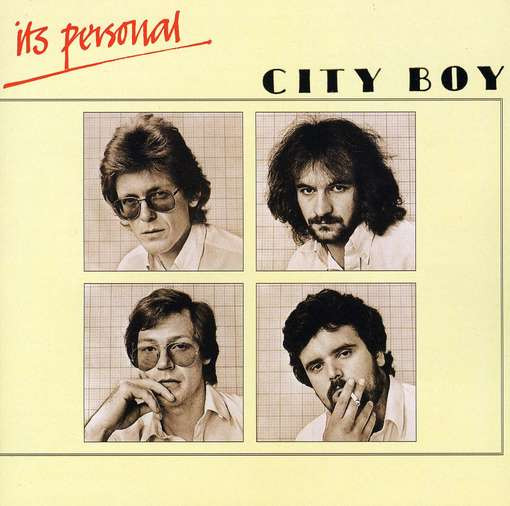
When Mutt Lange left to produce AC/DC's Back in Black, City Boy lost their sonic architect and their direction. The band self-produced 1980's Heads Are Rolling and 1981's It’s Personal, but the spark was gone without Lange's obsessive discipline to reign in their weirdest tendencies. The arrangements got cluttered, the hooks thinned out, and the Atlantic Records money dried up entirely. They quietly dissolved in 1982 after the final album was shelved in several major territories, leaving behind a catalog of brilliant, over-engineered power-pop anomalies.
Influences
- Queen — The band openly admitted to studying Roy Thomas Baker's multi-tracked operatic vocal production style. You hear this heavy, layered vocal stack all over 'The Runaround' and 'Sunset Boulevard'. They wanted that massive theatrical wall of sound but stripped of the fantasy elements.
- 10cc — Lol Mason cited the art-pop wits as their main blueprint for injecting sarcastic, observational humor into complex musical arrangements. The cynical, office-drone narrative of '5.7.0.5.' directly mimics the clever lyrical structures of 'I'm Not in Love' and 'Wall Street Shuffle'. They took the cleverness and turned the rock guitars up.
- The Beatles — The band's early songwriting was built on the McCartney-style melodic structures and vocal harmonies of the late-60s Abbey Road era. You hear this on their self-titled debut, where tracks like 'Haymaking Time' use counterpoint vocals and sudden melodic shifts. It was the foundation before Mutt Lange slicked them up.
- The Who — Mike Slamer's aggressive, chord-smashing rhythm guitar style was heavily modeled on Pete Townshend's power-chord template. This influence drives the heavier moments on Young Men Gone West, where the band attempted to inject some mod energy into their art-school arrangements. It kept them from floating off into pure prog-rock indulgence.
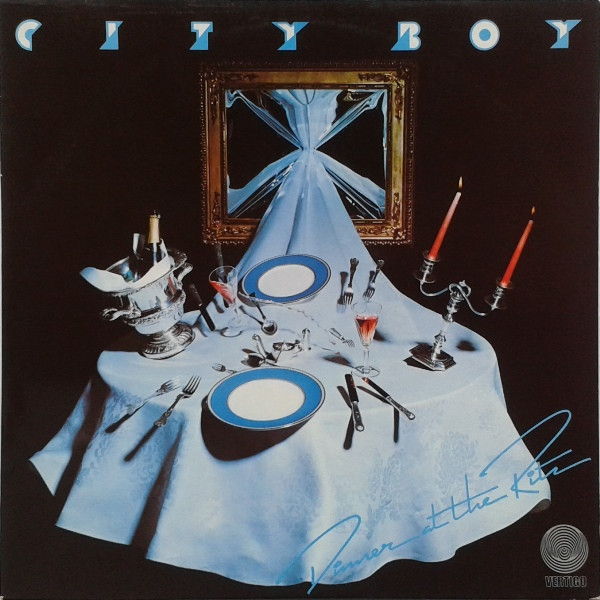
- Steely Dan — The band's obsession with studio perfection and complex jazz-adjacent chord changes came straight from Aja-era Donald Fagen and Walter Becker. You hear it on Dinner at the Ritz, where the title track uses sophisticated chord extensions and cynical, high-society lyrical themes. It was slick, expensive-sounding pop made by guys who hated pop music.
Discography
Their records — most-collected first.





Related artists
Around the web
Follow every record they touch.
Start your shelf and Gatefold tracks City Boy's new pressings, tour dates, and the whole discography — automatically.
Start your shelf →Free forever. Works with 10 records or 10,000.