
Artist
Blitzkrieg
Glendora
Blitzkrieg is a music group from Glendora. Their discography on Gatefold includes 4 records.

4
Albums tracked
7
In collections
—
Since
Biography
Blitzkrieg didn't even have a full album out before Lars Ulrich and James Hetfield turned their 1981 demo track into a foundational text for the entire Bay Area scene. By the time Neat Records finally got around to pressing the A Time of Changes LP in '85, the band was already running on fumes and internal friction. Brian Ross had a voice that could actually compete with the operatic weight of the New Wave of British Heavy Metal, but the production on that debut sounds like it was recorded in a tin shed with a single overhead mic. It’s thin, brittle, and somehow still essential because the riffs are that fucking good. They are the ultimate 'what if' of the NWOBHM era. Most bands from that Newcastle scene either blew up or burned out, but Blitzkrieg just sort of evaporated into the ether while their peers were headlining arenas. You listen to those early singles and you hear a band that should have been as big as Saxon, but they lacked the management or the stability to survive the mid-80s collapse of the genre. They spent more time being covered by future superstars than they did actually touring their own material.
Bio from The Clerk
The Arc of Blitzkrieg
The pivots — what forced Blitzkrieg to reinvent.
The Neat Records Grind
The band lived and died by the limitations of the Neat Records stable alongside bands like Venom and Raven. Working out of Impulse Studios in Wallsend, they were stuck with a low-budget, high-speed production style that defined the grainy, punchy sound of 1981. This era is defined entirely by the title track 'Blitzkrieg,' where the twin-guitar attack was sharpened by a DIY urgency that the polished major label metal acts of the time couldn't touch. It was lightning in a bottle that the label failed to capitalize on before the initial lineup splintered.
The 1985 Resurrection
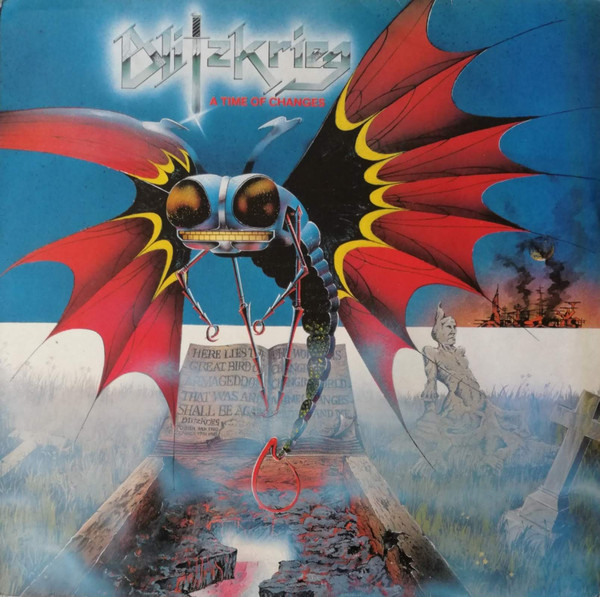
After years of silence and Brian Ross doing a stint in Satan, the band reformed to finally record a full-length debut to satisfy the lingering hype. A Time of Changes was basically a document of five-year-old ideas finally getting a studio treatment, but the scene had moved on to thrash and speed metal by then. The record sounds like a relic from a previous war, keeping the mid-tempo gallop and melodic hooks alive while everyone else was trying to play at 200 beats per minute. It serves as the final statement of the original spirit before they became a revolving door of session players and brief reunions.
Influences
- Black Sabbath — Brian Ross has explicitly cited the Birmingham quartet as the reason he wanted to sing heavy music. You hear it in the doom-laden tritone riffs and the lyrical obsession with dark, occult themes that permeate the early demos. It's the blueprint for the weight they tried to capture on tape.
- Deep Purple — The band's penchant for high-register vocal theatrics and organized, melodic guitar harmonies comes straight from the Gillan/Blackmore era. The technical interplay on tracks like 'The Hell Kiss' mimics the structured chaos Purple brought to the early 70s. Without the Mark II lineup, the NWOBHM melodic sensibility doesn't exist.
- Judas Priest — The twin-guitar harmonizing on 'A Time of Changes' is a direct descendant of the Tipton and Downing school of metal. Ross modeled his stage presence and leather-clad aesthetic after Rob Halford's late-70s transformation. It gave the Newcastle boys a sense of stadium-level theater even when they were playing pubs.
- Budgie — The Welsh trio provided the blueprint for the jagged, unconventional riff structures that Blitzkrieg used to bridge the gap between hard rock and heavy metal. You can hear the influence in the bouncy, rhythmic swing of their faster tempos. They covered 'Stranded' early on, proving the DNA was there from the start.
- Led Zeppelin — The band used Page’s production concepts of 'light and shade' to structure their longer, more epic compositions. While they stripped away the blues, they kept the dramatic shifts in dynamics and the heavy use of cymbals. It’s the foundation for the more ambitious, multi-part tracks that showed they weren't just a three-chord punk band with longer hair.
Discography
Their records — most-collected first.


Around the web
Follow every record they touch.
Start your shelf and Gatefold tracks Blitzkrieg's new pressings, tour dates, and the whole discography — automatically.
Start your shelf →Free forever. Works with 10 records or 10,000.