
Artist
Blind Idiot God
US instrumental rock trio
United States · Formed 1982
Blind Idiot God is a music group from United States, active since 1982. Their discography on Gatefold includes 4 records.

4
Albums tracked
3
In collections
1982
Since
Biography
Andy Hawkins didn't use pedals to hide behind; he used a cranked-up stack and a slide to make a guitar sound like a malfunctioning industrial lathe. They started in St. Louis before hitting the East Village, landing on SST Records back when Greg Ginn was still signing anyone who could play with more intensity than a heart attack. It wasn't metal and it wasn't jazz, but it was loud enough to clear out a room of posers in five minutes flat. Bill Laswell saw the potential in their technical violence and hauled them into the studio to sharpen the edges. They were the bridge between the No Wave skronk of the early eighties and the precision-engineered math rock that would eventually become a hipster staple. They’d drop a punishing doom riff then pivot into a flawless dub reggae groove without breaking a sweat. It shouldn't have worked, but they had the chops to make the transitions feel like a natural consequence of the volume.
Bio from The Clerk
The Arc of Blind Idiot God
The pivots — what forced Blind Idiot God to reinvent.
The SST/Laswell Collision
The self-titled debut in '87 was the sound of three guys from the Midwest getting filtered through the Brooklyn avant-garde lens. Bill Laswell’s production at BC Studio gave them a massive, dry low end that separated the bass from the guitar chaos. This era was defined by the impossible marriage of thrash speed and King Tubby-style space. You hear the gear working overtime, specifically Hawkins’ feedback control which sounded more like a synthesizer than a Gibson.
The Zorn/Avant-Metal Nexus
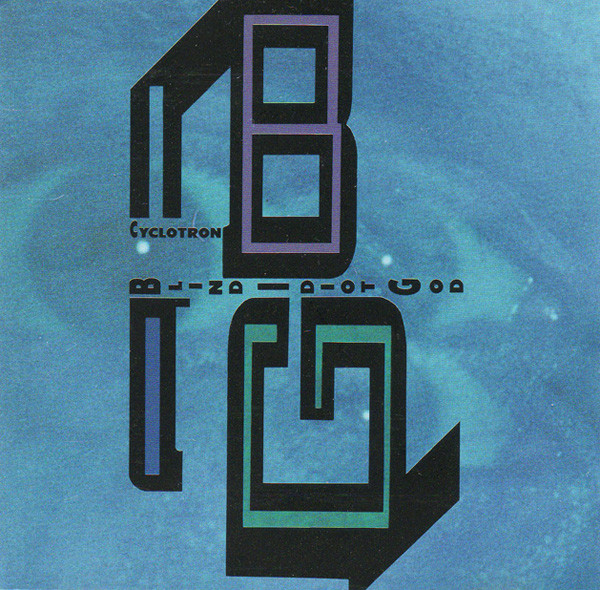
By the time Cyclotron dropped on John Zorn’s Avant label in '92, the band had fully embraced the technical complexity of the Downtown scene. The tracks got tighter, the odd time signatures became more jagged, and the production took on a cold, clinical sheen. This was the peak of their interplay, where Ted Epstein’s drumming moved away from rock steady beats into a fragmented, polyrhythmic assault. It felt like they were trying to see how much pressure the compositions could take before they shattered.
The Wyskida Reinvention
After a massive silence, the band resurfaced with Tim Wyskida from Khanate taking over the drum throne for Before Ever After. The shift was visceral, replacing Epstein’s twitchy energy with a heavy, glacial power that reflected Wyskida’s background in drone and doom. They moved into the hardware-heavy environment of Hawkins’ own studio, Sayko Cell, resulting in a double-album sprawl. The dub elements returned but felt more haunted, buried under layers of sustained guitar texture that took over a decade to perfect.
Influences
- Black Flag — Greg Ginn signed them to SST and his erratic, atonal lead style is the direct DNA for Andy Hawkins' early solos. You hear it in the frantic, unhinged chromatic runs on the first record. It's the sound of punk rock falling apart at the seams.
- King Tubby — The band has cited Tubby’s 'Dub from the Roots' as a structural blueprint for their instrumental breaks. They don't just play reggae; they mimic the physical desk mutes and reverb splashes of a dub engineer in a live trio setting. It provides the necessary air between the heavy riffs.
- Mahavishnu Orchestra — The technical precision and high-volume interplay were modeled after John McLaughlin’s early 70s fusion work. Hawkins has specifically mentioned the influence of McLaughlin's speed and tone on his own approach to complex arrangements. It's the bridge between jazz proficiency and rock aggression.
- Led Zeppelin — The band famously covered 'The Ocean' during their early years, proving their heavy riffs were grounded in classic rock foundation. You can hear Bonham’s swing in Ted Epstein’s pocket during the slower, groove-oriented sections. They took the blues-rock riff and stripped away the blues entirely.
- The Pop Group — Their blend of political intensity and jagged, funk-inflected noise was a major influence on the NYC scene that Blind Idiot God inhabited. The rhythmic displacement found on 'Y' echoes in the way the band handles their more dissonant, syncopated tracks. It's all about the tension of the groove.
Discography
Their records — most-collected first.


Related artists
Around the web
Follow every record they touch.
Start your shelf and Gatefold tracks Blind Idiot God's new pressings, tour dates, and the whole discography — automatically.
Start your shelf →Free forever. Works with 10 records or 10,000.