
Artist
Big Thief
US indie folk band
Brooklyn, United States · Formed 2015
Big Thief is a music group from Brooklyn, United States, active since 2015. Their discography on Gatefold includes 7 records.

7
Albums tracked
185
In collections
2015
Since
Biography
Adrianne Lenker and Buck Meek spent years grinding as a folk duo, sleeping in a van and playing to rooms of ten people before they even bothered to call themselves a band. They finally tracked Masterpiece in a house on Lake Champlain with producer Andrew Sarlo, using the natural acoustics of a wooden room to glue together Lenker’s jagged, distortion-heavy guitar leads and Max Oleartchik’s jazz-schooled bass lines. It wasn't about being 'indie folk'—it was about four people who played like a single organism, capturing first takes where the mistakes were left in because the energy was too raw to fix. By the time they got to the 4AD era, they were obsessed with environmental textures, recording in rural Washington and the Chihuahua Desert to let the room noise breathe. They don't use click tracks. They don't do polished overdubs. If a dog barks or the wind hits a mic membrane, it stays on the record. That commitment to the physical reality of the moment is why their stuff sounds like it’s vibrating right in front of your face instead of being squeezed through a Pro Tools filter.
Bio from The Clerk
The Arc of Big Thief
The pivots — what forced Big Thief to reinvent.
The Saddle Creek Years
Working with Andrew Sarlo on Masterpiece and Capacity, the band focused on a claustrophobic, tactile sound that felt like being trapped in a small room with a loud amplifier. They leaned into the contrast between Lenker’s whisper-thin vocals and sudden bursts of harrowing guitar feedback. It was a volatile introduction that established them as a guitar band first, folk act second. These records captured the heavy gravity of family trauma and the physical toll of life on the road.
The 4AD Dualism
In 2019, they dropped two distinct albums that showed the split in their DNA: the ethereal, synth-touched U.F.O.F. and the dirt-under-the-fingernails grit of Two Hands. U.F.O.F. was tracked at Woodshed Recording in Malibu, emphasizing a wet, layered, and almost alien atmosphere. Just days later, they decamped to Sonic Ranch in the Texas heat to record the follow-up live to tape with almost no overdubs. This pivot proved they could handle high-concept studio layering without losing their ability to punch a hole through the wall in a single take.
The Sprawl of Dragon New Warm Mountain
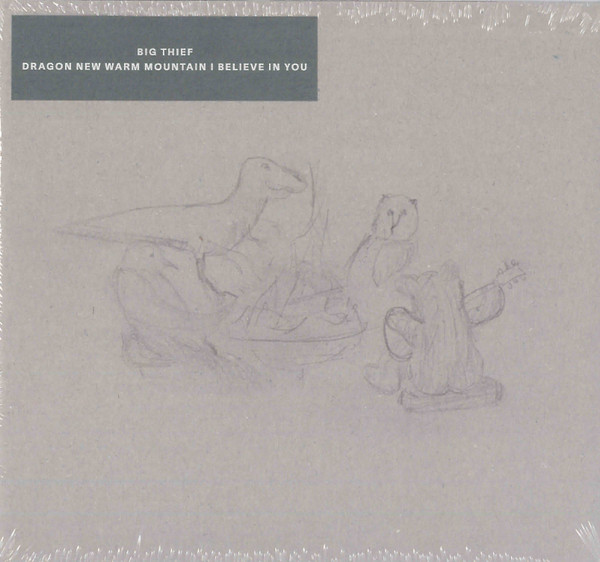
James Krivchenia stepped into the producer role and dragged the band through four different studios in four different climates to see what would break. They recorded in the mountains, the desert, and the woods, ending up with 45 songs that they eventually whittled down to a double album. The result was a messier, more experimental collection that incorporated jaw harps, prepared piano, and loose-tuned fiddles. It signaled a shift away from the tight intensity of their early work toward a sprawling, communal folk-rock circus.
Influences
- Lucinda Williams — Lenker has cited 'Car Wheels on a Gravel Road' as a fundamental blueprint for how to write about specific, painful places. You hear it in the hard-edged Americana of 'Capacity,' where the songwriting is dusty, Southern, and completely unsentimental. It’s that same marriage of literary detail and bar-room grit.
- John Prine — The band famously covered 'Summer's End' and Lenker often references Prine’s ability to find the profound in the mundane. His influence shows up in Big Thief's more whimsical, finger-picked moments where the lyrics turn on a single, devastatingly simple phrase. He taught them how to be funny and heartbreaking in the same verse.
- Neil Young — The DNA of 'Zuma' and 'Everybody Knows This Is Nowhere' is all over their live shows and the 'Two Hands' sessions. Buck Meek’s erratic, melodic guitar style mirrors the way Young lets his leads wander off the rails before snapping back into the groove. They value the ragged, first-thought-best-thought philosophy of the Horse.
- The Microphones — Phil Elverum’s 'The Glow Pt. 2' redefined how acoustic instruments could sound massive and terrifying through lo-fi production. Big Thief follows this lineage by letting tape hiss and room bleed become part of the arrangement. They treat the studio like a forest floor where everything is allowed to decay and grow simultaneously.
- Tucker Zimmerman — Lenker championed the 83-year-old folk singer and eventually got the whole band to back him on his 2024 album 'Dance of Love.' His 1969 debut 'Ten Songs' influenced their approach to unconventional song structures and raw, observational poetry. He’s the spiritual mentor for their recent shift into more communal, elder-statesman folk.
Discography
Their records — most-collected first.



Related artists
Around the web
Follow every record they touch.
Start your shelf and Gatefold tracks Big Thief's new pressings, tour dates, and the whole discography — automatically.
Start your shelf →Free forever. Works with 10 records or 10,000.