
Artist
Béla Fleck and the Flecktones
Nashville, United States · Formed 1989
Béla Fleck and the Flecktones is a music group from Nashville, United States, active since 1989. Their discography on Gatefold includes 12 records.

12
Albums tracked
22
In collections
1989
Since
Biography
Béla Fleck was told by a Nashville producer in the late 70s that nobody wanted to hear a solo banjo record. He ignored that and spent a decade shredding in New Grass Revival before deciding he needed a rhythm section that didn't exist yet. He found Victor Wooten through a friend, and Victor brought along his brother Roy—who calls himself Future Man—and plays a customized guitar synthesizer shaped like a spaceship called the Drumitar. It sounded like a fever dream on paper, but when they tracked the self-titled debut in 1990, the technical proficiency was so high it made most fusion bands look like they were playing with mittens on. The magic is in the sheer absurdity of the gear. You’ve got a guy playing a banjo with a MIDI pickup, a bassist who treats the instrument like a percussion kit, and a dude drum-tapping a plastic body. It’s nerdy as hell. Sometimes it wanders into that 'jazz-light' territory that makes you want to check your watch, especially during some of the late-90s guest-heavy sessions, but when they lock into a groove like 'Sinister Minister,' the skepticism stops. They aren't just showing off; they're rewriting what an acoustic instrument is allowed to do in a loud room.
Bio from The Clerk
The Arc of Béla Fleck and the Flecktones
The pivots — what forced Béla Fleck and the Flecktones to reinvent.
The Original Quartet
Between 1990 and 1992, the band was defined by Howard Levy’s ability to play a diatonic harmonica chromatically, which meant they could go anywhere harmonically without a keyboard player. These three albums—culminating in UFO Tofu—are the tightest the band ever sounded because Levy filled the gaps between Fleck’s banjo and Wooten’s bass. You hear the limitation of the four-piece forcing them into insane technical acrobatics to keep the sound full. When Levy left in 1993, the band’s entire geometry changed overnight.
The Trio Years and Jeff Coffin
After Levy bailed, they stayed a trio for a minute, but the sound felt thin on Three Flew Over the Cuckoo’s Nest until they leaned into the guests. By 1998, they brought in saxophonist Jeff Coffin, whose double-sax technique gave them a beefier, almost rock-leaning horn section sound. This era saw the band getting experimental with production on Left of Cool, using more overdubs and studio trickery than their early live-in-the-room sessions allowed. It was a push toward a more 'produced' sound that culminated in the massive guest-list sprawl of Outbound.
The Reunion Pivot
By 2011, the band hit a wall with the big-band format and brought Howard Levy back into the fold for Rocket Science. They ditched the extra percussion and guest vocalists to return to the original weirdness of the 1990 lineup. You can hear the relief in the playing—it’s more about the interplay of the four specific brains in the room rather than trying to see how many people can fit on the stage. It’s the sound of a band realizing they were right the first time.
Influences
- Chick Corea — Béla specifically cited Corea's Return to Forever as the blueprint for his band's structure and technical ambition. You hear the heavy Latin-jazz influence and complex unison lines on tracks like 'Spain,' which Fleck and Wooten have covered live for years. It’s the DNA of their approach to virtuosity.
- Earl Scruggs — Fleck started playing after hearing 'Ballad of Jed Clampett' and eventually recorded 'The Bluegrass Sessions' as a tribute to Scruggs' three-finger style. Even when Béla is playing weird chromatic scales, the Scruggs-style rolls are the engine under the hood. He basically took Scruggs' right-hand technique and applied it to Charlie Parker's brain.
- The Stanley Brothers — Béla grew up on the high lonesome sound and has documented his obsession with their raw, Appalachian vocal harmonies. You hear this in the sparse, melodic phrasing on their quieter ballads like 'Sunset Road.' It’s the ghost of traditional bluegrass haunting a bunch of jazz-fusion nerds.
- Weather Report — Victor Wooten's entire approach to the bass is a conversation with Jaco Pastorius, who defined the fretless fusion sound for Weather Report. The way Victor handles lead melodies while maintaining a groove is a direct descendant of the 'Heavy Weather' era. Without Jaco, Victor wouldn't have had the permission to turn the bass into a lead instrument.
- John McLaughlin — Béla often credits the Mahavishnu Orchestra for showing him that you could play acoustic instruments with the intensity of a rock band. The blistering, rapid-fire trade-offs between banjo and sax are a direct nod to McLaughlin’s work with Billy Cobham. It's the high-speed chase energy that keeps the Flecktones from becoming background music.
Discography
Their records — most-collected first.
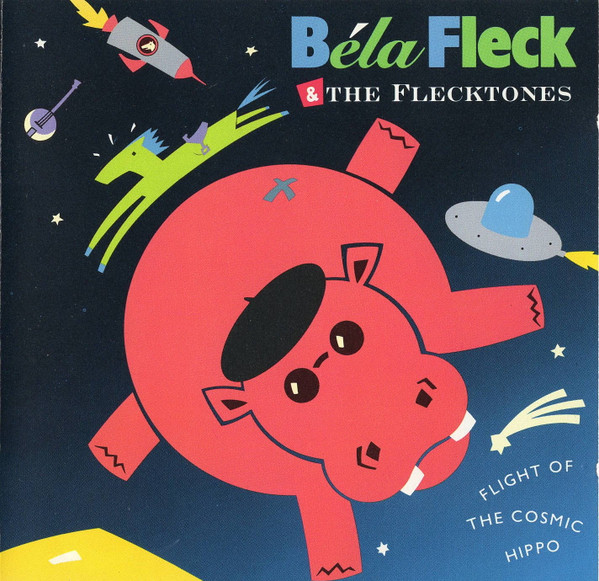

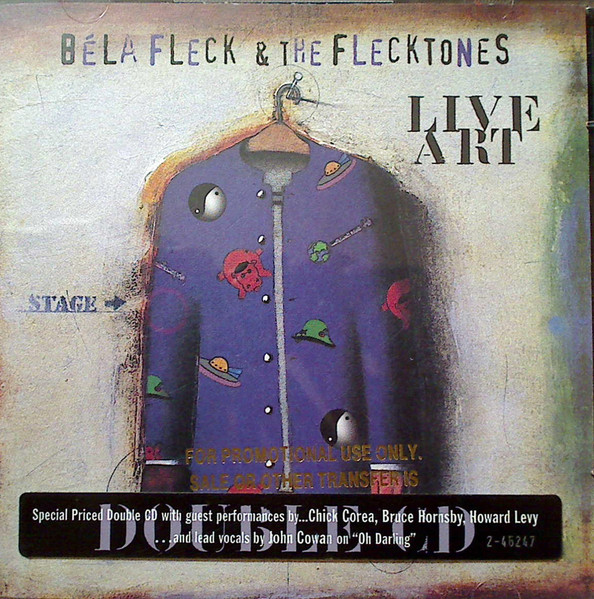


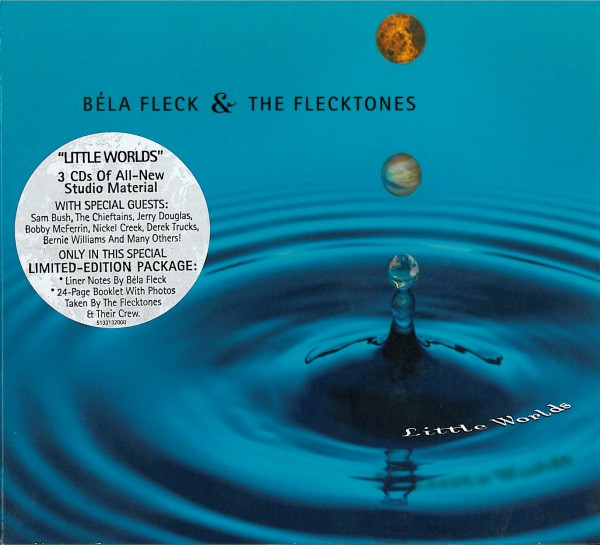

Related artists
Around the web
Follow every record they touch.
Start your shelf and Gatefold tracks Béla Fleck and the Flecktones's new pressings, tour dates, and the whole discography — automatically.
Start your shelf →Free forever. Works with 10 records or 10,000.