
Artist
Arthur Lyman
Kauaʻi, United States · 1932 – 2002
Arthur Lyman is a musician from Kauaʻi, United States, active 1932–2002. Their discography on Gatefold includes 24 records.

38
Albums tracked
61
In collections
1932
Since
Biography
Arthur Lyman built a career out of a custom-built four-mallet technique and the natural reverb of the Kaiser Aluminum Dome in Honolulu. He wasn't just some guy playing lounge music. He was an obsessed percussionist who figured out how to make a vibraphone sound like it was melting into the humidity. The secret wasn't the fancy gear—it was the aluminum dome’s acoustics and the fact that his band was making bird calls and frog noises into the mics to hide the hiss of the tape. He cut his teeth playing in Martin Denny’s group before splitting off to chase a harder, more percussion-heavy sound. While the rest of the world thought this was background music for tiki bars, Lyman was a monster on the vibes who demanded absolute precision from his quartet. They recorded after midnight to avoid traffic noise, capturing that weird, eerie stillness that makes 'Taboo' sound like a transmission from a different planet. It’s high-fidelity kitsh, sure, but the technical execution is fucking bulletproof.
Bio from The Clerk
The Arc of Arthur Lyman
The pivots — what forced Arthur Lyman to reinvent.
The Shell Bar Departure
After the massive success of 'Exotica' in 1957, Lyman left Martin Denny’s group to become the house act at Henry J. Kaiser’s Hawaiian Village. He took the bird calls with him but ditched the piano-heavy arrangements for a leaner, mallet-focused quartet. This shift put the vibraphone at the dead center of the mix, turning the music from cocktail jazz into a hypnotic, percussive experiment. You hear the change immediately on the first HiFi Records sessions where the space between the notes becomes just as important as the melody.
The Aluminum Dome Years
Kaiser built a massive geodesic dome that acted like a giant acoustic chamber, and Lyman treated it like a fifth band member. The engineer, Richard Vaughn, used a portable Ampex tape recorder to capture the natural decay of the room, which gave the vibraphone a ghostly sustain that no studio plate reverb could mimic. This era produced 'Yellow Bird' and 'Taboo,' records that sold millions because they sounded like 3D audio before the technology actually existed. It was a perfect marriage of architectural fluke and percussionist ego.
The Stereo Spectacle Decline
As the 1960s wore on, the industry shifted from the atmospheric 'Exotica' craze to more conventional easy listening and pop covers. Lyman started churning out records like 'The Shadow of Your Smile' to satisfy the label, losing the bird calls and the midnight-session spookiness in favor of polish. The quartet remained tight, but the wild, improvisational edge of the early sessions was replaced by a corporate-mandated lounge sheen. It’s the sound of a guy who conquered the charts and then got stuck playing the hits for tourists until the vibe died out.
Influences
- Lionel Hampton — Lyman cited Hampton as his primary reason for picking up the mallets. You hear it in his rhythmic attack and the way he handles fast, chromatic runs that most lounge players would simplify.
- Martin Denny — Denny was Lyman's boss in the mid-50s and the one who encouraged the 'jungle noises' during their residency at the Hawaiian Village. The DNA of the entire Exotica genre was forged in their shared stage time before Lyman went solo.
- Milt Jackson — Lyman respected the blues-drenched phrasing of the Modern Jazz Quartet leader. While Lyman focused on atmosphere, his soloing logic often mirrored Jackson’s soulful, restrained vibrato use.
- Les Baxter — Baxter's 1951 'Ritual of the Savage' provided the blueprint for the tribal-pop aesthetic Lyman adopted. Lyman took Baxter’s orchestral concepts and stripped them down for a four-piece percussion ensemble.
- George Shearing — The 'Shearing Sound'—locked-hands piano and vibraphone doubling the melody—was a massive influence on how Lyman structured his quartet’s harmonies. He took Shearing's cool jazz polish and moved it into the tropics.
Discography
Their records — most-collected first.
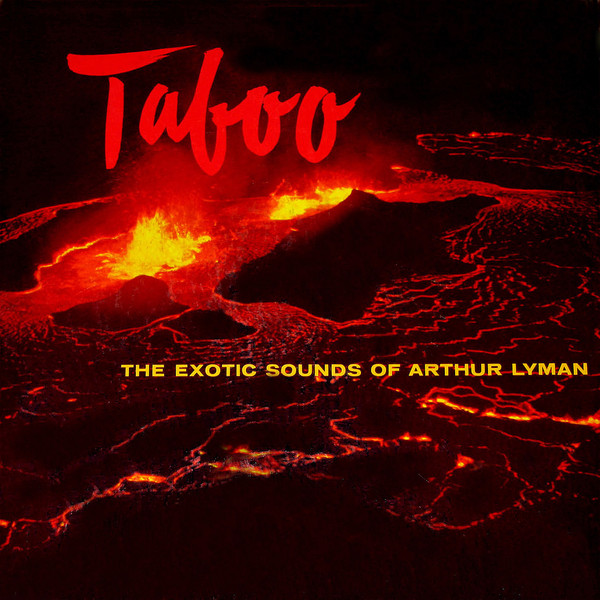
Taboo - The Exotic Sounds Of Arthur Lyman
1958

Percussion Spectacular!
1961

Taboo Vol. 2
1960

Bahia
1959

Island Vibes
1980

Many Moods Of Arthur Lyman
1962

The Legend Of Pele
1959

Hawaiian Sunset
1958

Bwana À
1958

Ilikai
1967
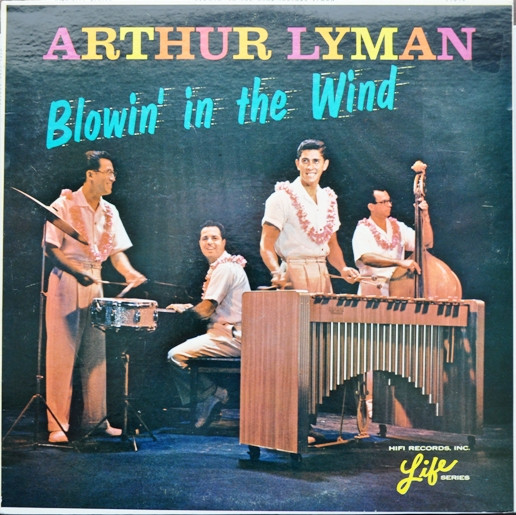
Blowin' In The Wind
1964

Paradise
1964

Love For Sale!
1963

The Winner's Circle
1969

Today's Greatest Hits
1969

The Shadow Of Your Smile
1966

Aloha, Amigo
1966

Hawaiian Sunset Vol II
1965

Arthur Lyman's Greatest Hits
1965

Isle Of Enchantment
1964

Mele Kalikimaka (Merry Christmas)
1964
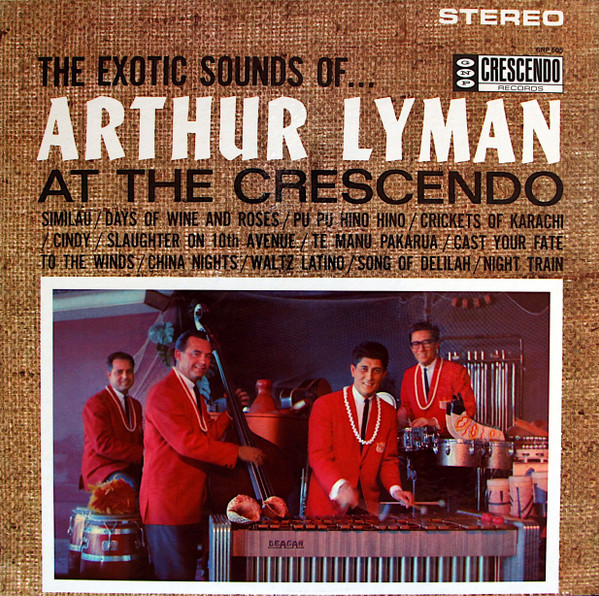
The Exotic Sounds Of ... Arthur Lyman At The Crescendo
1963

Cotton Fields
1963

Taboo Vol. 2
1962
Related artists
Bands & projects
Frequent collaborators
Around the web
Follow every record they touch.
Start your shelf and Gatefold tracks Arthur Lyman's new pressings, tour dates, and the whole discography — automatically.
Start your shelf →Free forever. Works with 10 records or 10,000.