
Artist
Allegaeon
American technical/melodic death metal band
Fort Collins, United States · Formed 2007
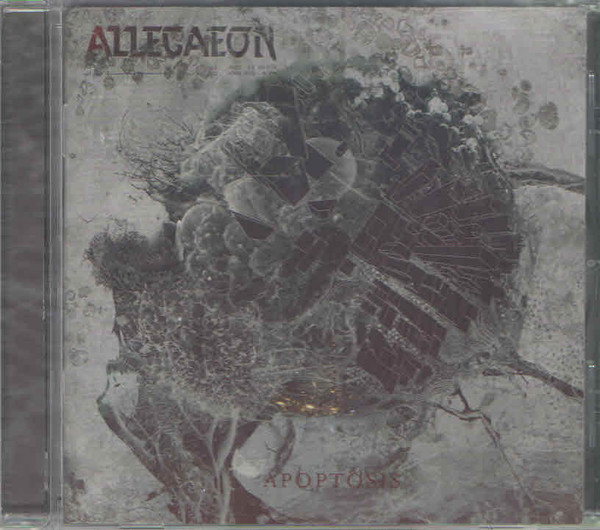
Allegaeon is a music group from Fort Collins, United States, active since 2007. Their discography on Gatefold includes 8 records.

8
Albums tracked
13
In collections
2007
Since
Biography
Greg Burgess went to the Cincinnati Conservatory of Music and you can hear every cent of that tuition in the picking patterns. Most tech-death bands hide behind a wall of digital compression and triggered kicks, but these guys showed up at Flatline Audio with Dave Otero to prove you could play math-heavy riffs with the soul of a thrash band. They didn't start in a garage; they started in a rehearsal space obsessing over Bach-style counterpoint and how to make it heavy as hell without losing the melody. They’ve cycled through three different drummers and a couple of frontmen, but the DNA hasn't mutated much because Burgess and Michael Stancel keep the guitar work locked in a tight, neoclassical grip. It’s science-fiction metal for people who think the genre got too soft or too mindless. They hit that sweet spot where the technicality isn't just a flex—it's the whole point of the song.
Bio from The Clerk
The Arc of Allegaeon
The pivots — what forced Allegaeon to reinvent.
The Otero Formula
When they linked up with producer Dave Otero for Fragments of Form and Function, they found the sound that would define the Denver tech-death scene. Otero’s production stripped away the muddy low-end of their early EP and forced the dual-guitar harmonies to the front of the mix. This era established their obsession with biological and astronomical themes, setting them apart from the standard gore-soaked tropes of their peers. You can hear the precision of a controlled laboratory environment in every sweep-picked arpeggio.
The McShane Era
The departure of original vocalist Ezra Haynes could have sank the ship, but Riley McShane stepped in and brought a melodic range that the band hadn't explored yet. Records like Proponent for Sentience saw them leaning harder into progressive structures and even clean vocals, which pissed off the purists but opened up their songwriting. This shift allowed them to incorporate flamenco guitars and more complex orchestral layering without it feeling like a gimmick. It was the moment they stopped being just a 'fast' band and started being a 'big' band.
The Full Circle Return
With Ezra Haynes returning to the fold recently, the band has pivoted back to the aggressive, punchy energy of their early days while keeping the high-concept production values they picked up along the way. The transition back to the original voice felt less like a nostalgia trip and more like a recalibration of their core mission. They aren't trying to reinvent the wheel anymore; they're just making sure the wheel is spinning at 280 beats per minute with perfect intonation. It’s a leaner, meaner version of the technicality they’ve been honing for over a decade.
Influences
- Johann Sebastian Bach — Burgess is vocal about his classical training and specifically Bach’s influence on his compositional style. You hear it in the constant use of counterpoint and the way the two guitars weave independent lines rather than just playing in unison. It’s the structural backbone of their entire discography.
- Carcass — The band has directly covered 'Heartwork' and frequently cites the Bill Steer/Michael Amott era as the blueprint for their melodic sensibility. That specific blend of surgical precision and earworm hooks is all over the riffing on 'Elements of the Infinite.' They took the surgical theme and swapped the hospital for a physics lab.
- Nevermore — The influence of Jeff Loomis is unavoidable in Allegaeon’s lead work and their use of seven-string guitars to create massive, dark textures. They’ve toured with Loomis and his DNA is present in the way they bridge the gap between thrash energy and progressive complexity. It’s heavy, but it’s never dumb.
- At the Gates — The Swedish melodic death metal scene provided the rhythmic template for Allegaeon's faster passages. You can hear the 'Slaughter of the Soul' style d-beats and rapid-fire tremolo picking throughout their early records. They took that Gothenburg sound and sharpened it with modern American technicality.
- Dream Theater — The band’s progressive inclinations and long-form conceptual pieces are a direct nod to Petrucci and company. They’ve mentioned the 1990s prog-metal boom as the reason they aren't afraid to drop an eight-minute epic in the middle of a death metal record. The technical ambition is the common thread.
Discography
Their records — most-collected first.




Related artists
Around the web
Follow every record they touch.
Start your shelf and Gatefold tracks Allegaeon's new pressings, tour dates, and the whole discography — automatically.
Start your shelf →Free forever. Works with 10 records or 10,000.