
Album
Tester De Violencia
1988 · Rock
Rare pressing on Gatefold
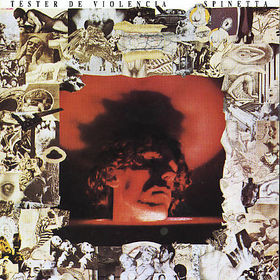
Tester De Violencia is a Rock album by Luis Alberto Spinetta, originally released in 1988. On Gatefold: 13 pressings tracked.
About
Tester De Violencia is the eighth solo album by Argentine musician Luis Alberto Spinetta, released in 1988 by Del Cielito Records. Spinetta himself considered it a concept album centered on the theme of violence, comparing its internal coherence to the album Durazno sangrando. It was presented on November 25, 26, and 27 at the Broadway Theater in Buenos Aires. The album was a massive success and was voted best of the year by the annual poll in the Sí supplement of the Clarín newspaper, while the song "El mono tremendo" was considered the best of 1988. The original vinyl LP version contains ten songs. The CD version added an extra track, "Parlante," at the end. The performers are Spinetta (guitar, vocals, and programming), Carlos Alberto Rufino (bass), Juan Carlos Fontana (keyboards), Guillermo Arrom (lead guitar), and Jota Morelli (drums). The album is dedicated to Spinetta's mother, Julia Ramirez. Historical Context Spinetta had just finished Lalalá (his double album with Fito Páez) and had suffered the tragedy of Fito Páez's mothers being murdered during the album's promotional concerts. This situation impacted both artists' work: while Fito Páez composed and released the album Ciudad de pobres corazones (1987), Spinetta, for his part, expressed his grief in Téster de violencia. The historical context of Argentina also influenced Spinetta's emotional state. At the end of 1983, Argentine society had regained democracy and had tried and convicted the military juntas (1985) that committed crimes against humanity during the last dictatorship. But in 1986, this climate began to sour when Congress passed the first of the so-called impunity laws, followed in January 1988 by the first of the military uprisings by the Carapintadas (painted faces), led by Aldo Rico. In March, Spinetta gave a concert at the Chateau Carreras in Córdoba, where he openly expressed his rejection of the uprisings, changing the lyrics of "Don't be a fanatic" to sing "Don't be a soldier, don't be rich." Recording Spinetta had planned to release the album in 1987, but a series of accidents and personal difficulties postponed it until recording began in April 1988. The delay allowed him to better organize the material and, above all, conceptualize it. Title Spinetta explained the meaning of the title on several occasions. The expression came to him in close connection with Fito Páez, between 1986 and 1987, after Páez's mothers were brutally murdered in their home in Rosario, an event for which Spinetta felt karmically responsible due to the violence contained in the songs of the album Lalalá (1986), which they had recorded together. Luis Alberto exemplified his behavior as a witness to the violence that surrounded him, mentioning an incident at the La Falda Festival in which musicians were violently attacked with bottles or blunt objects. By titling the album "Téster de Violencia", Spinetta intended to go beyond a purely moral approach to the theme of violence, to express how that violence manifested itself in people's bodies and how he himself felt that social violence permeated him, transforming him into an instrument that made that violence visible. In his conversations with Juan Carlos Diez, writen in "Martropía", Spinetta elaborates on this concept and extends the notion of "violence" to the very existential acts of being born, living, and dying. Spinetta proposes postponing "the idea that body and soul are separable" and develops a vision of the body as a vessel "through which fluids transiently pass; losing that fluid results in death." In this process, for Spinetta, people respond like "an enormous vibrational tester." Content Téster De Violencia is a concept album about violence, but it addresses it in a way that goes beyond moral condemnation and external narratives. In an interview with Humor magazine, Spinetta said that with the album he was trying to "reverse the word to a field other than that of the horrible. Violence isn't just atrocities." To refer to this vision, in Martropía he speaks of "the guinea pig consciousness." Influenced by his readings of Deleuze, and especially by the chapter "The Body of the Condemned" from Foucault's book Discipline and Punish, Spinetta focuses the album on the very bodies of people. The discovery of the body led Spinetta to write several essays on the subject, which he used in his songs. These essays remain unpublished, but Berti transcribes fragments of them in "Crónica e iluminaciones". In these essays, Spinetta conceives of the "living body" as "flora that glides within itself," relates it to nothingness, and defines it as a system "closed and open at the same time," establishing relationships of "confinement" through regimes of admission: "body is admission." The violence Spinetta felt at that time was also related to the country's historical context, especially the impunity laws passed by Raúl Alfonsín's government in 1986 and 1987, and the Carapintada military uprisings that had begun in January 1988. In an interview with El Porteño magazine in January 1989, Spinetta advocated activism "without weapons or violence," but at the same time said that if there were a fundamentalist military coup, one would have to "fight to the death" in defense of "a democratic country, the rule of law, and the upholding of human rights." In several conversations, Spinetta explained that he had grouped the album's songs into two main thematic categories: "falls into the body" and "evaporations." In the group of "falls to the body" he included "Tres Llaves" and "La Bengala Perdida", while in the group of "evaporations" he included "Lejisimo", "Organismo En El Aire", "El Mono Tremendo", "La Luz De La Manzana" and "Siempre En La Pared". Cover The album cover is a collage of bodies, with a red photograph of Spinetta's head superimposed in the center of the front. The overall idea was Luis Alberto's. The collage is the work of Gustavo Spinetta—Luis Alberto's brother—and the photograph is by Dylan Martí. The collage is made with black and white figures cut from books and magazines, some of them selected by Luis Alberto himself. Among the images are the Ezeiza Massacre, boxers fighting, a man self-immolating, another man choking on food, a woman and a man having sex, a prisoner peeking through the prison bars, Sylvester the Cat, women's legs in high heels, a hand X-ray, police officers, screaming children, comic book characters, a man yawning, soldiers in a helicopter, Frankenstein's monster, starving children, the suicide of politician Budd Dwyer, hands, feet, buttocks, and a pelvis. The cover's focal point is a red photograph of Spinetta's head, emerging from the shadows and submerged in a collage of black and white bodies. The red color, the head without the rest of the body, and the facial expression convey a bloody and deadly image, suggesting a sacrifice with obvious similarities to Christian imagery. Gustavo Spinetta has mentioned the influence of Dadaism and Surrealism on his drawings, linked to madness and "visionary states," as well as Foucault's influence on his brother when creating the overall cover design.
via Last.fm
The Clerk says
The Clerk knows this whole record — the pressing quirks, the credits, the take.
Tracklist
Side A
- A1Lejísimo
- A2Siempre En La Pared
- A3Al Ver Verás
- A4La Luz De La Manzana
- A5El Marcapiel
Side B
- B1El Mono Tremendo
- B2Organismo En El Aire
- B3Tres Llaves
- B4La Bengala Perdida
- B5Alcanfor
Sound DNA
- Rock
- Classic Rock
- layered
- intense
- bohemian
Credits
The people behind it.
Performers
- Guillermo ArromARRANGED BY ELECTRIC GUITAR GUITAR
- Jota MorelliDRUMS PERFORMER , DRUMS, PERCUSSION
- Juan Carlos FontanaARRANGED BY KEYBOARDS
- Luis Alberto SpinettaARRANGED BY RHYTHM GUITAR, PROGRAMMED BY , VOCALS, ARRANGED BY GUITAR
- Machi RufinoARRANGED BY , BASS BASS ARRANGED BY
- Catarina SpinettaBACKING VOCALS
- Dante SpinettaBACKING VOCALS
- Emmanuel "Papik" MartíBACKING VOCALS
- Guadalupe MartíBACKING VOCALS
- Lucas MartíBACKING VOCALS
- PechugoBACKING VOCALS
- Valentino SpinettaBACKING VOCALS
Rare pressing on Gatefold · 13 pressings tracked on Gatefold
Start your shelf.
Track your pressings of Tester De Violencia, get the Clerk's take, and see what the record is worth — free.
Start your shelf →Free forever. Works with 10 records or 10,000.