
Album
Pieces Of A Man
1971 · Jazz, Funk / Soul
36 collectors on Gatefold own this
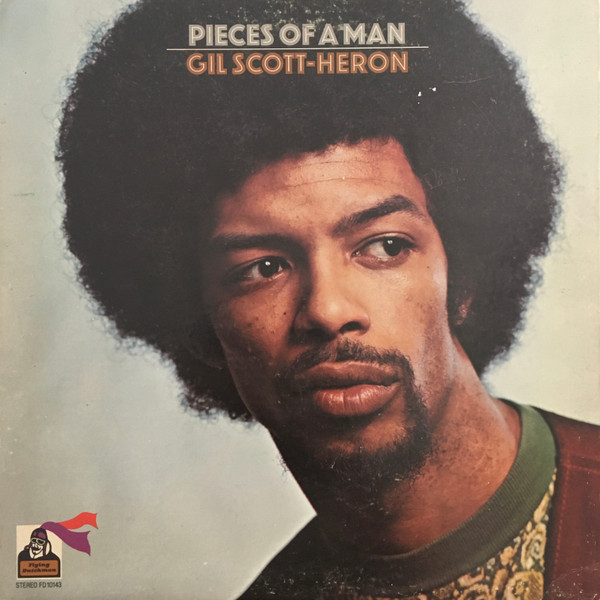
Pieces Of A Man is a Jazz album by Gil Scott-Heron, originally released in 1971. On Gatefold: 39 pressings tracked, owned by 36 collectors.
About
Once asked how he felt about people calling him the Godfather of Rap, Gil Scott-Heron said he thought they’d made a mistake. Yeah, there were similarities: the sing-speaking; the mix of soul, poetry, and jazz; the concept of music as a reportorial force—what Public Enemy’s Chuck D later called “Black America’s CNN.” Beyond that, though, he didn’t get it. Hip-hop was—especially at its onset— loud, <i>braggadocious</i>, more concerned with personal mythmaking than societal reflection. And whereas rap’s origin story was all about economy (two turntables and a microphone, the big personality with the bare-bones rig), Scott-Heron and his writing partner Brian Jackson had always sought to make their music subtler and more refined—less radio DJ than verse set to sound. <i>Pieces of a Man</i> is best known for “The Revolution Will Not Be Televised,” and with good reason: Few pieces of music capture as much humor, bitterness, grief, and insight in such a short space. But it’s the whole of the album—its tonal shifts, its musical variety—that makes Scott-Heron legendary: the pessimism of “Home Is Where the Hatred Is” next to the uplift of “Save the Children,” springy jazz funk (“Lady Day and John Coltrane”) next to heavy soul ballads (“Pieces of a Man”). As bracing as his observations can be, he has a way of making them feel casual, almost offhand—the chatter of someone on the corner rather than the Sermon on the Mount. He once said the place he came from was more Langston Hughes than Huey Newton—in other words, he wasn’t there to change what he saw, only to describe it with as much empathy as he could. Whereas artists like Bob Marley and Fela Kuti—both radical Black voices of the ’70s—inspire action, Scott-Heron inspires careful, unflinching observation. Asked whether “The Revolution Will Not Be Televised” was an effort to turn his anger into humor, Scott-Heron shook his head and said he didn’t turn anything into anything. And if the condition of being Black in America looked unjust and absurd, well, maybe that’s because it is.
via Apple Music
The Clerk says
The Clerk knows this whole record — the pressing quirks, the credits, the take.
Tracklist
- 1The Revolution Will Not Be Televised3:07
- 2Save the Children4:27
- 3Lady Day and John Coltrane3:36
- 4Home Is Where the Hatred Is3:21
- 5When You Are Who You Are3:22
- 6I Think I'll Call It Morning3:31
- 7Pieces of a Man4:54
- 8A Sign of the Ages4:02
- 9Or Down You Fall3:13
- 10The Needle's Eye4:50
- 11The Prisoner9:26
- 12Chains3:25
- 13Peace6:08
- 14A Toast to the People3:25
Sound DNA
- Jazz
- Soul Jazz
- warm
- earnest
- political
Notes from the original pressing. Later editions may differ.
Recorded: April 19 & 20, 1971
Credits
The people behind it.
Performers
- Bernard PurdieDRUMS
- Brian JacksonPIANO, ELECTRIC PIANO PIANO, PIANO
- Burt JonesELECTRIC GUITAR GUITAR
- Gil Scott-HeronCOMPOSED BY, VOCALS, LINER NOTES VOCALS VOCALS , LINER NOTES
- Hubert LawsFLUTE, SAXOPHONE
- Johnny PateCONDUCTOR
- Pretty Purdie And The PlayboysFEATURING
- Ron CarterBASS BASS, BASS BASS, ELECTRIC BASS
36 collectors on Gatefold own this · 39 pressings tracked on Gatefold
Start your shelf.
Track your pressings of Pieces Of A Man, get the Clerk's take, and see what the record is worth — free.
Start your shelf →Free forever. Works with 10 records or 10,000.