
Album
Lahai
2023 · Electronic, Funk / Soul
12 collectors on Gatefold own this
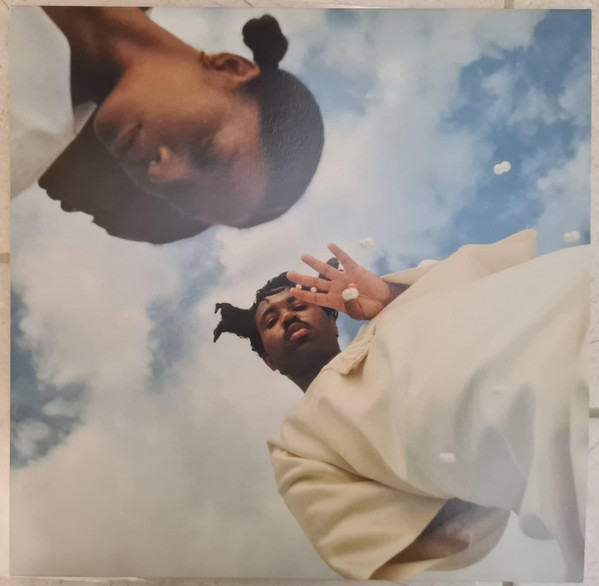
Lahai is a Soul & Funk album by Sampha, originally released in 2023. On Gatefold: 7 pressings tracked, owned by 12 collectors.
About
On his Mercury Prize-winning debut album, 2017’s <i>Process</i>, Sampha Sisay often cut an isolated figure. As the Londoner’s songs contended with loss—particularly the passing of his parents—and anxieties about his health and relationships, a sense of insularity and detachment haunted his poignant, experimental electro-soul. Arriving six years later, this follow-up presents a man reestablishing and strengthening connections. Lifted by warm synths and strings, songs are energized by the busy rhythms of jungle, broken beat, and West African Wassoulou music. Images of flight dominate as Sampha zooms out from everyday preoccupations to take a bird’s-eye view of the world and his place in it as a father, a friend, a brother, a son. “I feel sometimes making an album is like a manifesto for how I should be living, or that all the answers are in what I’m saying,” he tells Apple Music. “I don’t necessarily <i>live</i> by what I’m saying but there’s times where I recognize that I need to reconnect to family and friends—times where I can really lose connection by being too busy with my own things.” So where <i>Process</i> ended with Sampha ruefully noting, “I should visit my brother/But I haven’t been there in months/I’ve lost connection, signal/To how we were” on “What Shouldn’t I Be?” <i>Lahai</i> concludes in the fireside glow of “Rose Tint,” a song celebrating the salve of good company: “I’m needy, don’t you know?/But the fam beside me/Is what I needed most.” Before then, <i>Lahai</i> examines Sampha’s sense of self and his relationships through his interests in science, time, therapy, spirituality, and philosophy. “I became more confident with being OK with what I’m interested in, and not feeling like I have to be an expert,” he says. “So even if it comes off as pretentious at times, I was more comfortable with putting things out there. That’s an important process: Even in the political sphere, a lot of people don’t speak about things because they’re worried about how people will react or that they’re not expert enough to talk on certain things. I’m into my science, my sci-fi, my philosophy. Even if I’m not an expert, I could still share my feelings and thoughts and let that become a source of dialogue that will hopefully improve my understanding of those things.” Started in 2019 and gradually brought together as Sampha negotiated the restrictions of the pandemic and the demands and joys of fatherhood, the songs, he says, present “a photograph of my mental, spiritual, physical state.” Read on for his track-by-track guide. <b>“Stereo Colour Cloud (Shaman’s Dream)”</b> “I wanted to make something that felt like animation and so the instrumentation is quite colorful. What started it off was me experimenting with new kinds of production. I was using a mechanical, MIDI-controlled acoustic piano and playing over it. Same thing with the drums—I built a robotic acoustic drummer to build these jungle breaks. So, it’s all these acoustic instruments that I programmed via MIDI, and also playing over them with humans, with myself.” <b>“Spirit 2.0”</b> “It’s a song I started in my bedroom, a song I wrote walking through parks in solitude, a song I wrote at a time I felt I needed to hear for myself. It took probably a year from start to finish for that song to come together. I had the chords and the modular synths going for a while and then eventually I wrote a melody. Then I had an idea for the drums and I recorded the drums. It was also influenced by West African folk music, Wassoulou music. I guess that isn’t maybe quite obvious to everyone, but I’ve made quite a thing of talking about it—it’s influenced the way I write rhythmically.” <b>“Dancing Circles”</b> “This also came from this kind of acoustic/MIDI jamming. I wrote this pulsing, slightly clash-y metronomic piano and wrote over and jammed over it. I put the song together with a producer called Pablo Díaz-Reixa [Spanish artist/producer El Guincho], who helped arrange the song. I sort of freestyled some lyrics and came up with the dancing refrain, and then had this idea of someone having a conversation with someone they hadn’t seen in a long time, and just remembering how good it is, how good it felt to dance with them.” <b>“Suspended”</b> “I feel like a lot of what I’ve written goes between this dreamlike state and me drawing on real-life scenarios. This is a song about someone who’s reminiscing again, but also feeling like they’re kind of going in and out of different time periods. I guess it was inspired by thinking about all the people, and all the women especially, in my life that I’ve been lifted up by, even though I frame it as if I’m speaking about one person. The feeling behind it is me recognizing how supported I’ve been by people, even if it’s not been always an easy or straightforward journey.” <b>“Satellite Business”</b> “This feels like the midpoint of the record. I guess in this record I was interrogating spirituality and recognizing I hadn’t really codified, or been able to put my finger on, any sort of metaphysical experience, per se—me somewhat trying to connect to life via a different view. The song is about me recognizing my own finitude and thinking about the people I’ve lost and recognizing, through becoming a father myself, that not all is done and I’m part of a journey and I can see my parents or even my brothers, my daughter. [It’s] about connection—to the past and to the future and to the present. Any existential crisis I was having about myself has now been offloaded to me thinking about how long I’m going to be around to see and protect and help guide someone else.” <b>“Jonathan L. Seagull”</b> “I speak a lot about flying [on the album] and I actually mention [Richard Bach’s novella] <i>Jonathan Livingston Seagull</i> in ‘Spirit 2.0.’ For me, the question was sometimes thinking about limits, the search for perfection. I don’t agree with everything in <i>Jonathan Livingston Seagull</i> as a book, it was more a bit of a memory to me [Sampha’s brother read the story to him when he was a child], the feeling of memory as opposed to the actual details of the book. I guess throughout the record, I talk about relationships in my own slightly zoomed-out way. I had this question in my mind, ‘Oh, how high can you actually go?’ Just thinking about limits and thinking sometimes that can be comforting and sometimes it can be scary.” <b>“Inclination Compass (Tenderness)”</b> “Birds, like butterflies, use the Earth’s magnetic field to migrate, to be able to navigate themselves to where they need to get to [this internal compass is known as an inclination compass]. I feel that there’s times where love can be simpler than I let it be. As you grow up, sometimes you might get into an argument with someone and you’re really stubborn, you might just need to hug it out and then everything is fine—say something nice or let something go. Anger’s a complicated emotion, and there’s lots of different thoughts and theories about how you should deal with it. For me personally, this is leaning into the fact that sometimes it’s OK to switch to a bit more of an understanding or empathetic stance—and I can sometimes tend to not do that.” <b>“Only”</b> “It’s probably the song that sticks out the most in the record in terms of the sonic aesthetic. It’s probably less impressionistic than the rest of the record. I think because of that it felt like it was something to share [as the second single]. Thematically as well, it just felt relevant to me in terms of trying to follow the beat of my own drum or finding a place where you’re confident in yourself—recognizing that other people are important but that I can also help myself. It’s a bit of a juxtaposition because there’s times where it feels like it’s only you who can really change yourself, but at the same time, you’re not alone.” <b>“Time Piece”</b> “Time is just an interesting concept because there’s so many different theories. And does it even exist? [The lyrics translate as ‘Time does not exist/A time machine.’] But we’re really tied to it, it’s such an important facet of our lives, how we measure things. It was just an interesting tie into the next song.” <b>“Can’t Go Back”</b> “I feel like there’s a lot of times I just step over my clothes instead of pick them up. I’m so preoccupied with thinking about something else or thinking about the future, there’s times where I could have actually just been a bit more present at certain moments or just, ‘It’s OK to just do simple things, doing the dishes.’ The amount [of] my life [in] which I’m just so preoccupied in my mind…Not to say that there isn’t space for that, there’s space for all of it, but this is just a reminder that there’s times where I could just take a moment out, five to 10 minutes to do something. And it can feel so difficult to spend such short periods of time without a device or without thinking about what you’re going to do tomorrow. This is just a reminder of that kind of practice.” <b>“Evidence”</b> “I think there’s times where it just feels like I have ‘sliding door’ moments or glimpses or feelings. This is hinting [at] that. Again, the feeling of maybe not having that metaphysical connection, but then feeling some sort of connection to the physical world, whatever that might be.” <b>“Wave Therapy”</b> “I recorded a bit of extra strings for ‘Spirit 2.0,’ which I wanted to use as an interlude after that, but then I ended up reversing the strings that [Canadian composer and violinist] Owen Pallett helped arrange. I called it ‘Wave Therapy’ because, for some of the record, I went out to Miami for a week to work with El Guincho and before each session, I’d go to the beach and listen to what we had done the day before and that was therapeutic.” <b>“What if You Hypnotise Me?” (feat. Léa Sen)</b> “I was having a conversation with someone about therapy and then they were like, ‘Oh, I don’t even do talking therapy, I just get hypnotized, I haven’t got time for that.’ I thought that was an interesting perspective, so I wrote a song about hypnotizing, just to get over some of these things that I’m preoccupied with. I guess it’s about being in that place, recognizing I need something. Therapy can be part of that. As I say, nothing has a 100 percent success rate. You need a bit of everything.” <b>“Rose Tint”</b> “Sometimes I get preoccupied with my own hurt, my own emotions, and sometimes connecting to love is so complicated, yet so simple. It’s easy to call someone up really and truly, but there’s all these psychological barriers that you put up and this kind of headspace you feel like you don’t have. Family and friends or just people—I feel like there’s just connection to people. You can be more supported than you think at times, because there’s times where it feels like a problem shared can feel like a problem doubled, so you can kind of keep things in. But I do think it can be the other way round.”
via Apple Music
The Clerk says
The Clerk knows this whole record — the pressing quirks, the credits, the take.
Tracklist
Side A
- A1Stereo Colour Cloud (Shaman's Dream)
- A2Spirit 2.0
- A3Dancing Circles
- A4Suspended
- A5Satellite Business
- A6Jonathan L Seagull
Side B
- B1Inclination Compass (Tenderness)
- B2Only
- B3Time Piece
- B4Can't Go Back
- B5Evidence
- B6Wave Therapy
- B7What If You Hypnotise Me?
- B8Rose Tint
Sound DNA
- Soul & Funk
- Contemporary R&B
- layered
- intimate
- soulful
Credits
The people behind it.
Performers
- Owen PallettARRANGED BY
- Sampha SisayVOCALS, BACKING VOCALS, PIANO, SYNTH, SPEECH , ELECTRIC PIANO , GONG, DRUM PROGRAMMING
- Ben Reed6-STRING BASS, ACOUSTIC GUITAR, VIBRAPHONE ACOUSTIC GUITAR BACKING VOCALS
- Ben WalkerBACKING VOCALS
- David WrenchPROGRAMMED BY
- El GuinchoBASS BONGOS, PROGRAMMED BY PROGRAMMED BY
- Fabiana PalladinoBACKING VOCALS
- Fame'S Skopje Studio OrchestraSTRINGS
- Georgia DuncanBACKING VOCALS
- IbeyiBACKING VOCALS VOCALS
- Jonathan GeyevuBACKING VOCALS
- Katie MackenzieBACKING VOCALS
- Kwake BassDRUMS
- Laura GrovesBACKING VOCALS ELECTRIC PIANO , VIBRAPHONE
- Léa SenFEATURING VOCALS
- Mansur BrownBACKING VOCALS ELECTRIC GUITAR
- Morgan SimpsonDRUMS
- Pauli The PSMBACKING VOCALS
12 collectors on Gatefold own this · 7 pressings tracked on Gatefold
Start your shelf.
Track your pressings of Lahai, get the Clerk's take, and see what the record is worth — free.
Start your shelf →Free forever. Works with 10 records or 10,000.