
Album
Daydream Nation
1988 · Rock
68 collectors on Gatefold own this
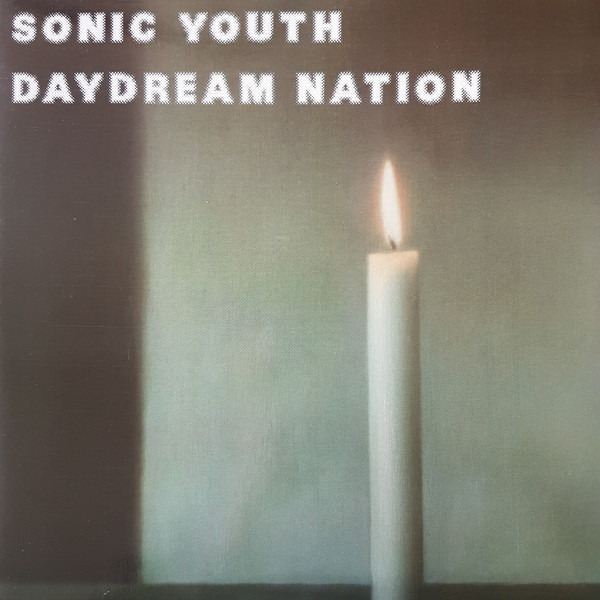
Daydream Nation is an Alt/Indie album by Sonic Youth, originally released in 1988. On Gatefold: 91 pressings tracked, owned by 68 collectors.
About
In 1988, <i>Billboard</i> magazine started a new chart called Modern Rock Tracks. Most of the names were familiar, or at least getting there: U2, R.E.M., Sinéad O’Connor, Depeche Mode. At some point, Sonic Youth’s blistering “Teen Age Riot” showed up. It didn’t chart higher than No. 20, but it’s still weird to think of the band in the company of such mega-acts as U2 and R.E.M. By some metrics, landing on Billboard’s Modern Rock Tracks chart was about as big as Sonic Youth ever got. Still, even if Sonic Youth never achieved the arena-filling heights of some of its alt-rock peers, <i>Daydream Nation</i> is an album that transformed everyone who heard it. The band had been getting progressively more accessible since 1986’s <i>Evol</i>, but <i>Daydream Nation</i> represented something different: The sound is clearer than previous efforts, and the songs make more sense. Even when the band members are digressing or jamming out, there’s a shape and discipline throughout <i>Daydream Nation</i>—so much so, some tracks feel more like classic rock than free noise (“’Cross the Breeze,” “Total Trash”). The band members prove they could sound brief and nasty (“Silver Rocket”) while also beautiful and abstract, with feedback-heavy guitars that open up like oceans (“The Sprawl”). Mostly, <i>Daydream Nation</i> feels like an experiment: What if a band that had always seemed totally committed to resisting conventions decided, for once, to embrace them instead? Not that this is a highly polished album: The tunings are weird, the songs are still noisy, and it’s not like Kim Gordon and Thurston Moore had decided to learn to sing. But to the extent that rock ’n’ roll was loud, beat-heavy music that captured the passionate rebellion of youth, <i>Daydream Nation</i> was pulling a lot more weight than Depeche Mode (all due respect). And making this a double album wasn’t just Sonic Youth’s way of poking fun of 1970s excess; the band members really <i>did</i> have a lot to say, even if they could come off as circuitous and detached while saying it. Thurston later said he wrote the lyrics for the surging “Teen Age Riot” after imagining an alternate reality in which Dinosaur Jr. cofounder J Mascis became president. On one hand, it was a joke: Mascis, by most accounts, was a guy too shy to be in a band, let alone hold office. But he also had the bravery to bring back big, classic-sounding guitar solos at a time when nothing in underground music could’ve been more uncool. And on <i>Daydream Nation</i>, Sonic Youth goes <i>big</i>, pairing epic American images—presidents, nations, sprawls, riots, trash—with equally epic music. “Does this sound simple?” Kim Gordon asks on “The Sprawl.” “Fuck you! Are you for sale? Does ‘fuck you’ sound simple enough?” In fact, no band had had ever made it sound so complicated.
via Apple Music
The Clerk says
The Clerk knows this whole record — the pressing quirks, the credits, the take.
Tracklist
Side A
- A1Teen Age Riot6:56
- A2Silver Rocket3:46
- A3The Sprawl7:39
Side B
- B1'Cross The Breeze7:00
- B2Eric's Trip3:46
- B3Total Trash7:30
Side C
- C1Hey Joni4:17
- C2Providence2:39
- C3Candle4:57
- C4Rain King4:38
Side D
- D1Kissability3:06
- D2ATrilogy: a) The Wonder4:27
- D2BTrilogy: b) Hyperstation7:04
- D2ZTrilogy: z) Eliminator Jr.2:37
Sound DNA
- Alt/Indie
- Noise Rock
- distorted
- frenzied
- art school
LP Masters:
1988 Masterdisk DMM is found on 1988 releases worldwide and all Blast First represses.
2007 Golden mastering for the box set is repressed in 2014 2xLP version.
CD Masters:
1988 Masterdisk version heard on all worldwide 1988 releases.
1993 Remaster (uncredited) heard on all DGC/Geffen versions including except Deluxe Edition.
2007 Golden remaster is found on deluxe edition and 2014 CD.
'Daydream Nation' was Sonic Youth’s sixth full-length, their first double-LP, and their last for an indie label before signing with Geffen.
Widely considered to be their watershed moment, the album catapulted them into the mainstream and proved that indie bands could enjoy wider commercial success without compromising their artistic vision.
More recently, has been recognized as a classic of its era: 'Pitchfork' ranked it #1 on their “100 Greatest Albums of the 1980s”; 'Spin' listed it at #13 on their “125 Best Albums of 1985-2010”. Daydream Nation was one of 50 recordings chosen by the Library Of Congress to be added to the National Recording Registry in 2006 and it was voted "One Of The Greatest Albums Of All Time" by 'Rolling Stone'.
Credits
The people behind it.
Performers
- Kim GordonBASS VOCALS WRITTEN-BY, PERFORMER
- Lee RanaldoGUITAR VOCALS WRITTEN-BY, PERFORMER
- Steve ShelleyDRUMS PERCUSSION WRITTEN-BY, PERFORMER
- Thurston MooreGUITAR VOCALS WRITTEN-BY, PERFORMER
- Alex TotinoGUITAR LEAD GUITAR
68 collectors on Gatefold own this · 91 pressings tracked on Gatefold
Start your shelf.
Track your pressings of Daydream Nation, get the Clerk's take, and see what the record is worth — free.
Start your shelf →Free forever. Works with 10 records or 10,000.