
Album
Automatic Man
1976 · Rock
3 collectors on Gatefold own this
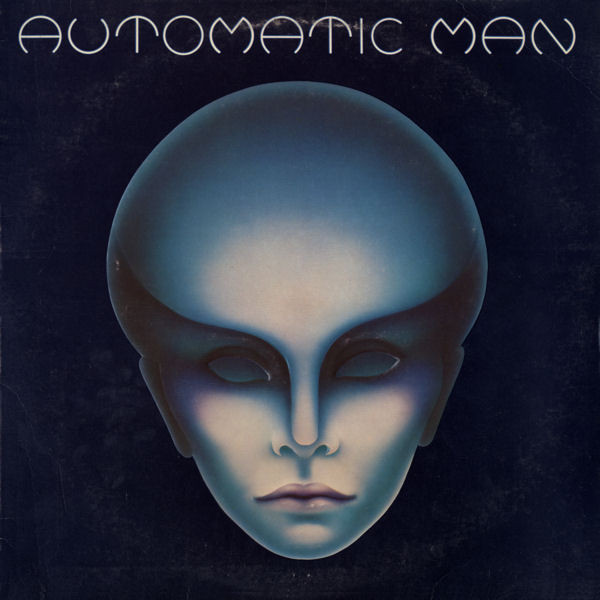
Automatic Man is a Rock album by Automatic Man, originally released in 1976. On Gatefold: 26 pressings tracked, owned by 3 collectors.
About
Automatic Man was an American 1970s progressive rock quartet from San Francisco which also featured elements of funk, space music, psychedelic rock, heavy metal, Krautrock, Musique concrete, art rock and Santana-inspired jazz fusion. Initially a side project of Santana's drummer Michael Shrieve, Automatic Man brought together well respected musicians of diverse backgrounds within the rock, funk and jazz communities of the mid-1970s. Despite a well reviewed 1976 eponymous début on Island Records and a lone charting single, 1977's "My Pearl", which reached No. 97 on the Billboard Hot 100., the line-up of Automatic Man was not cohesive. After a second album entitled "Visitors", they disbanded in 1978, retaining a small but very loyal, global cult following. With both releases being reissued on CD in 2004 after twenty eight years of only being available in vinyl format and with the advent of the internet, Automatic Man are being rediscovered and roundly praised for their genre defying, boundary breaking musical sound and unique lyrics. Automatic Man formed in San Francisco around 1975 when drummer Michael Shrieve decided to quit Santana to explore other musical avenues. That led him to work with ex-Traffic/Spencer Davis group singer/keyboardist Steve Winwood, percussionist Stomu Yamashta, and synthesizer player Klaus Schulze on the Go album, an album of experimental progressive rock that had been released by Island Records a year later. It was at those sessions guitarist Pat Thrall met Shreive, and the two decided to work together. Lou CasaBianca, who had originally managed Eddie Money and who had also been a recording session engineer on GO, became their manager and producer. Next to join Automatic Man was 25-year-old keyboard player and singer, Todd Cochran, then known under the alias of "Bayete" (pronounced Bay-yet-tay). Cochran was a child prodigy and formally trained keyboard player attending the Trinity College of Music in England as a teen. Cochran had also been part of the jazz scene for nearly a decade, playing with renowned jazz artist Julian Priester. He also released two jazz-funk solo albums on Prestige Records in 1972 and 1973. Completing the lineup was bass guitarist Doni Harvey, who performed around the SF/Bay Area with his brothers and in blues, jazz, and soul bands, playing both bass and guitar. According to Harvey's brother, Regi Harvey, Doni joined the band sheerly by chance, "During the break we heard a band practising in the big space. We went in to see who it was. It turned out to be "Automatic Man". That night the bass man wasn't working out and stomped out of the room. They spotted Don and asked him to sit in and to finish rehearsing. He stepped up to the plate that night. When they stopped for a break we went back in the small space we were practising in to finish. During that time they asked him to join the band. One of the reasons was that he played so well that they were that impressed. The other was that Doni and I had gone to Junior College with the keyboard and main writer "Bayete" at the newly opened "Skyline College. Lou CasaBianca the manager noticed the camaraderie and jumped on it." Rather than continue to build on their burgeoning following in the San Francisco/Bay Area, Automatic Man headed for London under the direction of producer and manager Lou CasaBianca. Automatic Man made Chelsea's King's Road in London their base of operations recording at Basing Street Studios now Sarm West Studios in Notting Hill with renowned recording engineer Keith Harwood. The self-titled debut album contains a mix of progressive space-rock and jazz fusion, with hard guitars and layered synthesizers. Allusions to space travel, Atlantis, astral projection, karma, angels, aliens, belly dancers and other mystical and exotic subjects are covered on nearly every album track. Cochran wrote the tracks "Atlantis Rising-Fanfare", "Coming Through", "One and One", "Newspapers", "Geni-Geni" and Turning of the Axis ". He shares co-writing credits with CasaBianca on "Automatic Man", "Interstellar Tracking Devices" and "Right Back Down." The entire band and CasaBianca share writing credits on "There's A Way." Steve Winwood who worked with Thrall, Shrieve and CasaBianca on GO, is rumoured to have contributed an uncredited keyboard and vocal appearance on the title track. Credits Bass, Vocals – Doni Harvey Drums, Percussion (Electronic) – Michael Shrieve Engineer – Keith Harwood Guitar, Vocals – Pat Thrall Keyboards, Synthesizer, Vocals – Bayeté Liner Notes – Nigel Williamson Producer – Automatic Man, Lou CasaBianca.
via Last.fm
The Clerk says
The Clerk knows this whole record — the pressing quirks, the credits, the take.
Tracklist
- 1Turn Around2:56
- 2A Few Days Later2:46
- 3Smokin' Cigarettes1:23
- 4Another Drink2:48
- 5Lady of the Night2:44
- 6Everything1:50
- 7In My Life1:57
- 8You Dont Wanna Go Home2:13
- 9Partied Alone2:30
- 10Lose and Burn1:20
- 11The Underground1:26
Sound DNA
- Rock
- Psych Rock
- fuzzy
- hypnotic
- psychedelic
Notes from the original pressing. Later editions may differ.
Comes with embossed cover and printed inner sleeve and 10x10 inch poster w. the cover art.
Credits
The people behind it.
Performers
- BayetéKEYBOARDS, SYNTHESIZER, VOCALS COMPOSED BY, LEAD VOCALS LEAD VOCALS
- Doni HarveyBASS, VOCALS COMPOSED BY, LEAD VOCALS LEAD VOCALS
- Michael ShrieveDRUMS, ELECTRONIC DRUMS , PERCUSSION DRUMS, PERCUSSION
- Pat ThrallGUITAR, VOCALS COMPOSED BY, GUITAR COMPOSED BY, GUITAR, SOLOIST
- The LammesPERCUSSION
3 collectors on Gatefold own this · 26 pressings tracked on Gatefold
Start your shelf.
Track your pressings of Automatic Man, get the Clerk's take, and see what the record is worth — free.
Start your shelf →Free forever. Works with 10 records or 10,000.